Why Knowing the Sign of a Burst Pipe Could Save Your Home
The most common signs of a burst pipe are:
- Standing water or puddles in unexpected places
- Sudden drop in water pressure at your faucets
- Unusual sounds — hissing, gurgling, or banging from walls or floors
- Water stains, bulging, or peeling on walls and ceilings
- Discolored or foul-smelling water coming from your taps
- Unexplained spike in your water bill
- Mold or musty odors appearing without an obvious cause
A burst pipe can release up to 250 gallons of water per day, and in many cases, homeowners do not notice until serious damage has already been done. Here in Derry, NH, freezing winter temperatures put pipes under enormous stress. When water freezes inside a pipe, it expands by roughly 9%, building pressure that can crack or completely rupture the line.
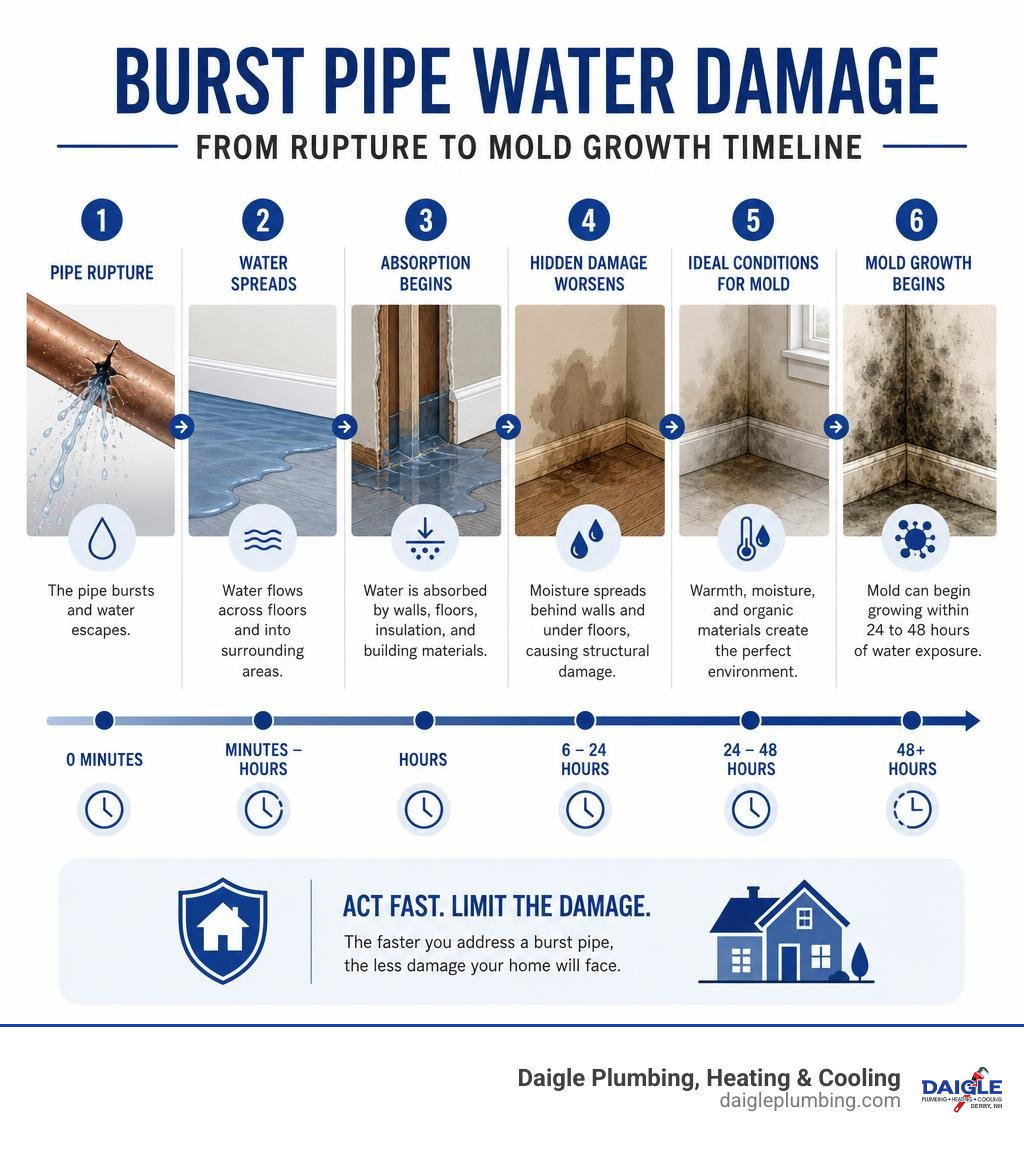
The tricky part? Many burst pipes are hidden behind walls, under floors, or underground. By the time you see visible damage, the water has often been spreading for hours, or longer. And mold can begin growing within just 24 to 48 hours of water exposure, turning a plumbing repair into a much larger and costlier problem.
At Daigle Plumbing, Heating & Cooling, our team has seen how quickly an undetected sign of a burst pipe can escalate from a minor inconvenience into major structural damage. In this guide, we’ll walk you through exactly what to look for, how to act fast, and how to protect your home before a small leak becomes a disaster.
How to Spot a Physical Sign of Burst Pipe Damage
When water escapes from a pressurized pipe inside your walls, it doesn’t always show up as a dramatic indoor geyser. Often, it begins as a silent pooling that gradually saturates your home’s building materials. Understanding how to recognize the physical indicators of a leak can help you catch the problem early.
If you suspect your plumbing is compromised, reviewing the 9 Signs of a Burst Pipe in Your Home is a great starting point for assessing your system. Let’s look at the most prominent physical signs you might encounter.
Standing Water and Puddles
The most obvious physical sign of a burst pipe is the sudden appearance of standing water or puddles inside your living spaces. You might notice water gathering at the base of a wall, pooling under kitchen sinks, or flooding your basement floor.
Because water follows the path of least resistance, a puddle in your hallway could easily be originating from a pipe rupture several feet away. If left unaddressed, standing water will quickly rot wooden framing, ruin carpeting, and cause irreversible structural damage to your home’s subflooring.
Water Stains and Bulging Drywall
Drywall acts like a giant sponge. When a pipe bursts behind a wall or above a ceiling, the drywall absorbs the escaping water. This leads to clear cosmetic and structural warning signs:
- Ceiling Stains: Dark, ringed, or yellowish water stains on your ceilings.
- Warped and Bulging Walls: Drywall that feels soft to the touch, bubbles, or bulges outward under the weight of trapped water.
- Peeling Paint or Wallpaper: As moisture pushes through the drywall, it forces paint to bubble and peel away, and wallpaper to lose its adhesive grip.
If you notice a sagging ceiling or a wall that looks swollen, do not ignore it. The drywall could eventually collapse under the weight of the accumulated water.
Subtle Clues: Pressure, Bills, and Sounds
Not all signs of a burst pipe are visual. Your plumbing system will often “speak” to you through changes in performance, utility costs, and unusual noises. Listening to these subtle cues can help you identify a hidden leak before it ruins your drywall.
Low Water Pressure: A Classic Sign of Burst Pipe Problems
When your home’s plumbing is functioning correctly, it maintains a steady, pressurized flow of water. Normal residential water pressure typically sits between 40 and 80 PSI (pounds per square inch), with 60 PSI being the ideal sweet spot.
When a pipe ruptures, water escapes through the new opening instead of flowing to your fixtures. That often causes a sudden, unexplained drop in water pressure. If your shower or kitchen faucet turns into a weak trickle, and you have not changed your usual water use, there may be a leak somewhere in the system. To see how even small pressure and leak issues can waste water, read common ways you could be wasting water with plumbing leaks.
Spiking Water Bills: A Hidden Sign of Burst Pipe Leaks
A sudden jump in your monthly utility bill is one of the most reliable indicators of a hidden water leak. If your household’s daily water usage has remained the same, but your bill has spiked by 20% or more, a ruptured pipe is often the culprit.
Because a burst pipe can run continuously behind the scenes, it can waste thousands of gallons of water in a matter of weeks. We always recommend tracking your monthly consumption closely so you can spot these anomalies immediately.
Unusual Plumbing Noises
Your walls should be relatively quiet when no water is running. If you start hearing strange noises from your plumbing system, it’s time to investigate:
- Hissing Sounds: Often indicates water escaping under high pressure through a small crack or pinhole leak in a pipe.
- Gurgling Drains: Air bubbles trapped in the lines by escaping water can cause drains to make gurgling or glugging sounds.
- Water Hammer: A loud banging or hammering sound when you turn off a faucet. This occurs when sudden pressure changes create shockwaves inside your pipes, which is common when lines are damaged or loose.
How to Detect a Hidden or Underground Burst Pipe After a Freeze
In New Hampshire, some of the most dangerous pipe bursts happen out of sight—either in unheated crawl spaces, deep inside exterior walls, or underground. After a hard winter freeze, finding these hidden leaks requires a bit of detective work.
Soggy Yard Patches
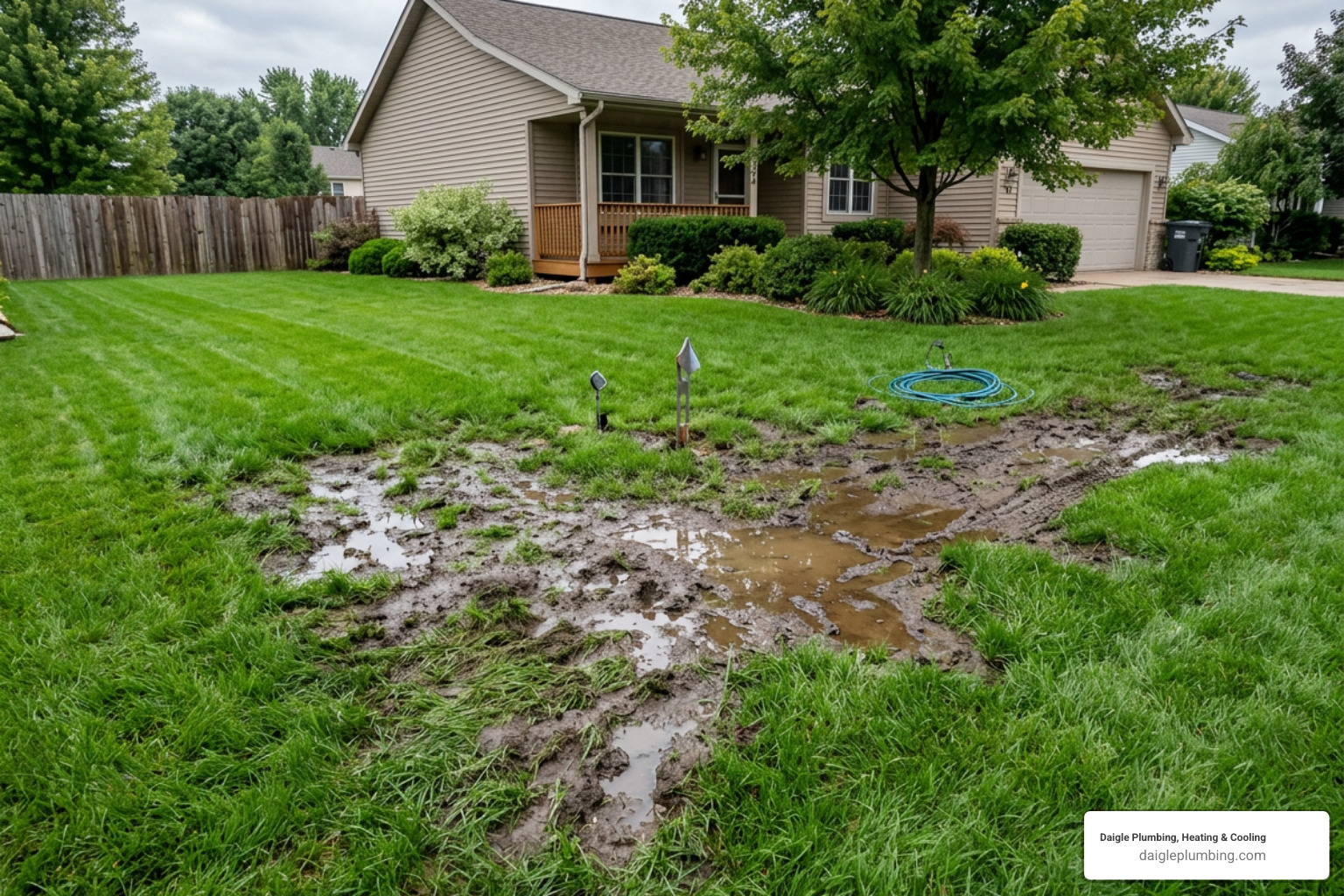
If a main water line buried beneath your yard bursts, the escaping water will eventually saturate the soil and rise to the surface. Look for unusually soggy, muddy, or spongy patches of grass, even when it hasn’t rained. You might also notice that the grass over the leak looks significantly greener and grows faster than the rest of your lawn. If you suspect an underground issue, learning how to find hidden water leaks in your home can help you pin down the general location.
Water Meter Test
You can use your home’s water meter to confirm whether you have a hidden leak. Here is how to perform a quick test:
- Turn off every faucet, appliance, and water-using fixture inside and outside your home.
- Locate your water meter (usually in the basement or in an outdoor utility box).
- Look at the leak indicator, which is often a small triangular dial or a rotating wheel.
- If the leak indicator is spinning—or if the main meter numbers change after 15 to 30 minutes of zero water use—you have an active leak.
Advanced Leak Detection Tools
When physical clues aren’t enough, professional plumbers use specialized equipment to pinpoint hidden ruptures without tearing up your home:
- Thermal Imaging: Infrared cameras detect temperature differences behind walls, highlighting cold spots where water is leaking and cooling the surrounding drywall.
- Acoustic Listening Devices: Ground microphones and acoustic sensors amplify the sound of water escaping from pipes deep underground or behind concrete slabs.
Using these advanced methods saves time and prevents unnecessary property damage. You can read more about how these technologies protect your home in our guide on The Dangers of Unrepaired Leaks and How Professional Leak Detection Can Help.
The Dangers of Leaving a Burst Pipe Unaddressed
Ignoring the signs of a burst pipe is a recipe for severe property damage and high repair bills. Even a minor leak can quickly compromise your home’s safety and your family’s health. For a closer look at urgent situations, see our breakdown of Plumbing Emergencies That Need Immediate Service.
Structural and Electrical Damage
Water is incredibly destructive. Over time, persistent leaks rot wooden support beams, warp subfloors, and degrade drywall until it crumbles. If a pipe bursts near your electrical system, water can seep into outlets, light fixtures, or your electrical panel, creating severe fire hazards, short circuits, and risk of electrocution.
Mold Growth and Health Risks
As mentioned earlier, mold spores thrive in dark, moist environments and can begin colonizing within 24 to 48 hours of water exposure. According to the U.S. Environmental Protection Agency (EPA), controlling indoor moisture is the key to preventing mold growth and protecting your health. Mold damage ruins structural materials and releases airborne spores that can cause respiratory issues, allergic reactions, and asthma flare-ups.
Immediate Action Plan: What to Do When a Pipe Bursts
If you discover a burst pipe in your home, acting quickly in the first few minutes can save you thousands of dollars in restoration costs. Follow this emergency checklist to protect your property.
Shut Off the Water and Power
Your absolute first priority is to stop the flow of water.
- Locate the Main Shutoff Valve: This is typically located in your basement, crawl space, or near the water meter. Turn the valve clockwise to shut off the water supply to your entire home.
- Turn Off the Electricity: If water is pooling near outlets, electrical appliances, or your circuit breaker, turn off the power to those affected zones immediately at your main electrical panel. Do not step in standing water to reach the panel; if the area is already flooded, call an electrician or your utility company for assistance.
Drain the Lines and Document Damage
Once the main valve is closed, you need to relieve the remaining pressure in your plumbing system.
- Open Your Faucets: Turn on both hot and cold taps to drain the remaining water out of the pipes.
- Flush the Toilets: Flush all toilets in the home to empty their tanks.
- Take Photos and Videos: Before you begin cleaning up, document all standing water, damaged drywall, and ruined personal belongings. Your insurance company will require this evidence for your water damage claim.
- Remove Standing Water: Use a wet-dry vacuum, towels, and buckets to clear out as much water as possible. Set up fans and dehumidifiers to start drying the area and discourage mold growth.
How to Prevent Frozen and Burst Pipes
The best way to handle a burst pipe is to prevent it from happening in the first place. With New Hampshire winters bringing sub-zero temperatures, proactive winterization is key.
Winterization and Insulation
- Insulate Vulnerable Pipes: Wrap exposed pipes in unheated areas (like basements, attics, and crawl spaces) with foam pipe sleeves or heating tape.
- Disconnect Outdoor Hoses: Before the first freeze, disconnect, drain, and store your outdoor garden hoses. Shut off the indoor valves leading to your outdoor spigots and drain the remaining water from the exterior lines.
- Keep Your Home Warm: Keep your thermostat set to at least 55°F, even when you’re traveling. Open cabinet doors under sinks to allow warm indoor air to circulate around your pipes.
- Let Faucets Drip: During extreme cold snaps, let faucets on exterior walls drip slightly. This relieves pressure buildup inside the lines, preventing a freeze from turning into a burst.
| Pipe Material | Freeze & Burst Risk | Lifespan | Common Vulnerabilities |
|---|---|---|---|
| Copper | Medium-High | 40–60 Years | Rigid joints can crack under freeze pressure; susceptible to corrosion over time. |
| PEX | Low | 40–50 Years | Flexible material expands slightly under freeze pressure, making it highly burst-resistant. |
| PVC / CPVC | Medium | 40–50 Years | Becomes brittle in extreme cold; joints can fail under high pressure. |
| Galvanized Steel | High | 20–50 Years | Highly prone to internal rust, corrosion, and clogging, which weakens the pipe walls. |
Smart Home Monitoring
Consider installing smart leak detectors near high-risk areas like water heaters, washing machines, and basements. These sensors connect to your home Wi-Fi and send instant alerts to your phone if they detect moisture or a sudden drop in ambient temperature. Some advanced systems can even automatically shut off your main water valve if a major leak is detected. If you suspect a pipe is already frozen, read our guide on How to Identify Repair Frozen Pipes to resolve the issue safely.
Frequently Asked Questions about Burst Pipes
How long does it take for a burst pipe to cause damage?
Water damage begins instantly. Within minutes of a pipe bursting, water can saturate drywall, ruin insulation, and damage flooring. Within 24 hours, standing water can cause wood structural members to swell and rot. Mold and mildew can begin growing in as little as 24 to 48 hours, significantly increasing the complexity and cost of the cleanup.
Can a pipe burst if it is not freezing outside?
Yes. While freezing temperatures are a leading cause of burst pipes in New Hampshire, pipes can also rupture due to:
- High Water Pressure: Sustained water pressure above 80 PSI puts constant stress on pipe joints and walls, eventually causing them to fail.
- Corrosion: Over time, acidic water and chemical wear thin out metal pipes, leading to pinhole leaks and structural failures.
- Soil Shifting: Shifting ground or growing tree roots can exert physical pressure on underground water lines, causing them to crack or break.
When should I call a professional plumber?
You should call a professional plumber immediately if you experience a complete loss of water pressure, hear rushing water inside your walls, find visible flooding, or suspect an underground leak. Attempting to repair a pressurized water line yourself can lead to further damage or injury. If you are unsure whether your situation requires immediate help, read our checklist on 5 Signs It’s Time to Call a Plumber.
Conclusion
Spotting the sign of a burst pipe early is the single best way to protect your home from devastating water damage and expensive structural repairs. From keeping an eye on your monthly water bills to listening for unusual plumbing sounds, staying vigilant can save you time, money, and stress.
When plumbing emergencies strike, you don’t have to face them alone. At Daigle Plumbing, Heating & Cooling, we have been serving our neighbors in Derry, NH, and surrounding communities like Londonderry, Windham, and Manchester for over 40 years. As a family-owned business, we pride ourselves on providing licensed, insured expertise, a satisfaction guarantee, and flexible financing options to keep your home safe and comfortable.
If you suspect you have a hidden leak, or want to winterize your plumbing before the next cold snap, don’t wait until it’s too late. Contact our expert plumbers and schedule professional services with our team of experts today!