Why Your Water Heater Needs Regular Flushing and What Happens If You Skip It
A flush water heater service is one of the simplest and most effective ways to protect your home’s hot water supply, lower your energy bills, and extend the life of your water heater.
Here’s what you need to know at a glance:
- What it is: Draining and flushing your water heater tank to clear out sediment, mineral scale, and rust that collect at the bottom
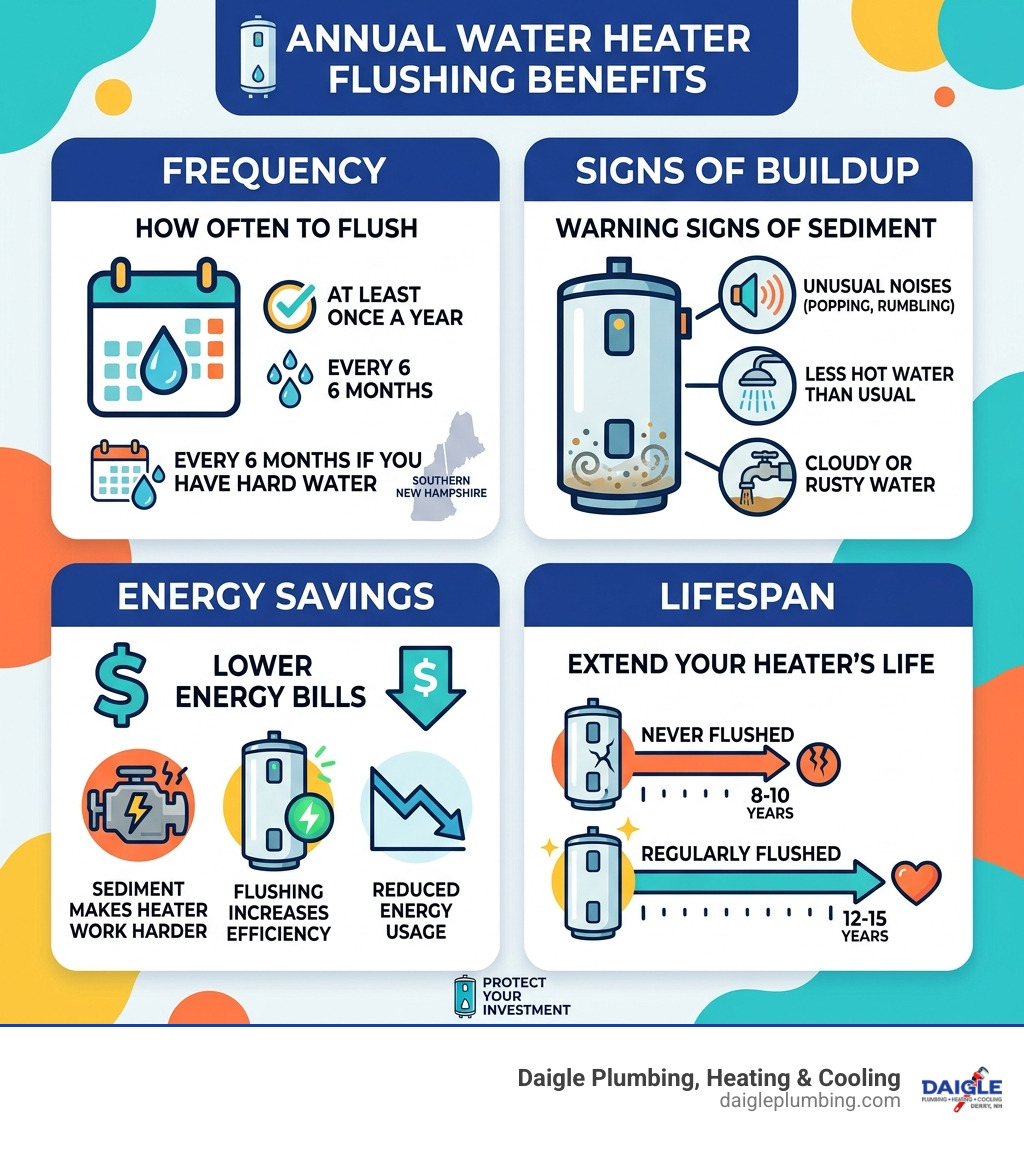
- How often: At least once a year for most homes, and every 6 months if you have hard water, which is common in southern New Hampshire
- Why it matters: Buildup inside the tank makes your water heater work harder, reduces efficiency, and can shorten the system’s lifespan
- DIY or pro? Basic flushing is possible for some homeowners, but a professional plumbing service can also spot problems like a worn anode rod, a faulty T&P valve, or a corroded drain valve
- Cost of skipping it: Neglecting maintenance can lead to early system failure, inconsistent hot water, higher utility bills, and a greater chance of unexpected breakdowns
Over time, minerals, rust, and debris from your water supply settle at the bottom of your tank. That crusty layer acts like insulation between the burner and the water — making your system work harder, run louder, and wear out faster. Most water heaters last around 10 years, but regularly flushed units can last 12–15 years. Units that are never flushed often fail at 8–10 years.
This guide walks you through everything: the warning signs, the step-by-step process, what to do with tankless systems, and when to call a professional.
At Daigle Plumbing, Heating & Cooling, our team has extensive hands-on experience with flush water heater service for homes across southern New Hampshire. Whether you’re planning to handle basic maintenance yourself or trying to decide when it’s time to call a professional, this guide will walk you through the essentials in simple terms.
Why You Need a Regular Flush Water Heater Service
In our years of serving Derry, NH, and surrounding areas, we’ve seen countless water heaters fail prematurely simply because they were never maintained. Think of a flush water heater service like an oil change for your car. You wouldn’t drive 100,000 miles without changing the oil, so why let your water heater run for a decade without a cleaning?
The primary enemy of your water heater is sediment. Water naturally contains minerals like calcium and magnesium. When water is heated, these minerals crystallize and settle at the bottom of the tank. This creates a thick layer of “scale.”
The Hidden Dangers of Sediment
As this layer grows, it acts as a thermal barrier. In a gas water heater, the burner is located at the bottom. The heat must now travel through a thick layer of rock-like sediment before it even reaches the water. This causes the metal tank bottom to overheat, which can lead to the glass lining cracking and the tank eventually leaking. For electric heaters, sediment can bury the lower heating element, causing it to burn out.
Regular flushing is one of the best ways to prevent these problems. Removing built-up debris helps your water heater run more efficiently and maintain strong, reliable performance.
Benefits of Annual Maintenance:
- Lower Utility Bills: When your heater doesn’t have to fight through sediment, it uses less energy.
- Consistent Temperatures: No more sudden “cold flashes” in the middle of a shower.
- Increased Capacity: A tank full of sediment holds less actual water.
- Quiet Operation: Removing the “popping” rocks at the bottom keeps the unit silent.
- Longevity: Learn how to extend the lifespan of your water heater by protecting the tank’s integrity.
Signs Your System Requires Maintenance or Repair
How do you know if your water heater is crying out for help? Your home will usually give you several “noisy” clues before the unit finally gives up the ghost.
1. Strange Noises (Rumbling and Popping)
If your basement sounds like someone is making popcorn or there’s a low rumbling sound coming from the utility closet, you have a sediment problem. These sounds occur when steam bubbles are trapped under the layer of sediment. As they burst through the crust, they create that distinctive “knocking” sound. If you hear this, check out our guide on water heater repair Derry NH noises to understand what your tank is trying to tell you.
2. Discolored Water or Metallic Taste
If your hot water looks rusty, cloudy, or has a “sandy” texture, it’s a clear sign of signs of a clogged water heater Derry NH. This sediment can travel into your pipes, clogging aerators and damaging your dishwasher or washing machine.
3. Smelly Water
A “rotten egg” smell often indicates bacteria growth or a failing sacrificial anode rod. During a flush water heater service, we can inspect these components to ensure your water remains safe and fresh.
4. Leaks Around the Base
A small puddle today can become a flooded basement tomorrow. If you see moisture, it’s time to look at the warning signs you need water heater repair solutions before the tank experiences a catastrophic failure.
Step-by-Step Guide to Draining Your Tank
If you’re a handy homeowner in Manchester or Nashua, you might want to try a DIY flush. It’s a manageable Saturday morning task that takes about 90 minutes. However, safety is paramount. You are dealing with scalding water and either high-voltage electricity or combustible gas.
Preparing for Your Flush Water Heater Service
Before you touch a single valve, you must ensure the unit is safe to handle. We recommend turning off the power the night before if possible, to allow the water to cool. If you can’t wait, wear thick gloves and eye protection.
Safety Checklist:
- Turn off the Power/Gas: For electric heaters, flip the dedicated breaker in your electrical panel. For gas heaters, turn the knob on the thermostat to the “Pilot” or “Vacation” setting. This prevents the burners or elements from firing while the tank is empty—which would destroy them instantly.
- Shut off the Cold Water: Locate the cold water inlet pipe (usually marked with a blue handle) and turn it off.
- Open a Hot Faucet: Go to a sink upstairs and turn on the hot water. This breaks the vacuum in the lines, allowing the tank to drain smoothly.
| Feature | Gas Water Heater | Electric Water Heater |
|---|---|---|
| Power Source | Natural Gas or Propane | 240V Electricity |
| Shutdown Step | Turn to “Pilot” or “Vacation” | Flip Breaker to “Off” |
| Danger Risk | Gas Leaks / Carbon Monoxide | Electrocution / Element Burnout |
| Maintenance | Needs more frequent flushing | Element inspection is critical |
Executing the Flush Water Heater Service
Once the power is off and the water is cool, follow these steps adapted from You Should Flush Your Water Heater Annually—Here’s How:
- Connect a Garden Hose: Attach a standard garden hose to the drain valve at the bottom of the tank.
- Direct the Flow: Run the other end of the hose to a floor drain, a sump pit, or outside. Ensure the hose stays below the level of the drain valve.
- Open the Drain Valve: Use a flathead screwdriver or the built-in handle to open the valve.
- The “Power Flush”: Once the tank is empty, turn the cold water inlet valve back on in short bursts. This “stirs up” the sediment at the bottom and forces it out the hose. Continue until the water running out of the hose is crystal clear.
- Refill the Tank: Close the drain valve and remove the hose. Turn the cold water supply back on. Wait until the upstairs faucet has a steady stream of water (no air sputtering) before turning the power or gas back on. If you turn on an electric heater before it’s full, you will dry-fire and ruin the upper element.
If you find your tank is too far gone or the drain valve is completely clogged with “calcium rocks,” it might be time for an upgrade. You can save big with our expert-backed guide on water heater replacement to see if a newer, more efficient model makes sense for your New Hampshire home.
Maintaining Tankless Systems and Critical Components
If you’ve upgraded to a tankless system in Windham or Hooksett, your maintenance looks a little different. Tankless units don’t have a big tank to “flush,” but they do suffer from “scaling” inside the heat exchanger.
The Descaling Process
Tankless units require a “descale” rather than a simple flush. This involves using a circulation pump and a food-grade descaling solution (like white vinegar or a commercial kit) to dissolve mineral buildup inside the narrow copper pipes. If you ignore this, you’ll face 8 common issues with tankless water heaters, including “Error Code” shutdowns and reduced flow rates.
Don’t Forget the Anode Rod and T&P Valve
During any flush water heater service, it is smart to inspect two parts that do a lot of behind-the-scenes work:
- The anode rod: This metal rod helps protect the inside of the tank from rust by corroding first. Over time, it wears down and may need replacement if it is heavily depleted.
- The T&P valve (temperature and pressure relief valve): This is a key safety device. It helps release excess pressure or heat before they can damage the tank. Annual testing helps confirm it is working properly and not stuck due to mineral buildup.
Frequently Asked Questions about Water Heater Maintenance
How often should I flush my water heater in New Hampshire?
In New Hampshire, flushing your water heater once a year is a smart baseline for most homes. But if you have hard water, heavy hot water use, or a larger household, doing a flush water heater service every six months is often the better move. That extra maintenance helps keep sediment from building up, hardening, and becoming much harder to remove later.
What are the risks of DIY flushing versus professional service?
The biggest risk is scalding. Water inside a tank is often 120°F to 140°F—hot enough to cause third-degree burns in seconds. There is also the risk of the drain valve failing to close. Plastic drain valves often become brittle over time; if you force it open, it might snap, leaving you with 50 gallons of water flooding your basement.
When you book a water heater repair appointment in Derry, NH with us, we handle the mess and the risk. We also perform a multi-point safety inspection that most homeowners miss, such as checking for gas leaks or carbon monoxide venting issues.
How does sediment affect my energy bills in 2026?
As we move into April 2026, energy efficiency is more important than ever. Sediment acts as an insulator. If you have just 1/2 inch of sediment at the bottom of your tank, your heater has to work about 25% harder to reach the same temperature. This translates directly to higher gas or electric bills. If you find your bills spiking, ask yourself: Is your water heater faulty again? It might just need a good cleaning.
Conclusion
Your water heater is the unsung hero of your home. It provides the comfort of a hot shower on a cold New Hampshire morning and ensures your dishes are sanitized. By investing in a regular flush water heater service, you are protecting that comfort and your wallet.
At Daigle Plumbing, Heating & Cooling, we’ve been the trusted experts in Derry, NH, and the surrounding communities for over 40 years. Our family-owned business is built on a foundation of licensed expertise and a satisfaction guarantee. Whether you need a routine flush, a complex repair, or a brand-new water heater installation in Derry NH, our team is ready to help.
Don’t wait for a rumbling tank or a cold shower to remind you of your water heater. Contact our plumbing specialists today to schedule your maintenance and keep the hot water flowing for years to come!