Quick Diagnostics: Two-Minute Tests to Check Your System
Before taking apart any panels or assuming the worst, a couple of quick checks can tell you whether the system is truly failing or simply working through an operating delay. When the issue persists, ductless HVAC services can help identify the cause.
A ductless heat pump does not operate like a traditional gas furnace that blasts immediate scorching air. Learning what a ductless HVAC system is and how it works helps explain why these systems take time to gather outdoor thermal energy and compress it into usable indoor comfort.
To run a fast system verification, perform the two-minute thermometer test:
- Turn your remote or wall controller to Heat mode (look for the sun icon) and set the target temperature 5 degrees Fahrenheit higher than the current room temperature.
- Allow the system to run for roughly 10 to 15 minutes. Mini splits incorporate a cold-blow prevention feature that keeps the indoor fan idle or running at super-low speed until the indoor coil reaches a warm operating temperature.
- Hold an accurate digital thermometer near the discharge louvers where air leaves the indoor head.
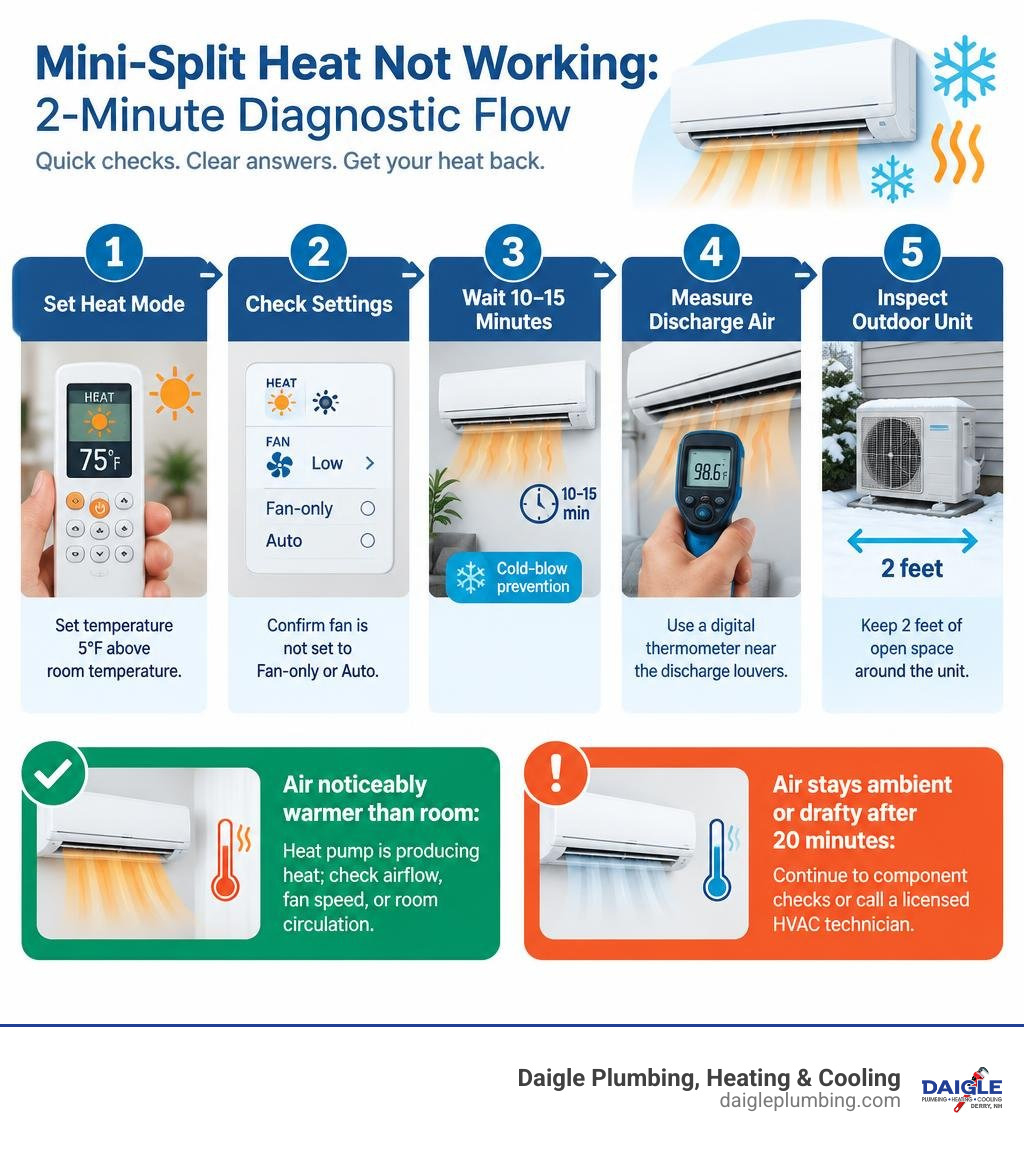
If the air coming off the coil is noticeably warmer than the ambient room air, your heat pump is actively producing heat. In that situation, the underlying issue is usually related to airflow circulation, fan speed settings, or poor room distribution rather than a broken compressor. If the air stays completely ambient or feels drafty after 20 minutes, move on to specific component checks.
Why Is Your Mini Split Heat Not Working? Common Causes
Ductless systems are dependable, yet cold weather places heavy demands on both indoor and outdoor components. A typical American household spends around $1,900 annually on energy bills, with heating and cooling eating up nearly half that amount. When heating performance drops, energy consumption often spikes because the compressor struggles to satisfy the thermostat.
Some heating problems stem from simple settings, while others involve mechanical faults. Here is a quick overview of what you can tackle on your own versus when our team needs to step in:
| Symptom | Probable Cause | Recommended Action | DIY or Pro? |
|---|---|---|---|
| Lukewarm air, weak airflow | Dirty indoor mesh filters | Wash filters in warm water and dry thoroughly | DIY |
| Unit blowing room-temperature air | Remote set to Auto or Fan mode | Switch to Heat mode with sun icon | DIY |
| Temporary stop, frost on outdoor coil | Normal defrost cycle | Wait 5 to 15 minutes for cycle to complete | DIY |
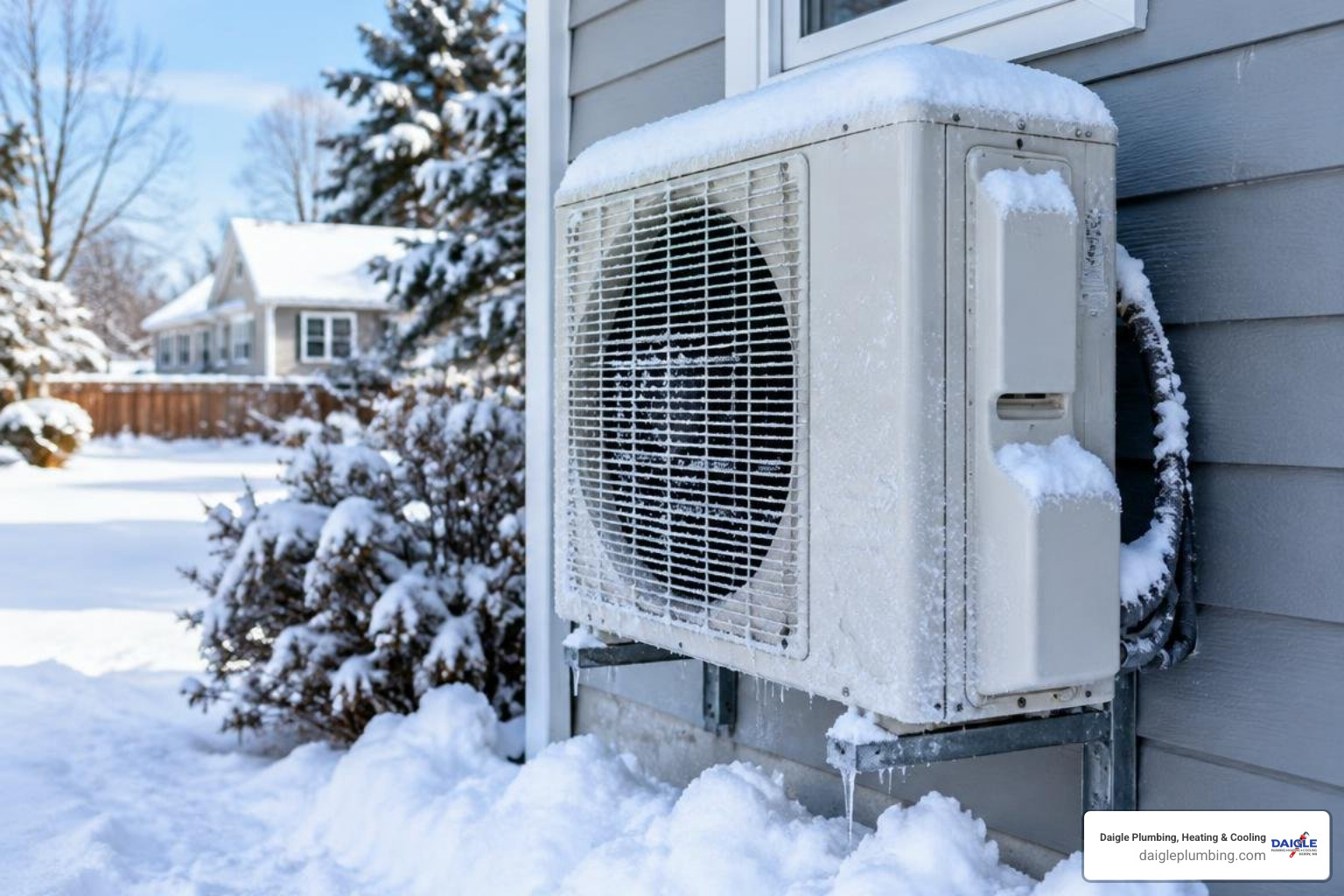
| Outdoor unit encased in snow/ice | Airflow restriction at condenser | Clear 2 feet of space around outdoor unit | DIY |
| Unit turns off, water backing up | Tripped condensate float switch | Clear drain line blockage | DIY / Pro |
| Constant cold air, ice on indoor lines | Refrigerant leak | Locate leak, repair, and recharge system | Pro |
| Clicking sound, compressor won’t start | Faulty capacitor or failed PCB fuse | Electrical testing and component replacement | Pro |
Thermostat and Remote Settings: Mini Split Heat Not Working Fixes
Thermostat mistakes happen more often than you might think. A common culprit is leaving the remote control in Auto mode. In Auto mode, the mini split decides whether to heat or cool based on indoor temperature swings. On a sunny winter afternoon, radiant heat through south-facing windows can trick the system into switching to cooling mode, leaving you shivering by nightfall.
Always select Heat mode directly. Ensure the setpoint is high enough to demand heat; setting the thermostat only 1 degree above room temperature may leave the unit idling in low-stage operation. If the settings are correct and heating still does not start, HVAC services in Bedford can help diagnose the problem.
If your controller settings look correct but your indoor room stays uncomfortable, check the location of your temperature sensor. Some ductless systems read the temperature right at the indoor wall unit near the ceiling, where warm air naturally collects. If the ceiling reaches 72 degrees while your living space sits at 66 degrees, the unit may shut off early. Adjusting your horizontal and vertical louvers downward forces warm air into the lower half of the room.
Clogged Air Filters and Blocked Coils
Airflow is the lifeblood of any ductless heat pump. A clogged mesh filter restricts the volume of air passing across the indoor heat exchanger. When air cannot move freely, heat builds up inside the indoor casing, causing high-pressure safety switches to throttle the compressor output to prevent overheating.
According to heating research, airflow and refrigerant faults add an estimated 20.7 terawatt-hours of excess energy waste to American homes each year. That is roughly 9 percent more energy consumed compared to clean, fault-free systems.
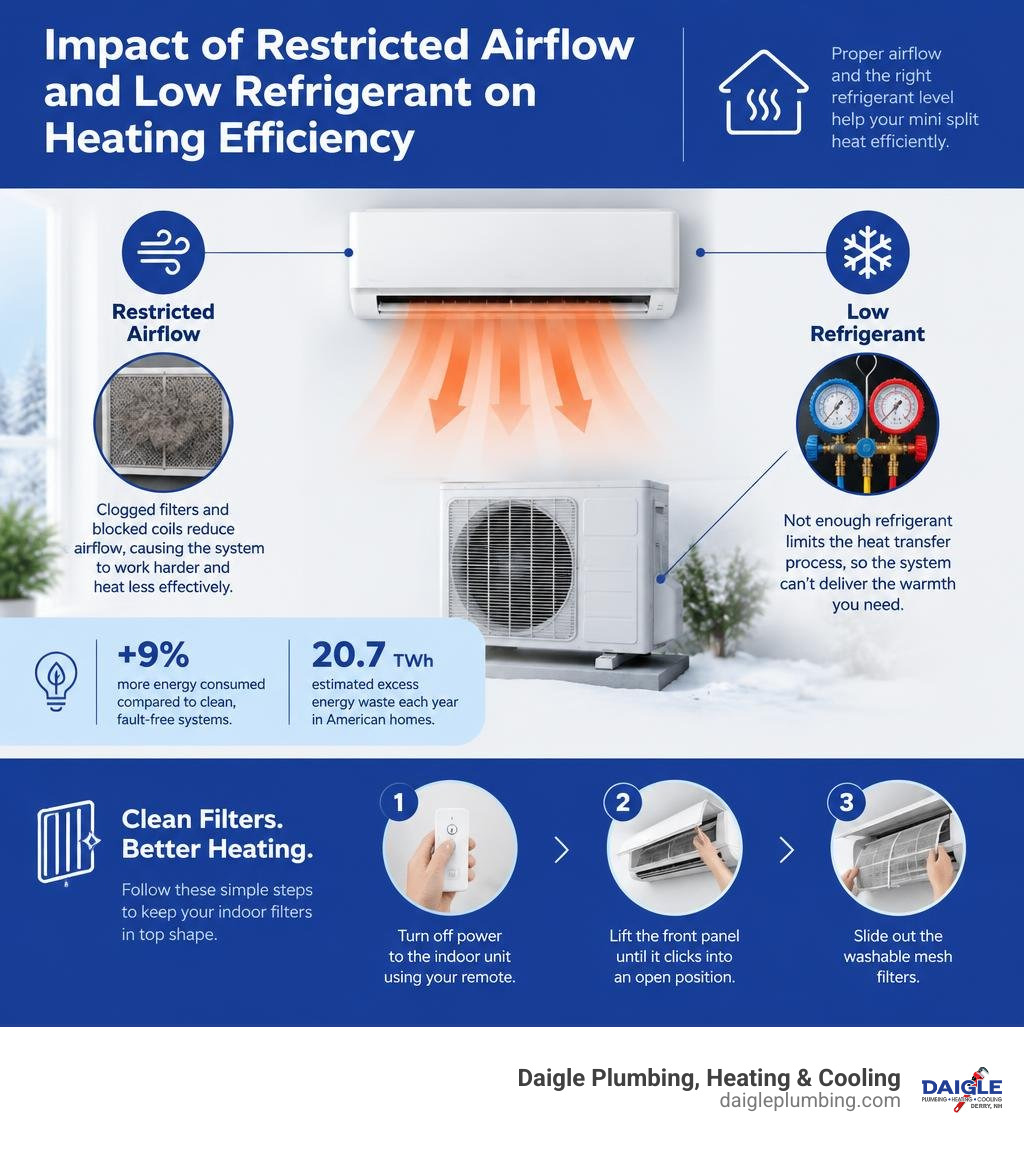
Following step-by-step air vent and filter care helps protect system efficiency. To clean your indoor filters:
- Turn off power to the indoor unit using your remote.
- Lift the front intake panel until it clicks into an open position.
- Slide out the washable mesh filters.
- Vacuum loose dust, then wash them gently in a sink using lukewarm water and mild dish soap.
- Let the filters air-dry completely before reinstalling them. Putting wet filters back into the unit can cause mold and mildew growth inside the blower wheel housing.
Is Your Mini Split Heat Not Working Due to Defrost Mode?
If your mini split suddenly stops blowing warm air on an icy day, the louvers close, or a small indicator light flashes, your system may simply be running a defrost cycle.
When heating your home, the outdoor coil absorbs heat from outside air, which causes moisture in the air to freeze onto the cold outdoor fins. To clear this frost layer, the system temporarily reverses the flow of refrigerant. It sends hot gas through the outdoor coil to melt the ice while shutting off the indoor fan to avoid blowing cold air into your living room.
National Renewable Energy Laboratory (NREL) testing shows that a 1-ton ductless mini split operating in cold, damp conditions may initiate a defrost cycle roughly every 55 minutes, with each cycle lasting about 8 minutes. In general, a standard defrost cycle takes between 5 and 15 minutes. Once the outdoor sensors detect that the ice has melted, the reversing valve switches back and normal heating resumes.
If your unit remains in defrost mode for more than 30 minutes, or if the outdoor unit is buried in heavy snow drifts, clear away the snow to restore outdoor airflow. These cold-weather cycles are a normal part of heat-pump operation.
Advanced Mechanical and Electrical Issues
When basic settings, clean filters, and outdoor clearance do not solve the problem, the underlying fault is usually electrical or mechanical.
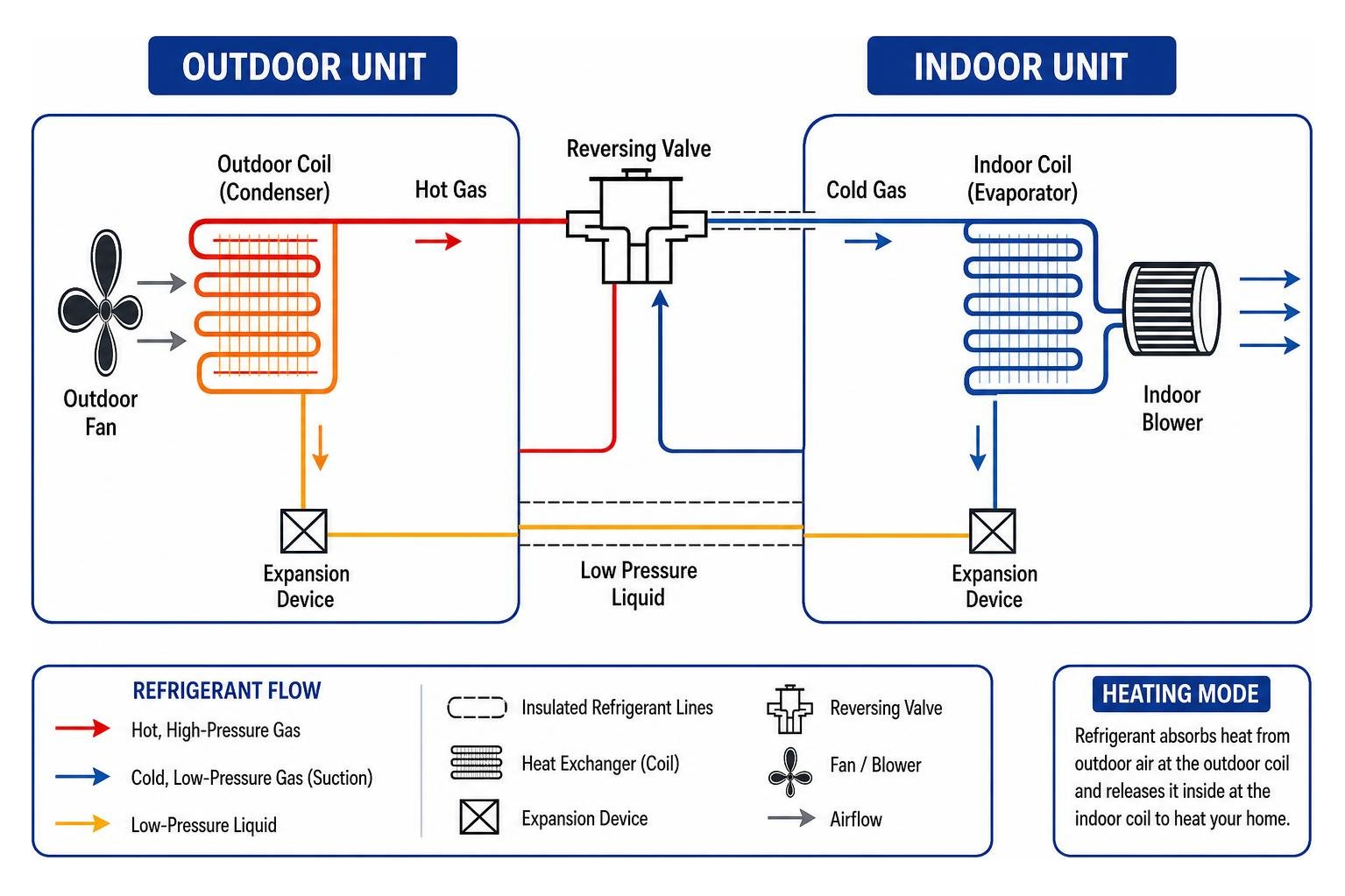
Here are the most common advanced issues that prevent a mini split from heating:
- Refrigerant Leaks: Mini split systems operate on a closed loop. If a flare fitting vibrates loose or corrosion develops on a copper line, refrigerant escapes. Low refrigerant reduces heat absorption and causes indoor coils to ice up. Knowing the proper protocol for handling a leaking coil is critical because federal EPA Section 608 regulations require certified technicians to locate the leak, repair the tubing, pressure-test with nitrogen, pull a deep vacuum, and weigh in the exact factory-specified charge.
- Clogged Drain Line and Float Switch: Mini splits produce condensation. If the drain tube becomes clogged with algae or debris, water backs up in the internal drain pan. Most modern indoor heads have a safety float switch that cuts power to the control board to prevent water damage to your walls and flooring.
- Blown Fuses or Circuit Board Issues: Electrical surges during winter storms can blow the disconnect fuse near the outdoor condenser or the main fuse on the printed circuit board (PCB). If the indoor unit turns on but the outdoor unit is completely silent, an electrical fault or a tripped circuit breaker is often to blame.
- Faulty Run Capacitor or Compressor Failure: If the outdoor unit makes a faint humming or clicking sound without firing up, the run capacitor may be failing. If the compressor itself suffers internal mechanical wear, our technicians can evaluate whether a component replacement or full system upgrade makes the most financial sense. Correct electrical supply is essential to proper operation.
Preventive Maintenance to Keep Your Mini Split Heating All Winter
The most reliable way to prevent heating interruptions during freezing New England winters is routine upkeep. Maintaining high efficiency not only protects your indoor comfort in communities like Derry, Salem, Manchester, and Nashua, but it also preserves the manufacturer warranty on your equipment.
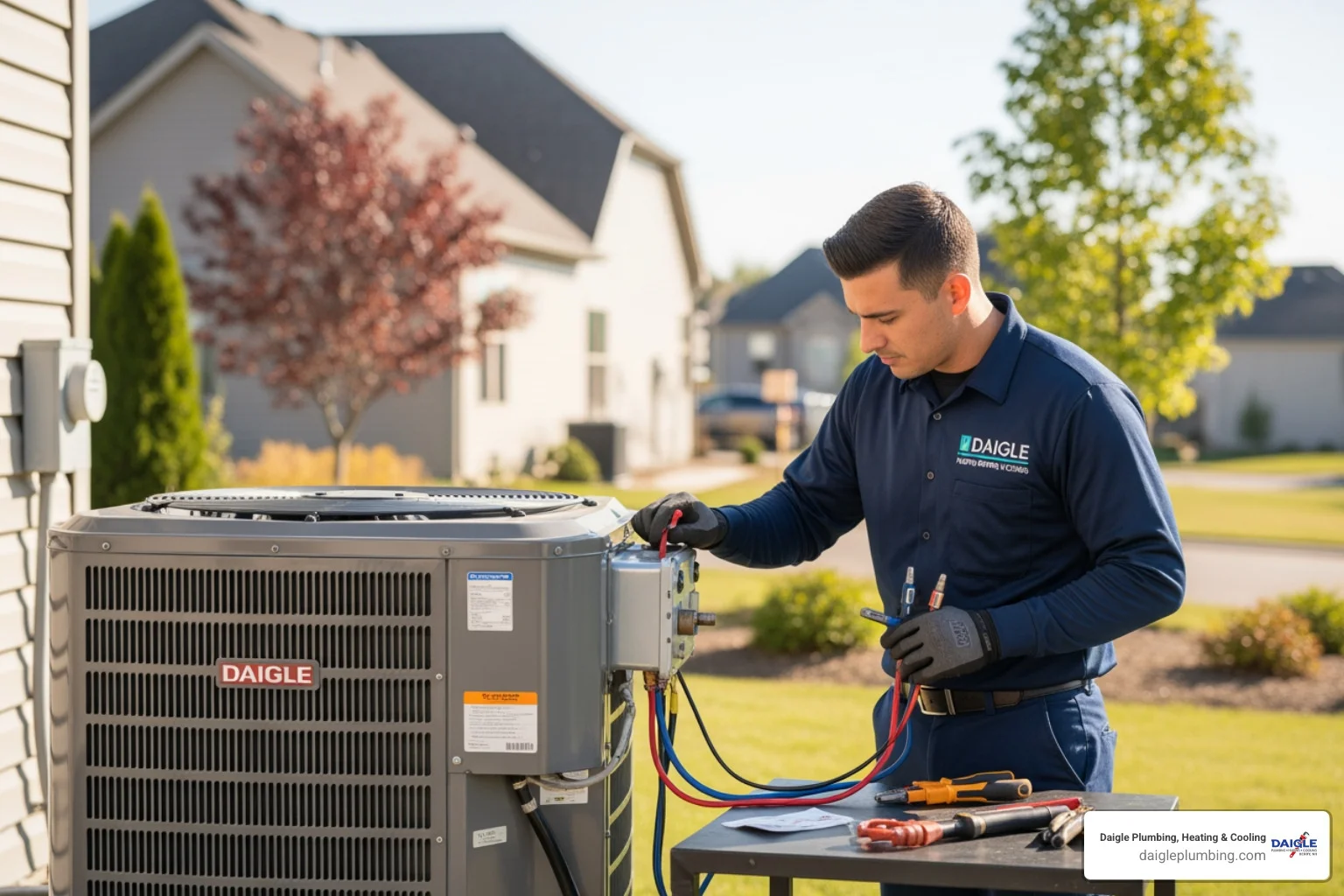
Scheduling routine seasonal HVAC preventive maintenance ensures that electrical connections stay tight, coils remain clear of corrosive buildup, and refrigerant pressures match original factory specifications.
To keep your system running smoothly through the winter months:
- Maintain at least 2 feet of open clearance around the outdoor condenser, keeping it clear of snowbanks, fallen leaves, and shrubs.
- Inspect outdoor wall brackets or ground stands to confirm the unit remains elevated above typical snow accumulation levels.
- Wash indoor mesh filters every two to three weeks during periods of heavy winter use.
- For homes considering an equipment update, choosing energy-saving ductless heating units designed with low-ambient cold-climate capabilities ensures stable heat output even when outside temperatures drop below zero.
For step-by-step guidance when a unit stops heating, our mini split troubleshooting tips explain the common checks to make before scheduling service.
Frequently Asked Questions About Mini Split Heating
Why is my mini split blowing cold air when in heat mode?
A mini split often blows unheated air during the first 10 to 15 minutes after startup while the indoor coil warms up. It may also circulate unheated air if the system enters a defrost cycle to melt ice from the outdoor unit. If cold air blows continuously for over 30 minutes, the cause is usually a clogged filter, an incorrect remote setting, or low refrigerant charge.
Should I keep my mini split on Auto mode during winter?
No, it is best to avoid Auto mode in the winter. Auto mode allows the system to switch between heating and cooling based on subtle room temperature shifts. Setting the system directly to Heat mode (sun icon) keeps the unit locked into heating, ensuring steady temperatures and lower utility bills.
How long does a mini split defrost cycle take?
A normal defrost cycle takes between 5 and 15 minutes. In very cold or humid conditions, your system may run a defrost cycle every 50 to 90 minutes. During this time, the indoor fan pauses to prevent cold drafts. Once the outdoor coil is clear of frost, heating resumes automatically.
Conclusion
When your ductless system leaves you in the cold, running through simple diagnostic steps, such as confirming Heat mode, washing the mesh filters, and checking the outdoor unit for snow blockage, can often get your warmth back quickly.
If your system still struggles to produce warm air, makes unusual noises, or flashes persistent error codes, professional support is the next step. At Daigle Plumbing, Heating & Cooling, our family-owned team brings over 40 years of hands-on experience, licensed and insured technicians, satisfaction guarantees, and convenient financing options to homeowners throughout Derry, Londonderry, Bedford, Merrimack, Windham, and surrounding New Hampshire communities.
When you need prompt heating help, contact our professional mini split repair technicians to schedule an inspection and keep your home cozy all season long.