7 Critical Signs You Need Furnace Repair in Nashua, NH
If your furnace is blowing cold air, making loud banging or squealing noises, burning with a yellow or flickering flame, short-cycling, or failing to start, you need professional furnace repair in Nashua, NH. These warning signs point to failing ignition systems, overheating components, or dangerous combustion problems that can leave your home without heat during a New Hampshire cold snap. When winter arrives in southern New Hampshire, your heating system transforms from a background appliance into your home’s most essential lifeline. Sub-freezing temperatures put immense strain on mechanical components, burners, and electrical switches. Catching small malfunctions before they cause a full system breakdown keeps your home warm, protects your plumbing from freezing, and prevents costly structural damage. Below are the seven key indicators that your system requires professional attention.
1. Cold Air or Inconsistent Temperatures
If your supply vents are blowing room-temperature or cold air while the thermostat is actively calling for heat, your furnace is struggling. This problem often stems from a tripped high-limit switch, a malfunctioning electronic ignition, or a failing blower motor.
Inconsistent temperatures throughout the house, where some rooms feel like an icebox while others overheat, indicate airflow imbalances or failing internal sensors. In worst-case scenarios, cold air can signal a cracked heat exchanger, which creates serious safety hazards. When you experience chronic temperature swings, scheduling heating services ensures a licensed technician can pinpoint the issue before the cold deepens. According to the U.S. Department of Energy, regular furnace maintenance also helps prevent efficiency losses and safety risks.
2. Loud Banging, Rattling, or Squealing Noises
Furnaces naturally produce a gentle hum when cycling on, but loud, unexpected sounds point to mechanical distress:
- Booming or Banging: A loud pop or bang during ignition usually indicates delayed gas ignition. Gas builds up in the combustion chamber before lighting all at once, creating a small explosion that can damage the burner assembly or crack the heat exchanger.
- Squealing or Screeching: High-pitched noises often mean a worn or frayed blower motor belt, or dry motor bearings that are on the verge of seizing.
- Rattling or Clattering: Loose panels, failing motor mounts, or vibrating ductwork cause persistent rattling. Left unaddressed, mechanical vibration can loosen electrical wiring or gas connections.
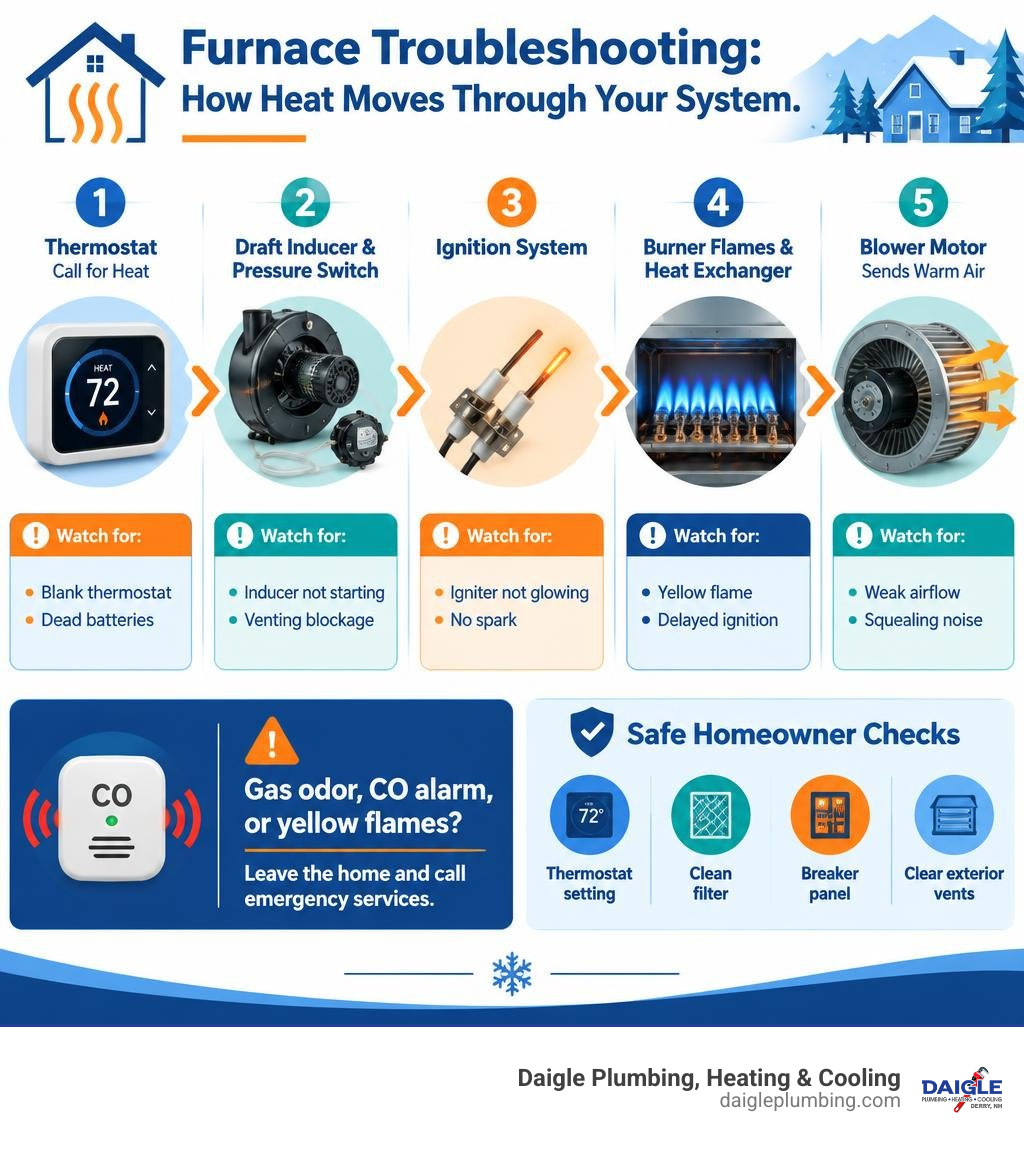
3. Discolored Pilot Light or Gas Odors
A healthy gas furnace burns with a crisp, steady blue flame. A blue flame signifies complete, efficient combustion where fuel is burning cleanly and safely.
If your burner flame burns yellow, orange, or flickers erratically, the burner is likely starved of oxygen or suffering from soot accumulation. Incomplete combustion produces elevated levels of carbon monoxide (CO), a colorless, odorless, and dangerous gas.
If you detect a rotten-egg scent (the mercaptan additive in natural gas and propane) or if your carbon monoxide detector alerts you, evacuate immediately and contact emergency services.
4. Frequent Short-Cycling
Short-cycling occurs when your heating unit starts up, runs for a brief few minutes, shuts off abruptly, and then restarts shortly afterward. This rapid cycling prevents your living spaces from reaching the set temperature and places heavy wear on the compressor, ignition, and blower assemblies.
The most common culprit is a severely restricted air filter that traps heat inside the heat exchanger, triggering the safety limit switch to shut down fuel delivery. Maintaining a consistent furnace filter replacement schedule prevents overheating, protects components, and keeps air moving freely through your ductwork.
5. Sudden Spikes in Energy Bills
It is normal for monthly utility costs to climb during January and February in Nashua, NH, but an unexplained surge in fuel or electrical consumption indicates that your equipment has lost operational efficiency.
When internal parts wear out, burners fall out of calibration, or motors lose velocity, the furnace must run longer and work harder to deliver the same volume of heat. Routine diagnostic service restores proper combustion ratios, cleans internal assemblies, and brings your operating costs back in line.
6. Poor Indoor Air Quality and Heavy Dust
During long New England winters, homes remain tightly sealed. If you notice a sudden haze of dust floating in sunbeams, soot streaks near registers, or household members experiencing dry throats and irritated eyes, your heating system may be circulating contaminants.
A malfunctioning blower fan, dirty internal chambers, or deteriorating flue pipes can push fine soot, combustion residue, and allergen particles directly into your living spaces. Professional cleaning and duct inspection clear away these hazards and restore clean indoor air.
7. Ignition Issues and Motor Startup Failures
Modern furnaces rely on a sequential startup process to operate safely. When the thermostat signals for heat, the draft inducer motor must spin up first to clear combustion gases from the flue pipe and close the safety pressure switch.
If the inducer motor fails or the draft switch stays open, the ignition sequence halts instantly to prevent dangerous backdrafts. Homeowners diagnosing furnace inducer motor issues often find that electrical faults, failing capacitors, or debris blockages prevent the ignition sequence from completing.
Resolving Heating Issues: Safety, DIY, and Professional Care

Navigating heating trouble requires balancing quick homeowner checks with professional expertise. While simple thermostat updates or filter changes fall within basic home care, working directly with electrical circuits, gas valves, and combustion chambers demands factory-trained expertise.
DIY Troubleshooting vs. Professional Furnace Repair in Nashua, NH
Before scheduling a service call, you can safely complete a few basic troubleshooting steps to rule out minor external issues.
| Issue / Checkpoint | Safe DIY Troubleshooting | Requires Professional Repair |
|---|---|---|
| Thermostat Function | Replace batteries; confirm system is set to “Heat” and temperature is 5 degrees above room level. | Recalibrating electronic sensors; running new control wiring; replacing faulty relays. |
| Electrical Power | Check the electrical service panel for tripped breakers; ensure the furnace power switch is turned “On”. | Replacing burned circuit boards; testing transformer voltage; repairing broken wiring harnesses. |
| Airflow & Filtration | Inspect and replace disposable 1-inch or 4-inch pleated air filters. | Replacing seized blower motors; balancing supply dampers; rebuilding duct transitions. |
| Fuel & Ignition | Verify the external gas shutoff valve handle is open (parallel to the pipe). | Clearing clogged burner orifices; replacing cracked hot surface ignitors; adjusting gas pressure. |
| Venting & Drainage | Check exterior PVC intake and exhaust pipes for snow, ice, or leaf clogs. | Repairing cracked flue pipes; replacing draft inducer fans; testing pressure differential switches. |
For complex electrical issues or persistent system failures, turning to comprehensive HVAC solutions protects your investment and ensures factory-approved repairs.
Safety Risks with Gas and Oil Furnaces
Gas and oil heating equipment operates under high voltage and combustible fuel pressure. Attempting to dismantle burner assemblies or bypass internal safety switches without proper training risks gas leaks, electrical shock, and fire hazards.
Cracked heat exchangers remain one of the most serious safety threats in residential heating. When metal fatigue or chronic overheating causes small fissures in the combustion chamber, toxic exhaust gases can seep directly into the breathable air stream. Seasonal tune-ups and regular heating services give technicians the opportunity to test your equipment with specialized combustion analyzers, ensuring every safety switch operates correctly.
Costs, Maintenance, and Energy Efficiency in New Hampshire
Investing in scheduled maintenance keeps repair costs manageable and ensures your heating equipment delivers reliable output when Nashua weather turns bitter.
Average Costs of Furnace Repair in Nashua, NH
Furnace repair expenses vary based on the age of your system, the accessibility of components, and the severity of the failure:
- Diagnostic & Minor Repairs: Common jobs such as replacing a flame sensor, hot surface ignitor, or blower capacitor fall on the lower end of the expense spectrum.
- Mid-Level Component Repairs: Replacing draft inducer assemblies, electronic control boards, or gas valves requires specialized parts and dedicated labor.
- Major Overhauls: Replacing a blower motor assembly or cracked heat exchanger represents a substantial investment where equipment age plays a major role in deciding between repair and replacement.
Extending Furnace Lifespan and Utilizing Rebates
The average residential furnace provides reliable service for 15 to 20 years when properly maintained. Skipping annual cleanings, ignoring filter changes, and leaving worn bearings unaddressed can reduce that operational lifespan significantly.
If your existing system is approaching two decades of service and requires frequent visits, upgrading to a high-efficiency system can offer meaningful long-term savings. New Hampshire homeowners may also qualify for available energy-efficiency rebates or financing options when installing a high-efficiency condensing gas furnace or an advanced heat pump system.
Frequently Asked Questions About Furnace Repair
How quickly can I get urgent furnace repair during a Nashua cold snap?
During severe cold snaps, local heating specialists prioritize homes without heat to prevent frozen water pipes and unsafe indoor living conditions. Our team provides prompt heating help throughout Nashua, NH, Derry, NH, and surrounding communities like Manchester, NH, Salem, NH, Hudson, NH, and Merrimack, NH, dispatching technicians equipped with fully stocked service vehicles to restore warmth as quickly as possible.
What are the most common furnace problems in Nashua homes?
The most frequent service calls we see in southern New Hampshire include clogged air filters causing thermal shutoffs, dirty flame sensors preventing burners from staying lit, seized draft inducer motors, and worn blower belts. Extended periods of below-freezing temperatures push mechanical parts to their operating limits, exposing minor wear that went unnoticed in milder weather.
When should I replace my furnace instead of repairing it?
Consider replacing your furnace if the unit is over 15 years old, if an individual repair estimate approaches half the cost of a new installation, or if the heat exchanger is cracked. Upgrading to a modern, high-efficiency system delivers dependable heating performance and lowers monthly fuel bills.
Conclusion
Recognizing warning signs like unusual noises, discolored burner flames, frequent cycling, and cold airflow allows you to schedule repairs before a minor mechanical issue leaves your home without heat in the middle of a New Hampshire winter. Proactive seasonal maintenance, timely filter replacements, and prompt service calls protect your home comfort and extend the operating life of your heating equipment.
At Daigle Plumbing, Heating & Cooling, our family-owned team brings over 40 years of local expertise to homeowners across Nashua, NH, Derry, NH, Londonderry, NH, Windham, NH, and neighboring communities. Our licensed and insured technicians stand behind their work with a satisfaction guarantee and flexible financing options. If your heating system is showing any of these warning signs, contact our professional furnace repair technicians to schedule service and keep your home warm and secure all winter long.