Act Fast When Pipes Freeze
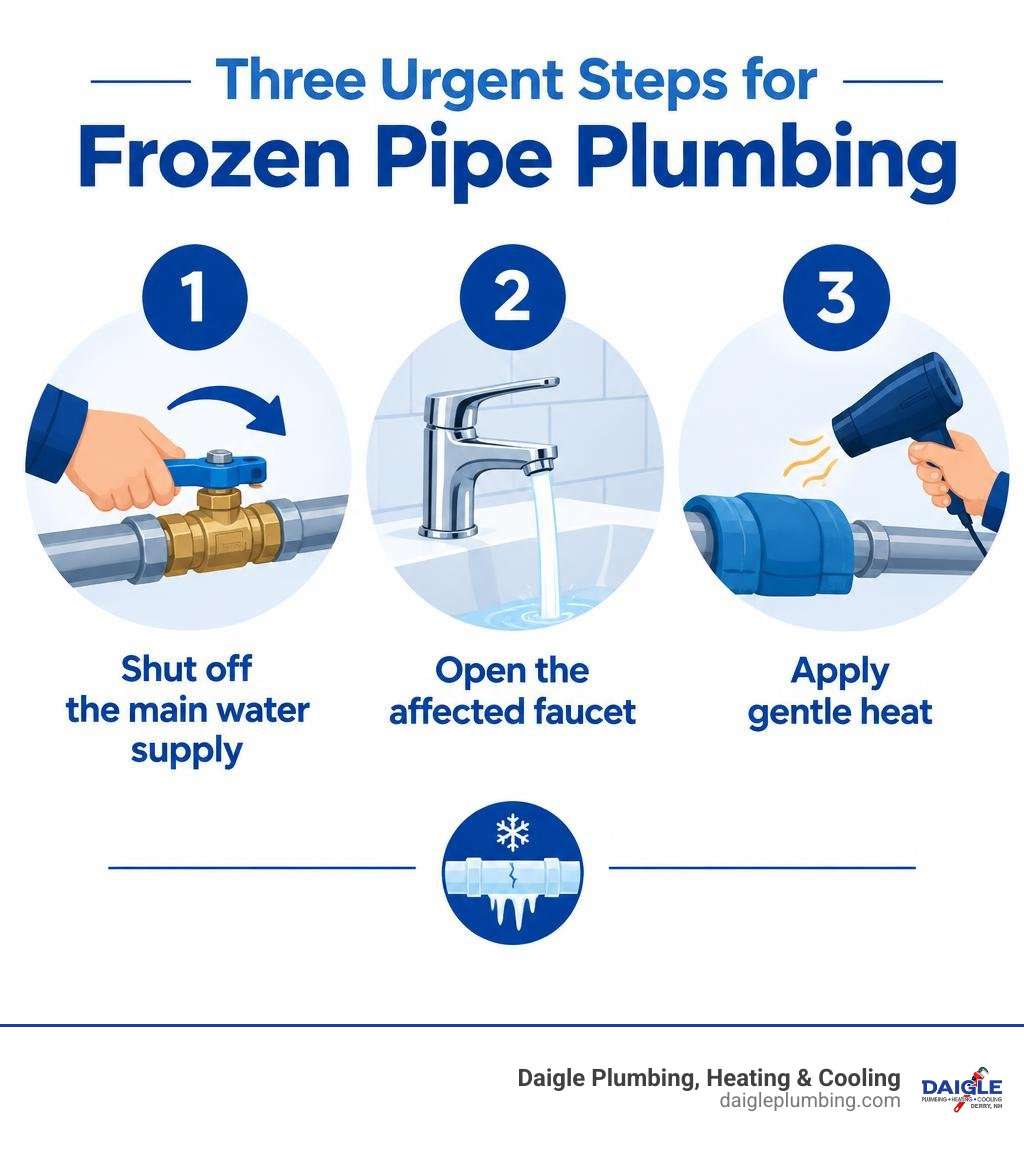
If you suspect frozen pipes in your plumbing, act before the ice thaws and a hidden crack starts leaking:
- Shut off the main water supply to limit flooding if the pipe has split.
- Open the affected faucet to release pressure and give melting water a way out.
- Use gentle heat only, such as a hair dryer, warm towels, or a safely placed space heater. Never use a torch or open flame.
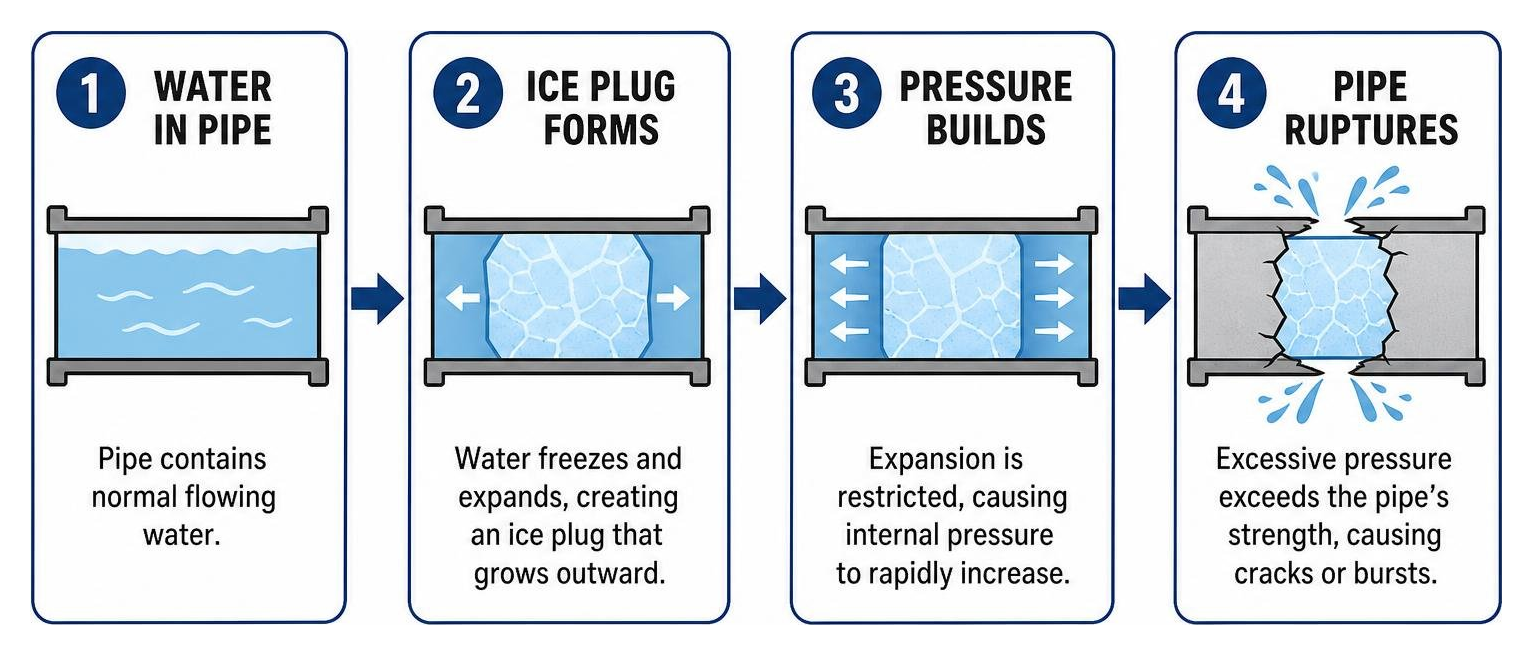
Water expands about 9% as it freezes, creating enough pressure to crack pipes, especially in exterior walls, crawlspaces, garages, and unheated basements. A pipe can freeze after sustained temperatures near 20 F or lower, and poorly protected plumbing can freeze much faster in subzero weather. Addressing frozen pipes in your plumbing requires prompt action from a qualified technician before a small crack becomes a major leak.
At Daigle Plumbing, Heating & Cooling, our experienced team provides hands-on HVAC and plumbing service with a focus on reliable repairs. Our background helps homeowners make safer, faster decisions when cold weather puts their home at risk.
How to Identify At-Risk and Frozen Water Lines
During harsh New England winters, plumbing lines exposed to drafts or installed inside exterior walls face intense thermal stress. When water turns to ice, it expands by roughly 9% in volume. This volumetric expansion creates extreme internal hydrostatic pressure, often surging between 2,000 and 30,000 PSI inside a closed plumbing line. That level of force can easily split rigid copper joints, crack CPVC fittings, and tear open water supply lines.
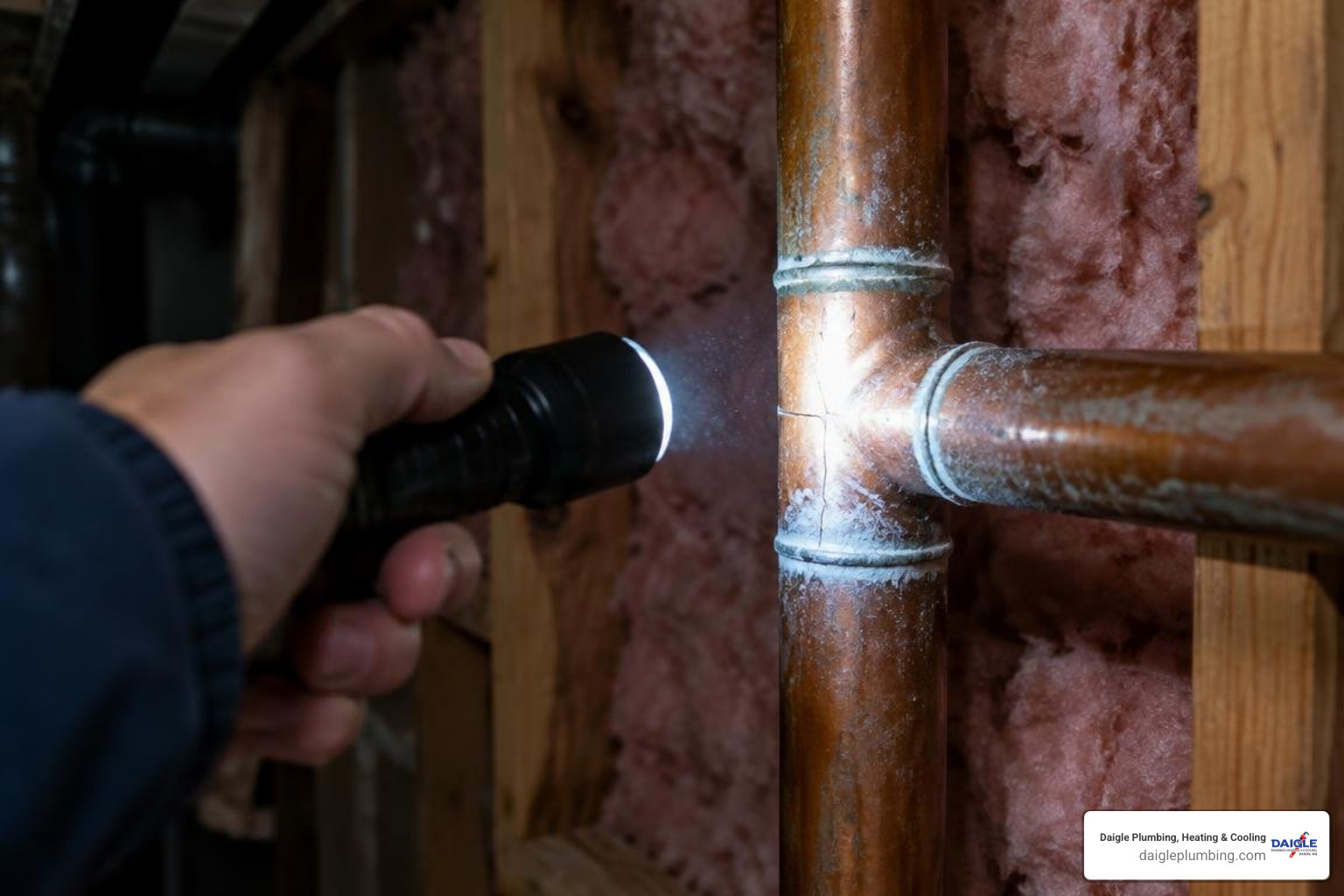
Catching a freeze early prevents severe property damage. If you notice a sudden drop in water pressure when turning on a bathroom tap or kitchen sink, an ice blockage is likely forming. Other clear warnings include visible frost coating exposed pipe surfaces, subtle bulges along copper or plastic pipe walls, and unusual whistling or banging sounds when valves open. Learning how to spot the signs of a burst pipe before it’s too late allows you to take swift corrective action before water begins pouring into your living areas.
Emergency Diagnosis: Identifying Frozen Pipes in Vulnerable Zones
Plumbing lines freeze most frequently in unconditioned or poorly insulated areas of the home. Exterior wall cavities facing north and west, unheated basements, vented crawlspaces, garages, and attics are prime trouble spots. Outdoor hose bibbs that remain connected to garden hoses during sub-freezing temperatures also transfer freezing temperatures straight into interior plumbing runs.
To diagnose a localized freeze, perform these systematic checks:
- Fixture Water Flow: Turn on each faucet in your home one by one. If cold or hot water flows normally in the kitchen but only trickles in an upstairs bathroom, the freeze is isolated to that specific branch line.
- Visual Pipe Inspection: Check exposed plumbing in your basement, utility closet, or crawlspace. Look for surface frost, condensation bands, or structural distention along pipe walls.
- Drainage and Vent Sounds: Gurgling noises coming from sinks or bubbling sounds in toilet bowls can indicate that expanding ice is creating pressure imbalances within the system.
- Water Meter Movement: If all interior faucets are closed but your water meter continues to spin, a hidden rupture may already be leaking behind a wall or beneath floorboards.
3 Urgent Steps to Fix Frozen Pipes Before They Burst
When you confirm that a water line is frozen, every minute counts. Attempting to force water through the line or ignoring the blockage can lead to catastrophic ruptures. Following the American Red Cross guide on preventing and thawing frozen pipes and adhering to established plumbing safety standards will help protect your property.
Step 1: Main Water Shutoff and System Depressurization
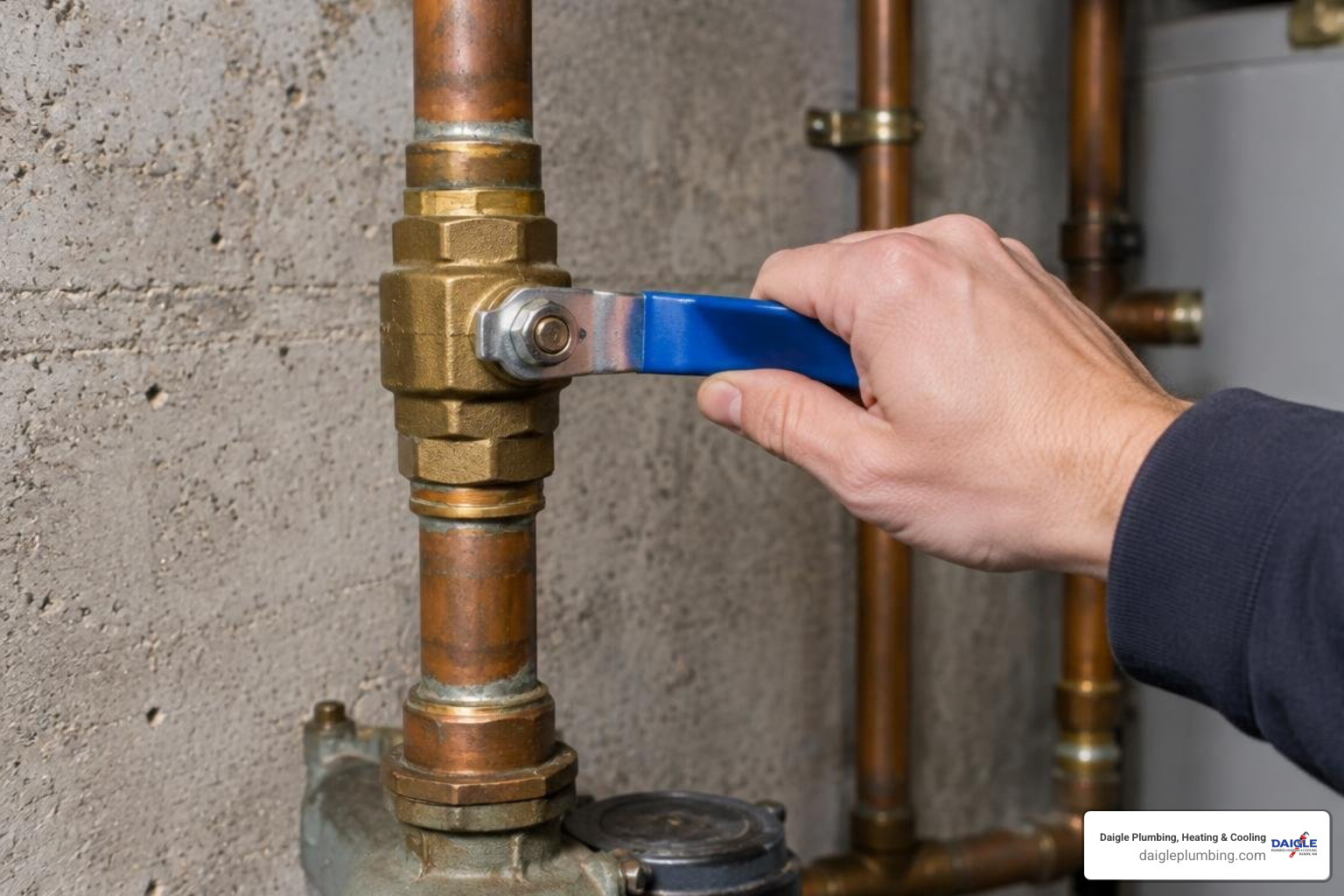
The very first action you must take is shutting off your home’s main water supply valve. This valve is typically located in the basement near the front foundation wall, inside a utility room, or near the water meter. Closing this valve halts incoming city or well water pressure immediately.
Once the main valve is shut, open the faucet connected to the frozen line, along with several downstream fixtures on lower levels. Opening these taps depressurizes the plumbing lines. This gives melting ice a clear path to escape and relieves upstream hydraulic pressure, significantly reducing the risk of a rupture while the pipe warms.
Step 2: Safe Thawing Techniques for Frozen Pipes
Thawing must always be done gradually and safely. Never use open flames, propane torches, high-output industrial heat guns, or charcoal burners. Open flames can instantly ignite wooden wall framing, crack cold pipes from thermal shock, or create trapped superheated steam pockets that can violently burst the pipe.
To safely thaw an exposed water pipe:
- Locate the Ice Blockage: Follow the cold supply line from the closed fixture back toward the unheated zone until you find the coldest section or visible frost.
- Apply Gentle Heat: Use a standard 1500-watt electric hair dryer, wrap the pipe in towels soaked with hot water, or place an electric heating pad directly around the frozen span.
- Work from the Faucet Backward: Direct heat starting at the open faucet and slowly move toward the frozen blockage. This sequence ensures that melted water can flow out through the open tap rather than getting trapped behind the ice dam.
- Warm Surrounding Spaces: If the pipe is concealed inside an exterior wall cavity, increase your central heating thermostat, open base cabinet doors to allow warm room air to circulate, and place a portable space heater safely in the room a few feet away from walls and curtains.
Step 3: Assessing for Ruptures and Managing Leaks
Many homeowners assume a pipe bursts at the exact moment it freezes, but structural failure often becomes apparent during the thawing stage. Ice plugs frequently seal the very cracks they create. Once the ice melts, pressurized water can quickly escape through split seams and fractured joints. A minor hairline crack can release a damaging amount of water, ruining drywall, flooring, and electrical systems.
Keep dry towels, buckets, and a wet-dry vacuum nearby while thawing. Visually inspect every inch of the exposed pipe for hairline fractures, separated solder joints, or split plastic seams. If you spot a small leak, you can temporarily apply an emergency pipe repair clamp or rubber patch to contain the moisture while you arrange for permanent repairs. Practical methods for fixing costly plumbing leaks can help keep minor drips from turning into major household floods.
Cold snaps can place heavy stress on connected appliances, making it equally important to check nearby equipment. Guidance on repairing water heater and supply line leaks can help homeowners identify related problems in the utility space.
Long-Term Freeze Prevention and Winterization Strategies
Preventing winter plumbing failures requires a mix of proper insulation, modern piping materials, and smart seasonal habits. Upgrading vulnerable plumbing lines before freezing temperatures arrive saves substantial time and money.
Different piping materials behave uniquely when exposed to sub-freezing temperatures. The table below outlines how common residential plumbing materials and insulation options perform during severe winter conditions:
| Material / Method | Freeze Tolerance | Burst Risk Level | Primary Benefits & Recommendations |
|---|---|---|---|
| PEX-A (Cross-linked Polyethylene) | High (Expands 6% to 8%) | Low | Highly flexible; expands with freezing water and contracts back without splitting. Ideal for cold climates. |
| Copper (Rigid Type L or M) | Low | High | Excellent heat conductor, meaning it freezes quickly. High burst risk at soldered joints and thin walls. |
| CPVC (Chlorinated PVC) | Very Low | Very High | Becomes brittle in cold temperatures. Prone to cracking and shattering under freezing pressure. |
| Closed-Cell Foam Pipe Sleeves | Preventative Barrier | Moderate Protection | Inexpensive baseline defense. Slows heat loss in unheated basements and crawlspaces. |
| Self-Regulating Heat Cable | Active Protection | Low Risk | Automatically adjusts heat output based on ambient temperature. Safe for pipes in freezing drafts. |
To protect your home throughout winter in communities like Derry NH, Salem NH, Manchester NH, and Bedford NH, follow these essential maintenance steps:
- Maintain Consistent Indoor Temperatures: Keep your heating system set to at least 55°F at all times, even when you are away on vacation.
- Improve Air Circulation: Open vanity and kitchen sink cabinet doors along exterior walls on freezing nights to let heated room air reach hidden plumbing lines.
- Let Faucets Drip: Allow a slow, steady trickle of water to run from fixtures connected to vulnerable exterior pipes during extreme cold snaps below 20°F. Moving water helps prevent ice dams from locking up the line.
- Winterize Outdoor Fixtures: Disconnect, drain, and store all garden hoses before the first hard frost. Shut off interior isolation valves serving exterior spigots, open the outside sillcocks to drain residual water, and consider installing freeze-resistant frost-free sillcocks.
- Schedule Preventative Inspections: A comprehensive assessment by our team can pinpoint hidden vulnerabilities in crawlspaces, basements, and exterior walls.
Because steady indoor warmth is one of the most effective ways to reduce freeze risk, our heating services can help homeowners keep vulnerable areas more consistently protected during severe winter weather.
For recurring leaks, frozen-line damage, or a winterization assessment, our plumbing services provide focused support for protecting pipes and completing durable repairs.
Frequently Asked Questions About Frozen Pipe Emergencies
How long does it take to safely thaw a frozen pipe?
Thawing an accessible, exposed plumbing pipe using a hair dryer or warm towels typically takes between 30 and 60 minutes. If the frozen section is located deep inside an uninsulated exterior wall cavity or enclosed ceiling space, the process may take several hours using increased ambient room heat and safe portable heating units. Never rush the process with open flames, as sudden heat can damage plumbing materials and cause fires.
Will homeowner’s insurance cover water damage from frozen pipes?
Many standard homeowner insurance policies may cover sudden and accidental water damage from burst frozen pipes, but coverage varies by policy and circumstance. Insurers may require evidence that the property was adequately heated or that plumbing was properly drained before an unoccupied home was left in freezing conditions. Document your emergency steps, photograph damage, and keep repair records while you review your policy or speak with your insurer.
At what outdoor temperature do residential pipes start freezing?
Pipes are generally at risk when outdoor temperatures drop to 20°F or lower for several consecutive hours. In severe conditions where temperatures drop to 0°F or below, uninsulated pipes in drafty crawlspaces, basements, or exterior wall cavities can freeze solid in as little as 4 to 6 hours. Cold outdoor wind entering through unsealed foundation vents or siding gaps significantly accelerates the freezing process.
Safe and Reliable Plumbing Solutions for Your Home
Frozen water lines can disrupt your daily routine and threaten your home with expensive structural damage. Knowing where your main shutoff valve is located, depressurizing lines, and applying steady, gentle heat helps you resolve freeze issues safely.
At Daigle Plumbing, Heating & Cooling, our family-owned team brings over 40 years of hands-on industry experience to homeowners across Derry, Londonderry, Windham, Hooksett, Hudson, and Nashua, as well as surrounding New Hampshire neighborhoods. Our licensed and insured technicians provide prompt heating help and urgent service to restore your plumbing and heating systems quickly. For help with frozen-pipe damage, preventative winterization, or whole-home repiping, contact our professional frozen-pipe repair technicians today to schedule service.