Early Warning Signs of Grease Buildup in Pipes
The primary warning signs of grease buildup in pipes are slow drainage, gurgling drains, foul odors, and standing water. When fats, oils, and grease (commonly known in the trade as FOG) enter your plumbing system, they do not simply vanish into the public sewer or septic tank. Instead, they cool, adhere, and create progressive internal restrictions. In severe cases, FOG deposits can cut sewer capacity by 30% to 60%, choking off drainage lines in a manner similar to arterial plaque.
Recognizing these early warning symptoms allows homeowners and business operators across Southern New Hampshire, including Manchester, Nashua, Derry, and Londonderry, to address accumulations before complete mechanical failure occurs.
Visual and Auditory Indicators of Grease Buildup in Pipes
Grease clogs rarely happen overnight. Unlike an accidental object dropped down a disposal, lipid accumulation is an insidious, layered process. Typical early warning indicators include:
- Progressive Slow Drainage: Water takes increasingly longer to leave the sink basin. In typical residential pipes, grease layers range from 5 to 20 mm thick, eventually narrowing the pipe diameter to a fraction of its original size.
- Gurgling Sounds: As wastewater struggles past a constricted grease choke point, negative air pressure builds behind the flow. This forces air backward through the sink trap, producing distinct bubbling or gurgling noises.
- Foul, Rancid Odors: Decomposing animal fats and vegetable oils trap decaying food particles. This organic slurry produces volatile organic compounds that waft back up through the drain opening.
- Standing Water: As the accumulation reaches severe stages (often exceeding 15 to 30 mm in thickness), wastewater ceases to flow freely, leaving persistent standing pools after basic dishwashing.
Saponification and Chemical Reactions in Plumbing
The problem worsens due to basic chemistry. When fatty acids interact with alkaline minerals (such as calcium and magnesium found in tap water) or common household cleaning agents, a process called saponification takes place.
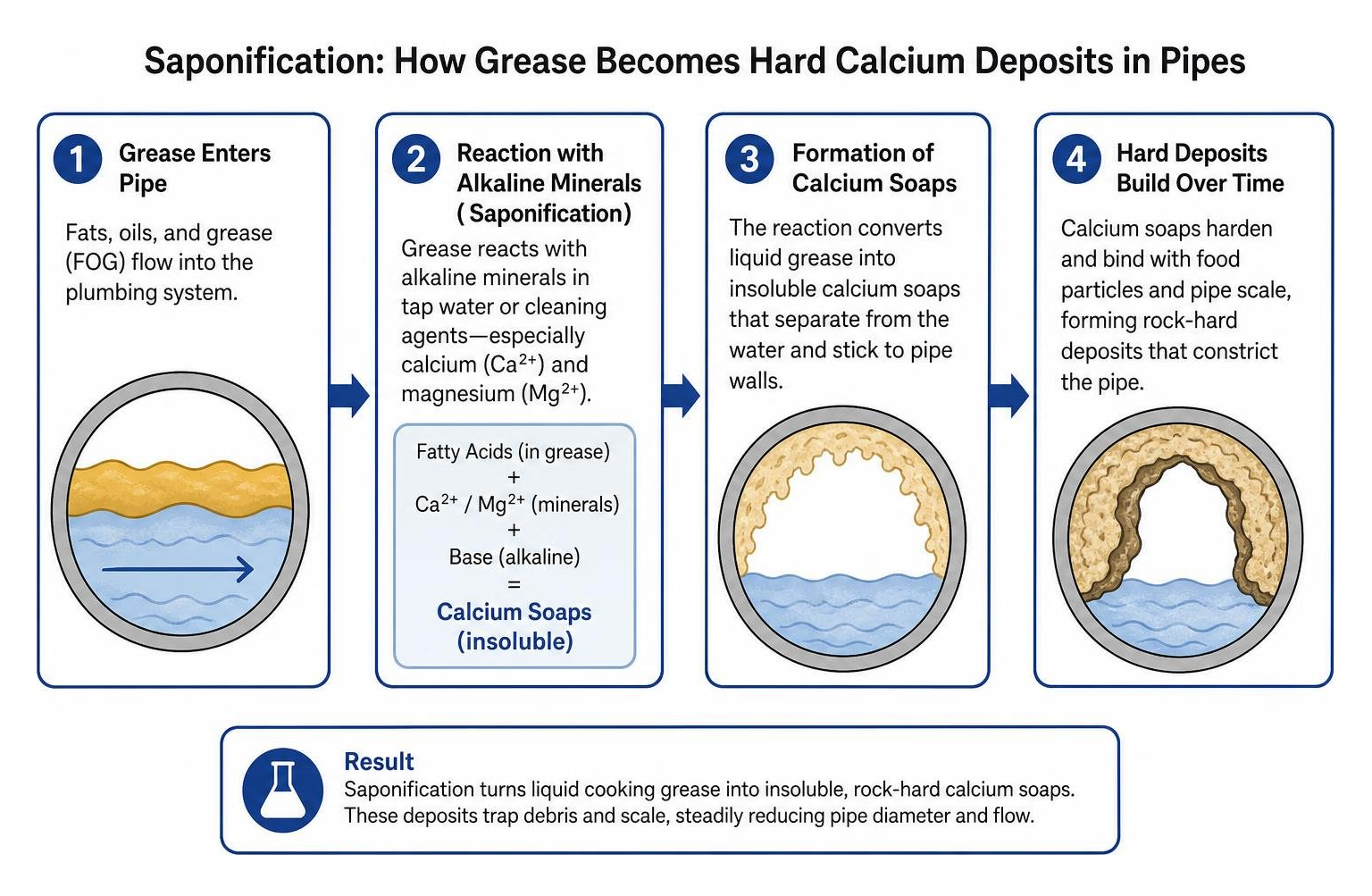
This reaction effectively converts liquid cooking grease into insoluble, rock-hard calcium soaps. Over time, these hardened soapy crusts bind with non-biodegradable solids and pipe scale, forming stubborn masses that cannot be resolved with basic plunging or store-bought drain treatments.
The Thermal Science Behind FOG Solidification
Understanding how lipids behave inside drainage infrastructure clarifies why conventional disposal habits often fail. Cooking oils and rendered animal fats typically exit frying pans and cookware at temperatures ranging from 200°F to 400°F. At these elevated thermal levels, grease behaves as a low-viscosity liquid.
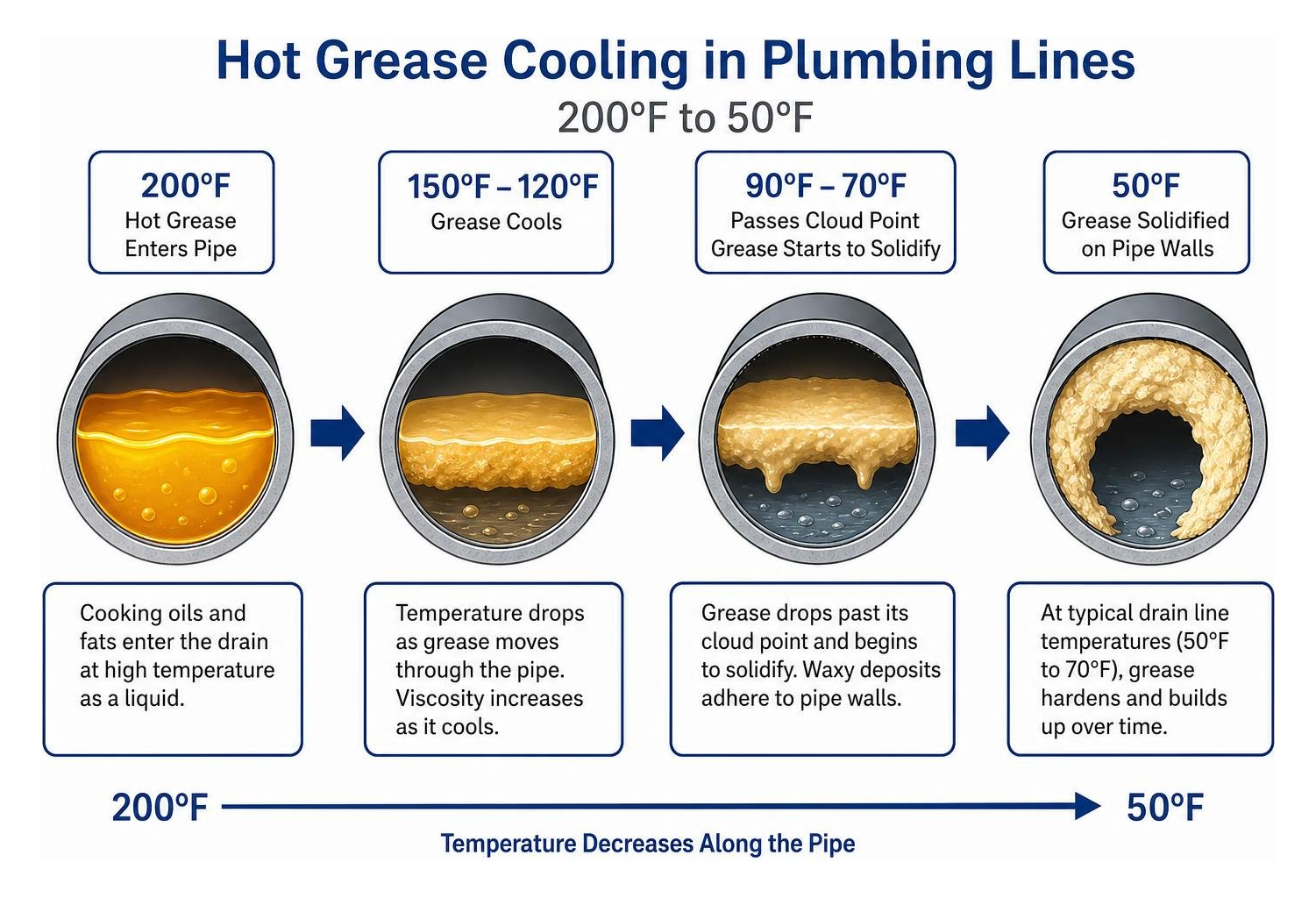
However, subterranean drainage lines under homes in Salem, Windham, and Bedford typically maintain temperatures between 50°F and 70°F. Once hot grease enters the drainage network, rapid thermal dissipation takes place. Within 10 to 50 feet of entering the fixture, the liquid drops past its cloud point, the temperature at which fats solidify into semi-solid waxy deposits. Early attention to drainage changes can also help prevent the conditions that lead to costly residential plumbing leaks and broader property damage.
The Hot Water and Dish Soap Disposal Fallacy
A widespread household misconception is that running hot tap water alongside a squirt of liquid dish soap allows melted grease to wash safely out of the plumbing system. If hot water and dish soap do not restore normal flow, our drain cleaning service can address the buildup before it progresses into a more disruptive blockage.
While hot water and surfactants temporarily emulsify surface fats near the sink drain, that hot water cools within seconds inside underground lateral lines. The surfactant dilutes, the emulsion breaks, and the lipid chains redeposit downstream, usually settling inside pipe elbows, fittings, and municipal junction points where blockages are far more difficult and expensive to extract.
Pipe Material Vulnerabilities
Pipe composition dictates how fast grease attaches to internal walls:
- Cast Iron Systems: Common in older properties throughout Hooksett, Hampstead, and Auburn, cast iron suffers from internal tuberculation and roughness. This textured, corroded surface provides high friction, giving cooling fats an ideal substrate for rapid physical adhesion.
- PVC and ABS Plastics: While modern smooth-walled plastics resist corrosion, hydrophobic attraction still allows lipid films to bind to the pipe wall. Once an initial film attaches, subsequent debris catches onto the sticky layer.
Step-by-Step Guide to Removing Kitchen Grease Clogs
When a drain line develops a partial or total grease restriction, taking a structured approach prevents further pipe damage. If repeated clogs raise concerns about a damaged line, our water leak detection and repair service can help identify related plumbing issues.
DIY Clearing: Heat, Surfactants, and Biological Enzymes
For minor, localized kitchen sink sluggishness, you can attempt safe physical and biochemical remedies:
- Step 1: Boiling Water Flush
Bring at least half a gallon of water to near-boiling. Pour it slowly and directly down the drain opening in steady stages to soften pliable outer lipid layers. - Step 2: Surfactant Emulsification
Follow immediately with several ounces of grease-cutting liquid dish detergent, then introduce another half gallon of hot water. The surfactant helps encapsulate grease particles so they remain suspended in water. - Step 3: Mechanical Plunging
Cover the sink overflow opening with a damp rag to seal air pressure. Place a flat cup plunger directly over the drain, ensuring a tight perimeter seal, and apply sharp, rhythmic plunges to disrupt softened grease plugs. - Step 4: Biological Enzyme Treatments
Unlike caustic chemicals, enzyme-based bio-cleaners digest fats, proteins, and starches naturally without corroding metal or melting plastic. Apply an enzymatic treatment before going to bed, allowing the biological agents to work undisturbed overnight.
Professional Remediation: Hydro Jetting and Pipe Cleaning
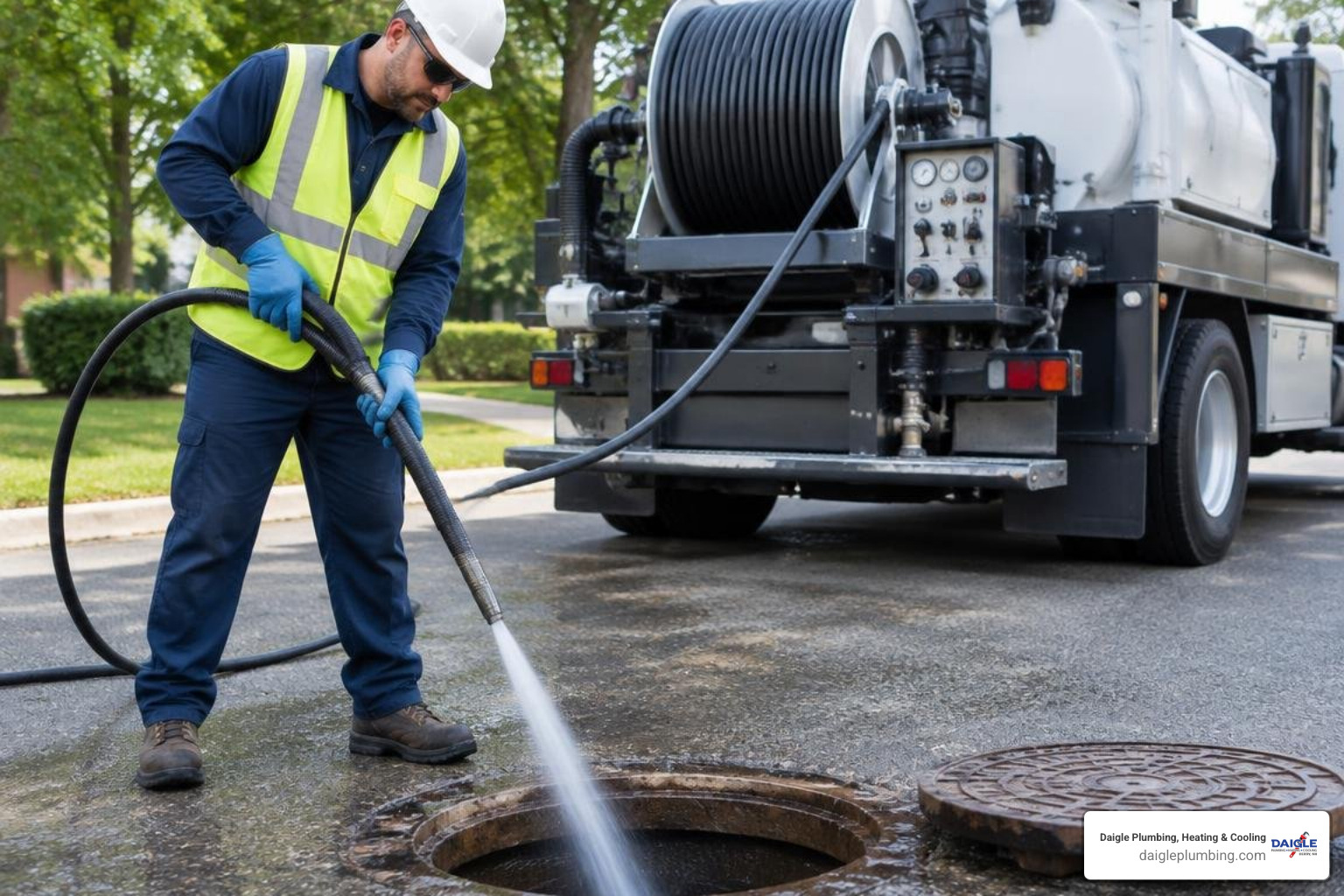
When hardened grease formations or saponified calcium scales settle deep within drainage lines, do-it-yourself strategies will not restore original pipe diameter. In these situations, professional mechanical cleaning is often necessary to restore reliable drainage.
Professional plumbing teams utilize commercial hydro jetting equipment that scours the complete interior perimeter of the pipe. Standard cold water jetting operates at 3,000 to 4,000 PSI, while heated hydro jetters project water at 150°F to 180°F. The combination of intense thermal energy and targeted hydraulic scouring shears grease away from pipe walls, completely washing it through the system without damaging pipe integrity.
Long-Term FOG Prevention and Maintenance Protocols
Preventing drain accumulation requires consistent source control habits alongside regular mechanical servicing. A typical single-family household produces 1 to 5 pounds of grease per month, whereas commercial dining establishments routinely generate 20 to 200+ pounds each week. Keeping kitchen plumbing in top shape also includes maintaining kitchen fixtures and sink faucets so drainage and water delivery remain dependable throughout the home.
| Management Practice | Residential Kitchens | Commercial Kitchens |
|---|---|---|
| Primary Disposal Method | “Cool, Can, and Trash” protocol | External rendering bins / recycling drums |
| Interception Mechanism | Fine-mesh sink basket strainers | Sized grease traps and interior interceptors |
| Typical Grease Output | 1–5 lbs per month | 20–200+ lbs per week |
| Cleaning Frequency | Monthly hot flushes / periodic enzymes | Pumping based on the 25% Rule (monthly/quarterly) |
| Professional Servicing | As-needed hydro jetting / CCTV inspection | Scheduled maintenance, hydro jetting, and lining |
Best Practices to Prevent Grease Buildup in Pipes
Simple daily habits stop lipids before they enter your plumbing:
- Cool, Can, and Trash: Pour warm cooking grease into an empty metal can, heat-safe glass jar, or disposable container. Allow it to cool and solidify fully before tossing it into your regular household trash.
- Scrape Plates Thoroughly: Use a rubber spatula or paper towel to wipe greasy pans, skillets, and dishware into the garbage before washing them in the sink or loading the dishwasher.
- Install Fine-Mesh Strainers: Keep fine-mesh drain strainers inside all sink basins to catch small food scraps that might otherwise bind with trace grease films.
- Monthly Preventative Flushes: Flush drains once a month with hot water and dish soap to keep minor surface films from consolidating into rigid scale.
Commercial Kitchen Protocols and the 25 Percent Rule
Commercial kitchens operating in Merrimack, Hudson, and Londonderry must comply with strict municipal grease disposal standards. High-volume operations depend on properly maintained grease traps and interceptors to capture waste. Even modern, high-efficiency grease interceptors catch 85% to 95% of incoming FOG, meaning 5% to 15% still enters building sewer lines.
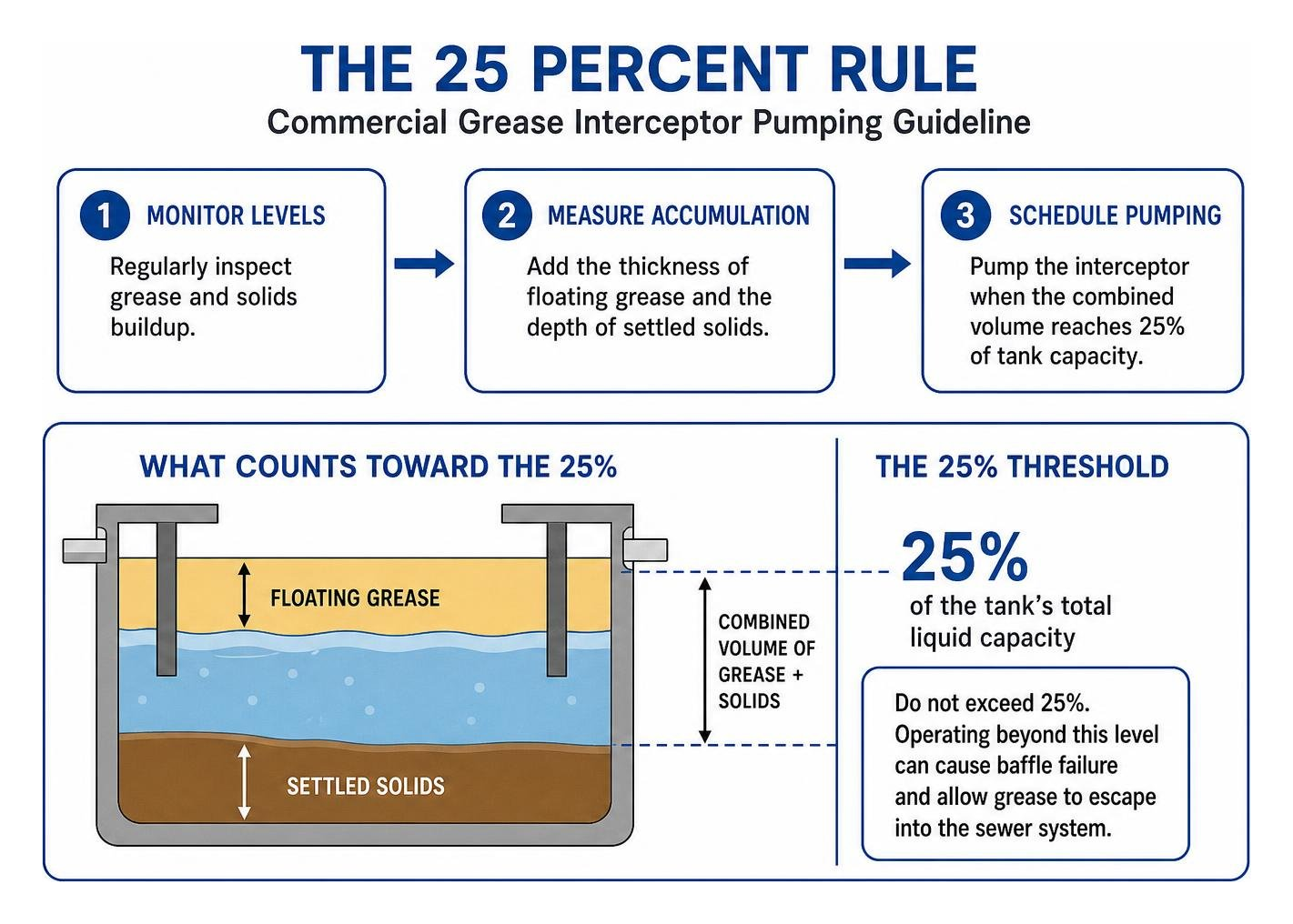
Under the standard 25 Percent Rule, a grease interceptor must be pumped whenever the combined volume of floating grease and settled solids reaches 25% of the tank’s total liquid capacity. Operating beyond this 25% threshold causes baffle failure, allowing raw grease to surge into sewer lines. For commercial operations, commercial kitchen grease trap maintenance helps prevent interceptor overload and protect downstream sewer lines.
Frequently Asked Questions About Grease in Drains
Will vinegar and baking soda melt grease clogs?
No. While combining baking soda (sodium bicarbonate) and vinegar (acetic acid) creates a fizzing reaction, it lacks the surfactant properties and thermal energy required to dissolve dense lipid chains. The mild bubbling action may loosen light surface debris, but it will not break down or melt solidified, saponified grease deposits.
Is chemical drain cleaner effective on solidified grease?
Chemical drain cleaners containing sodium hydroxide or sulfuric acid are dangerous and often counterproductive. While caustic cleaners generate heat, they can trigger saponification inside the pipe, turning fatty acids into hardened soap blocks that are tougher to dislodge than the original grease. Furthermore, the extreme heat and corrosive chemicals can warp PVC joints and eat through aging cast iron pipes.
How do I know if my clog is grease or a main line issue?
If a single kitchen sink is draining slowly while the rest of your home fixtures run normally, the blockage is typically isolated to the kitchen sink branch line and is likely caused by grease or food waste. If toilets gurgle, tubs back up when the washing machine drains, or multiple fixtures across your home drain slowly at the same time, the restriction is located down in your main sewer lateral.
Conclusion
Ignoring the early signs of grease accumulation in your plumbing lines leads to sluggish sinks, foul odors, and severe sewer line backups. Whether you are managing residential kitchen lines or handling commercial wastewater compliance, taking a proactive approach with proper disposal habits and timely mechanical cleanings protects your property.
The team at Daigle Plumbing, Heating & Cooling brings over four decades of hands-on plumbing and HVAC experience to homeowners and businesses throughout Derry, Salem, Manchester, Nashua, Bedford, and surrounding New Hampshire communities. If slow drains, bubbling sounds, or persistent kitchen odors are affecting your home, contact our professional drain cleaning technicians to restore clean, reliable drainage throughout your system.