Checking for Gas Leaks Starts With a Safe Exit
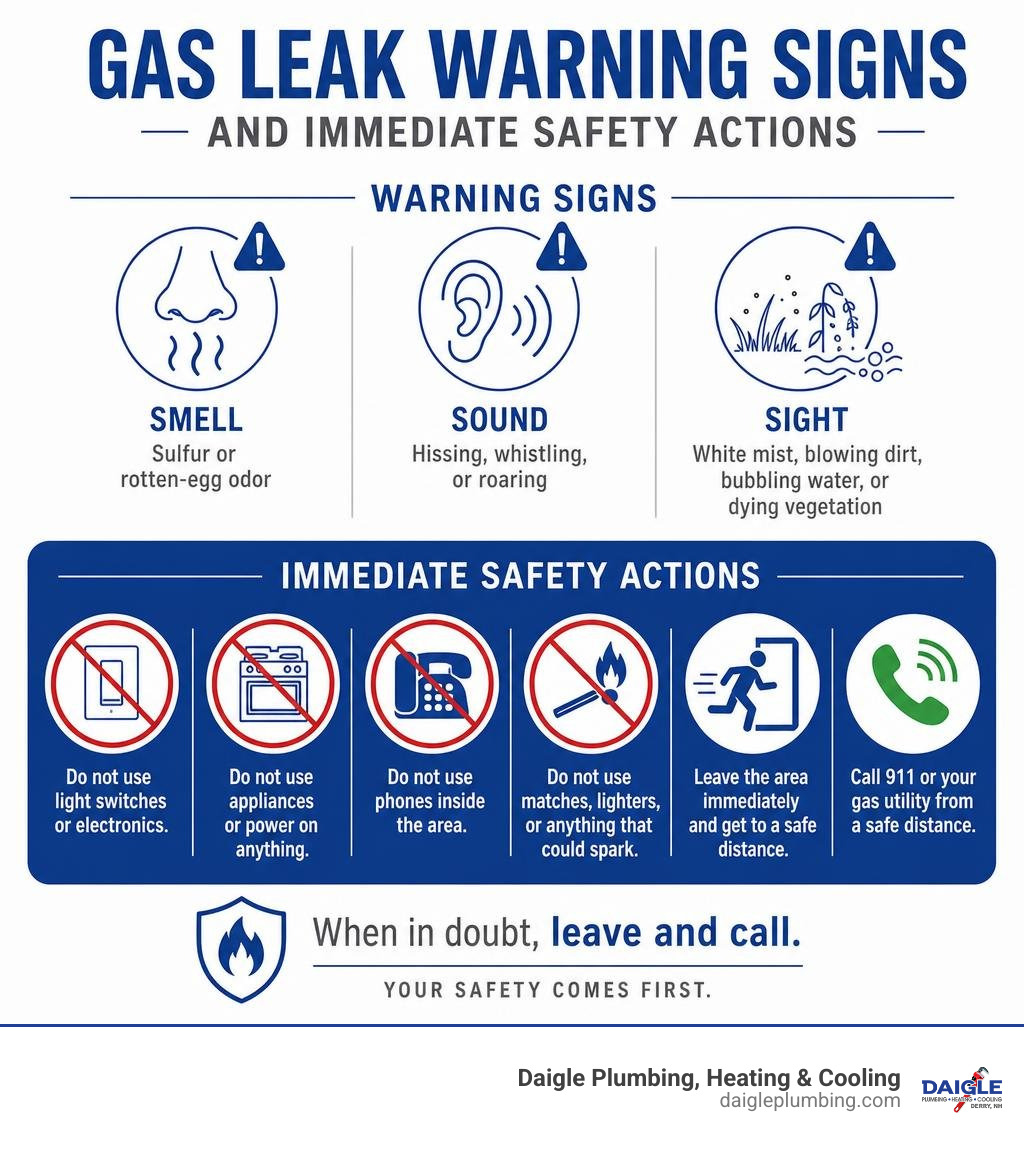
Checking for gas leaks begins with recognizing the warning signs and treating every suspected leak as urgent. If you smell rotten eggs, hear hissing, or see blowing dirt, dead plants, or bubbles in standing water, leave the area right away and call 911 or your gas utility from a safe distance.
- Smell: A sulfur or rotten-egg odor added to natural gas.
- Sound: Hissing, whistling, or roaring near a pipe, meter, or appliance.
- Sight: A white mist, blowing dirt, bubbling water, or dying vegetation near a gas line.
- Safety rule: Do not use switches, appliances, phones, matches, or anything that could create a spark inside the suspected leak area.
Natural gas is colorless and naturally odorless, so utilities add mercaptan to help people notice a leak. Still, odor can fade in some conditions, which is why smell is not the only sign worth taking seriously.
At Daigle Plumbing, Heating & Cooling, our operations and service teams combine hands-on HVAC and plumbing experience to help homeowners make safer decisions around gas appliances and piping. We approach checking for gas leaks with one priority: protect your home and everyone in it before a small issue becomes a major emergency.
How to Identify Signs of a Fuel Line Leak
Recognizing a natural gas leak quickly can protect your family and property. Natural gas is an efficient, popular energy source used for home heating, water heaters, and cooking across New Hampshire communities like Derry, Salem, and Manchester. However, because natural gas is highly combustible, any uncontained leak creates an extreme safety hazard.
Learning how fuel leaks present themselves indoors and outdoors is the first line of defense. By understanding how your senses detect gas escaping from a fitting, meter, or buried pipe, you can react appropriately long before dangerous levels build up.
Detecting Mercaptan Odor and Odor Fade
In its raw state, natural gas is completely colorless and odorless. To make leaks noticeable to humans, utility providers mix in a harmless chemical odorant called mercaptan (specifically methanethiol). Mercaptan gives gas its distinctive, highly recognizable smell, which most people describe as rotten eggs, skunk spray, or sulfur.
While mercaptan is an effective warning agent, you cannot rely exclusively on your nose. A physical phenomenon known as odor fade can reduce or strip away this smell. Odor fade happens when the chemical odorant reacts with new steel or iron pipe walls, absorbs into damp soil around buried lines, or breaks down due to rust, moisture, or chemical reactions inside gas lines. Low gas flow rates can also make the smell faint. If you suspect a problem but only catch a slight scent, do not wait for the odor to get stronger. Treat any sudden scent of sulfur as an urgent issue.
Auditory and Visual Leak Indicators
When gas escapes under pressure from a pipe fitting, flex hose, or control valve, it produces distinct sound waves and physical disruptions. Indoors, a damaged connector or loose pipe valve often creates a sharp hissing or whistling sound. Outdoors, high-pressure line breaks can generate loud roaring sounds near meters or buried pipes.
Visual clues are equally revealing, especially outdoors or in wet basements. Underground natural gas line leaks often cause:
- Unexplained dirt or dust blowing upward from dry ground.
- Persistent bubbling in puddles, flooded crawlspaces, or standing water.
- Patches of dead, brown, or dying lawn and vegetation directly above buried pipe runs.
- Unusual white mist or fog hovering near ground level over outdoor pipelines.
If you observe these signs around your property while performing outdoor maintenance or inspecting your basement, you may be dealing with gas escaping into surrounding soils or air. When plumbing issues coincide with structural dampness, professional water leak detection and repair services clarify whether water or gas infrastructure is causing localized damage.
Physical Symptoms in Humans and Pets
As natural gas fills an enclosed room, it displaces oxygen. Breathing air with elevated gas concentrations deprives your blood of oxygen, leading to immediate physiological warning signs in people and domestic animals.
Common physical symptoms include:
- Sudden lightheadedness, dizziness, or severe headache.
- Unexplained nausea, vomiting, or chest tightness.
- Fatigue, drowsiness, or breathing difficulties.
- Unexpected eye irritation, nose discomfort, or throat burning.
Pets often show symptoms long before human family members notice them. Birds, cats, and small dogs are particularly vulnerable to chemical shifts in home air quality, exhibiting restlessness, difficulty breathing, or collapse.
It is also vital not to confuse gas leak symptoms with carbon monoxide poisoning. Natural gas leaks stem from raw unburned fuel escaping a pipe, whereas carbon monoxide forms when gas burns improperly inside a furnace or boiler. Following proven recommendations to heat your home safely this winter with carbon monoxide safety tips protects your household against both distinct environmental hazards.
Safe Step-by-Step Methods for Checking for Gas Leaks
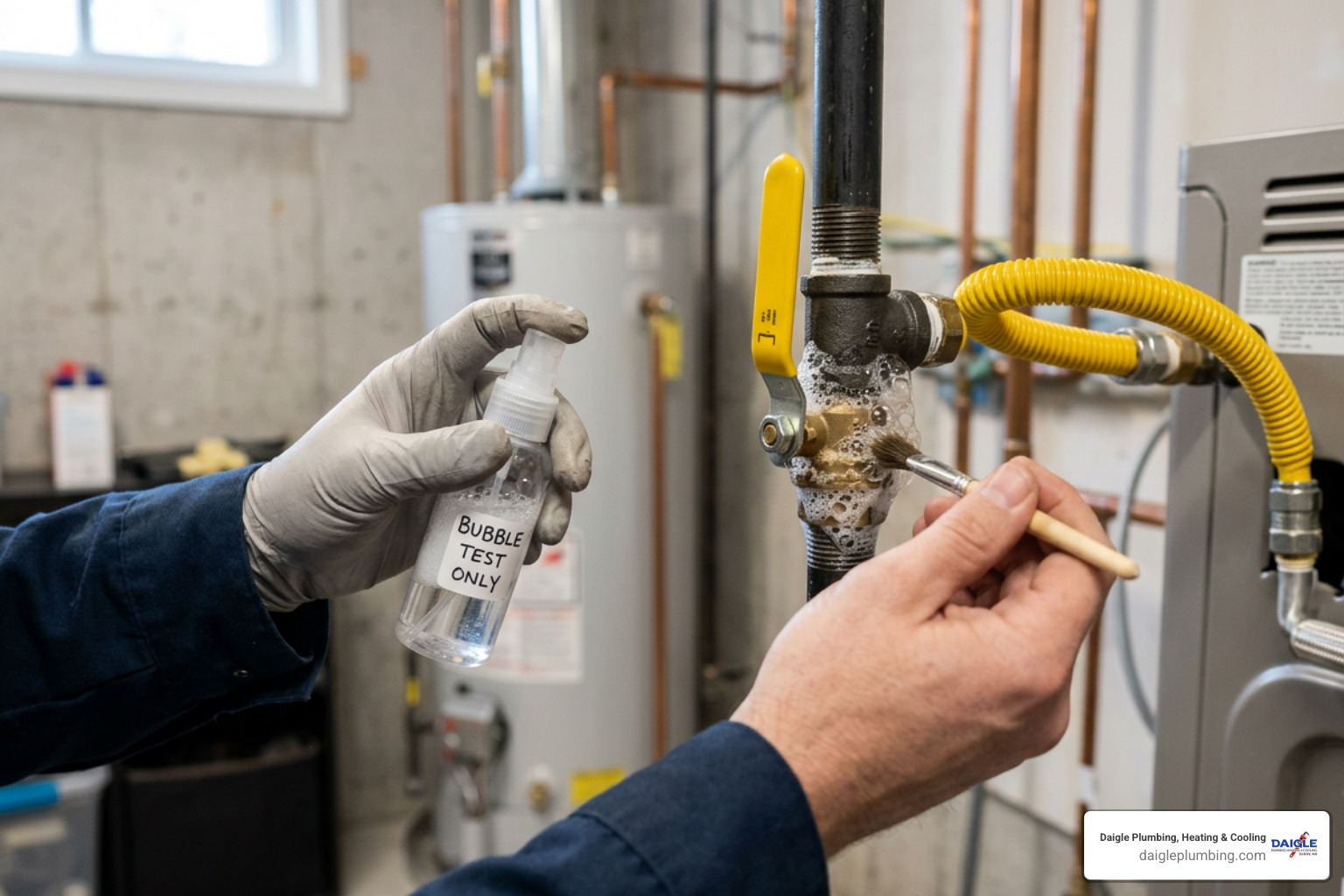
When you suspect a very minor gas odor near a stove joint, gas water heater, or furnace connection, specific non-sparking test methods allow you to confirm whether a fitting is loose. However, if you smell a heavy gas odor or hear loud hissing, skip testing entirely and evacuate immediately.
Using the Soap-and-Water Bubble Test When Checking for Gas Leaks
The soap-and-water bubble test is a classic, effective diagnostic method used by homeowners and HVAC professionals alike. It works by applying a liquid mixture over pipe joints, flex hose nuts, and shutoff valves. Escaping gas pushes through the liquid film, creating visible bubbles.
Here is a simple process to test fittings safely:
- Mix the Solution: Combine 1 teaspoon of standard mild liquid dish soap with 1 cup of clean water in a small container or spray bottle. Mix gently without creating excessive suds.
- Expose the Connection: Gently wipe dust or grease off the gas pipe fitting, flex connector, or appliance valve.
- Apply the Liquid: Use a clean paintbrush, sponge, or spray bottle to apply a liberal coat of the soapy water around the entire circumference of every joint or threaded fitting.
- Observe the Reaction: Watch the applied liquid closely for 1 to 2 minutes.
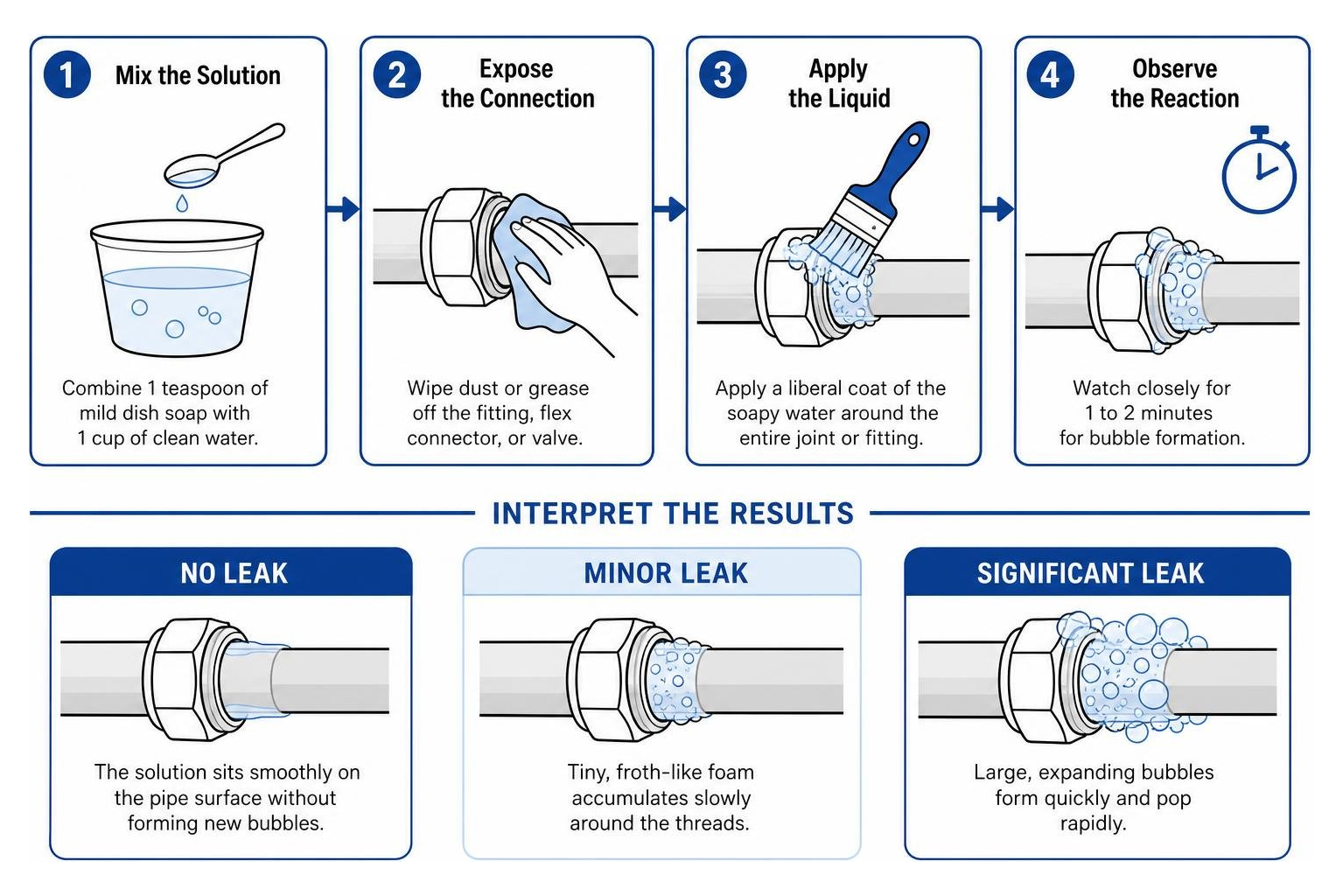
- No leak: The solution sits smoothly on the pipe surface without forming new bubbles.
- Minor leak: Tiny, froth-like foam accumulates slowly around the threads.
- Significant leak: Large, expanding bubbles form quickly and pop rapidly.
If expanding bubbles appear, turn off the appliance gas shutoff valve immediately if it is safe to do so. Minor concerns around water heating equipment call for a clear understanding of safety shutoffs and fuel line interactions, which are covered in these gas water heater troubleshooting tips.
Checking for Gas Leaks on Gas Stoves and Appliances
Gas ranges, ovens, space heaters, and gas furnaces are common indoor source points for minor fuel leaks. Checking a gas stove involves inspecting the supply hose connections, burner valves, and pilot assemblies.
Start by examining burner performance:
- Blue Flame: A healthy burner flame burns crisp, clear, and steady blue. This indicates complete combustion and proper air-to-fuel balance.
- Yellow or Orange Flame: A weak, lazy flame with yellow or orange tips signifies incomplete combustion. While this does not always mean a raw gas leak, it indicates dirty burners or improper air shutter settings that produce soot and hazardous carbon monoxide.
Older stoves with standing pilot lights can release unburned fuel if the pilot flame blows out repeatedly without the safety valve closing properly. In addition, internal control valves behind stove knobs contain specialized high-viscosity grease. Over decades, this grease can dry out, allowing micro-leaks known as “ghost leaks.” These micro-leaks emit tiny amounts of mercaptan smell near the control panel even when burners are turned off.
When heating equipment shows signs of fuel delivery issues or faulty seals, a detailed furnace gas valve troubleshooting and replacement guide explains how certified technicians evaluate and replace unsafe components.
Electronic Gas Detectors vs Carbon Monoxide Alarms
Many homeowners assume that standard carbon monoxide (CO) alarms automatically detect natural gas leaks. This is a dangerous misconception. CO detectors are engineered specifically to measure carbon monoxide gas produced by incomplete fuel combustion. Standard CO detectors cannot detect unburned methane or propane.
To detect raw natural gas leaks electronically, you need a dedicated combustible gas detector certified under Underwriters Laboratories (UL) Standard 1484.
| Feature | Carbon Monoxide (CO) Detector | Electronic Combustible Gas Detector |
|---|---|---|
| Primary Target Gas | Toxic carbon monoxide ($CO$) from burning fuel | Unburned methane ($CH4$), propane ($C3H_8$), LPG |
| Detection Trigger | Chemical concentration (PPM over time) | Explosive threshold ($\le 10\%$ Lower Explosive Limit) |
| Installation Height | Eye-level or wall height (5 feet up) | Within 12 inches of ceiling (Natural gas rises) |
| Primary Purpose | Prevent silent chemical poisoning | Prevent fuel ignition, fires, and explosions |
Handheld electronic gas sniffers, such as professional semiconductor devices, feature flexible goose-neck probes and digital sensors. These devices operate across wide measurement ranges from 0 to 10,000 ppm (parts per million), allowing technicians to zero in on tiny fitting leaks behind wall panels or furnace enclosures.
Because natural gas is lighter than air, it rises quickly toward the ceiling. Residential combustible gas alarms should always be mounted high on walls, within 12 inches of the ceiling, in rooms containing gas appliances or piping.
Emergency Safety Protocols During a Suspected Leak
When dealing with natural gas, safety takes priority over diagnostic testing. If you encounter a strong sulfur smell, hear loud hissing, or experience dizziness, abandon all testing and act immediately to safeguard your household.
Immediate Actions and What NOT to Do
Natural gas requires only three elements to ignite: fuel, oxygen, and an ignition spark. A small static shock, electrical arc from a light switch, or hot surface can detonate accumulated gas.
Follow these strict emergency rules:
What TO DO Immediately:
- Evacuate every person and pet from the building instantly.
- Leave doors wide open as you exit to encourage natural airflow.
- Walk to a safe location outdoors, far away from the building structure.
- Call emergency services (911) and your local gas utility once you are safely away.
What NOT TO DO Under Any Circumstance:
- Do not touch light switches or wall outlets: Flipping a light switch creates an invisible internal electrical arc capable of igniting gas.
- Do not use phones inside: Do not use landlines or mobile phones inside the leak area; static discharge can ignite fuel vapors.
- Do not start engines or power tools: Do not start cars in attached garages or run lawn equipment near the home.
- Do not light matches, lighters, or candles: Keep all open flames away from the premises.
- Do not flip circuit breakers or operate main electrical panels: Arc flashes inside breaker boxes will ignite accumulated gas clouds.
When to Call 911 vs Your Local Gas Utility
Knowing who to call during a gas emergency prevents dangerous delays. Both 911 dispatchers and utility emergency teams play critical, complementary roles.
Call 911 if:
- You smell an overwhelming, heavy gas odor throughout the house.
- Anyone exhibits severe physical distress, lightheadedness, or breathing difficulty.
- You hear loud, aggressive roaring or hissing noises indoors or outdoors.
- Fire, smoke, or structural damage is present.
Call your Local Gas Utility Emergency Line (such as regional providers across NASHUA, BEDFORD, or HOOKSETT) if:
- You detect a faint, intermittent gas smell near an outdoor meter or gas appliance.
- You observe suspicious dead grass or soil bubbling near buried supply lines.
- Emergency responders request utility technicians to isolate service lines at the street.
Preventing Gas Leaks Through Maintenance and Outdoor Safety
Preventing gas leaks before they occur requires routine maintenance of indoor equipment and careful attention to outdoor gas infrastructure.
Outdoor Digging Safety and 811 Call Requirements
The most frequent cause of catastrophic pipeline damage nationwide is accidental puncture during outdoor excavation work. Whether you are installing a fence, planting trees, digging a pool foundation, or building a deck in Hudson or Londonderry, you must identify underground gas lines before driving tools into the soil.
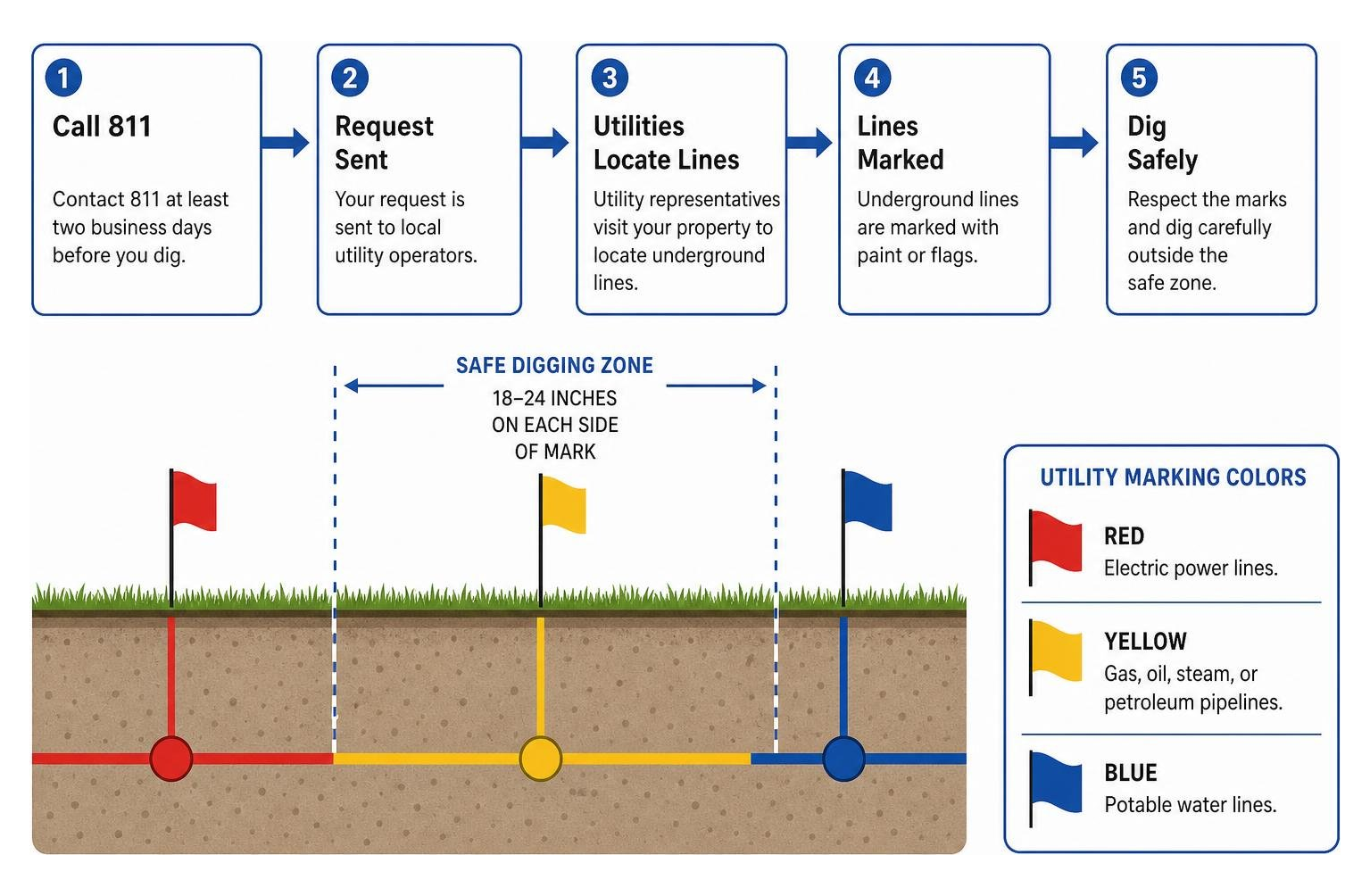
By dialing 811 (the national Call Before You Dig line) at least two business days prior to digging, utility representatives will visit your property to mark underground natural gas, electrical, and water lines with high-visibility spray paint or flags at zero cost to you.
- Red Flags/Paint: Electric power lines.
- Yellow Flags/Paint: Gas, oil, steam, or petroleum pipelines.
- Blue Flags/Paint: Potable water lines.
Once lines are marked, observe a 24-inch tolerance zone on either side of utility marks where you must avoid power equipment and excavate gently using hand shovels only. Main service lines entering residential properties are often equipped with an Excess Flow Valve (EFV). An EFV is a mechanical safety valve installed inside the underground service pipe that automatically shuts off the flow of gas if the pipe is accidentally severed or ruptured.
Maintaining Household Gas Appliances and Piping
Indoor gas safety requires ongoing care. Property owners are responsible for maintaining all gas piping downstream of the utility meter, including lines running to furnaces, boilers, water heaters, dryers, and outdoor grills.
Follow these preventive maintenance steps:
- Inspect Flexible Appliance Connectors: Older brass connectors can crack or unsolder over time. Have a licensed technician upgrade old flexible hoses to modern stainless steel connectors whenever appliances are moved or replaced.
- Clear Snow and Ice From Outdoor Meters: During NEW HAMPSHIRE winters in towns like WINDHAM, HAMPSTEAD, and AUBURN, snow and ice can accumulate on outdoor gas meters and regulator vents. Clear meters gently using a soft broom. Never strike frozen meters with metal shovels or sharp tools, which can rupture pipe fittings or crack regulator diaphragms.
- Schedule Annual Furnace Maintenance: Furnaces, boilers, and gas water heaters require annual tune-ups to clean burners, inspect heat exchangers, test safety cut-off switches, and check gas control valve seals.
- Maintain Clear Zones: Keep flammable liquids, paint, paper boxes, and cleaning chemicals at least 3 feet away from gas appliances and water heaters. In garages, water heater ignition sources must be elevated at least 18 inches above the floor to keep open flames above heavy fuel vapors.
When furnaces exhibit strange burning odors, unusual cycles, or ignition delays, scheduling timely heating repair services ensures that home heating systems operate safely throughout the winter season.
Frequently Asked Questions About Gas Leaks
Here are answers to common questions homeowners ask regarding fuel line safety, stove testing, and line ownership.
Can I use my phone inside the house if I smell gas?
No. You should never use a mobile phone, cordless home phone, or landline inside a house where you smell natural gas. Pressing buttons, receiving calls, or activating screen electronics can generate micro-sparks or static electrical discharge. Always walk completely outside and move a safe distance away from the property before making any phone calls to 911 or your gas utility company.
Why does my gas stove have an orange or yellow flame instead of blue?
A proper, safe gas stove flame burns with a sharp blue color. An orange or yellow flame indicates incomplete combustion, which occurs when gas is not receiving enough oxygen to burn cleanly. This is often caused by dirty burner ports, dust buildup, spilled food blockage, or misaligned air shutters. Incomplete combustion produces elevated carbon monoxide levels and soot. Clean your burner caps gently with warm water, and if the yellow flame persists, have a licensed technician adjust the air-to-fuel ratio.
What is the difference between utility-owned and customer-owned gas lines?
The boundary line between utility responsibility and homeowner responsibility is the gas meter. Your utility company owns, inspects, and maintains the main distribution lines under the street, the service line running to your property, and the physical gas meter itself. However, the property owner is responsible for all piping, flexible connectors, shutoff valves, and fuel lines running from the outlet side of the meter into the home, as well as lines leading to detached garages, pool heaters, and patio grills.
Conclusion
Checking for gas leaks is an essential responsibility for every homeowner. By recognizing the smell of mercaptan, listening for hissing noises, watching for outdoor soil bubbles, and using safe bubble tests on minor pipe fittings, you can protect your home against combustion risks. Whenever a significant leak is suspected, remember the most critical rule: skip all diagnostic tests, avoid touching electrical switches, evacuate immediately, and call for emergency assistance from a safe distance outdoors.
At Daigle Plumbing, Heating & Cooling, our family-owned team brings over 40 years of hands-on experience serving communities across New Hampshire, including Derry, Salem, Manchester, and Nashua. As licensed and insured experts, we offer complete peace of mind through annual safety inspections, precise fuel line piping, and responsive plumbing and heating services backed by our satisfaction guarantee.
Whether you need routine appliance maintenance, gas line installation, or trusted professional plumbing support, contact our professional gas safety specialists today to keep your home safe, warm, and secure.