What Does a New Water Heater Cost and Installation Actually Run in 2026?
New water heater cost and installation typically runs between $1,200 and $3,000 for many homeowners, but the final price depends a lot on the type of unit, your fuel source, and local labor rates. Here’s a quick snapshot:
| Water Heater Type | Typical Installed Cost (2026) |
|---|---|
| Electric tank (40-50 gal) | $1,000 – $1,800 |
| Gas tank (40-50 gal) | $1,300 – $2,400 |
| Tankless (electric) | $1,000 – $2,100 |
| Tankless (gas) | $1,500 – $4,500 |
| Heat pump / hybrid | $1,500 – $3,600 |
| Solar | $2,000 – $7,500 |
Note: Costs include the unit, standard labor, and basic permits. Additional work like gas line upgrades or fuel type conversions will add to your total.
If you already have a standard tank unit and you’re doing a straightforward replacement, you’re likely looking at about $1,200 to $1,800 for a gas or electric model. Move up to a tankless or heat pump water heater, and the upfront cost usually rises, but the potential for long-term energy savings rises too.
Many homeowners in Derry, NH are caught off guard by quotes that seem much higher than expected. That sticker shock is real. The national average cost to replace a water heater has risen significantly in recent years, driven by higher material costs, stricter local codes, and increased labor rates across the Northeast. Knowing what’s reasonable before you call a plumber puts you in a much stronger position.
At Daigle Plumbing, Heating & Cooling, we know how confusing the new water heater cost and installation can be for homeowners. In this guide, we’ll break down the real cost factors in simple terms so you can compare your options and budget with confidence.
Breaking Down New Water Heater Cost and Installation by Type
When we talk about new water heater cost and installation, the first question is always: “What kind of heater are we talking about?” In 2026, homeowners have more choices than ever, ranging from the classic “big white tank” in the basement to high-tech tankless units that look like a small suitcase mounted on the wall.
The unit price is only one part of the equation. Installation complexity varies wildly between these systems. For instance, a standard electric tank swap might take our team two hours, while a gas tankless conversion could require a full day of work, including new venting and gas line upgrades.
To make the comparison easier, we’ve broken down the main water heater options using current 2026 pricing trends. If you’re weighing different systems, our gas vs electric, tank vs tankless water heaters guide walks through the key tradeoffs. The average national cost for professional installation ranges from about $1,600 to $5,800, especially when higher-end specialty models are included.
Estimating New Water Heater Cost and Installation for Traditional Tanks
Traditional tank water heaters remain the most popular choice in New Hampshire, found in roughly 90% of households. These units store pre-heated water in an insulated tank, ready for use.
- 40-Gallon Units: Ideal for households of 2–3 people. In 2026, these units typically cost between $440 and $2,300 for the tank alone, with total installation running $1,000 to $2,500.
- 50-Gallon Capacity: The “gold standard” for a family of four. Expect the unit to cost $530 to $2,900. We often recommend upgrading from a 40 to a 50-gallon tank if you find yourself running out of hot water during back-to-back showers; the price difference is often only $50 to $150, but the comfort boost is immediate.
- Electric vs. Gas: Electric tanks are generally cheaper to buy and install (labor is often $150–$450) because they don’t require complex venting. Gas units cost more upfront (around $2,607 on average for the total job) but often have lower monthly operating costs in the Northeast.
Venting is a major cost driver for gas tanks. If you need a power-vent unit, which uses a fan to push exhaust out a side wall, expect to add $600 to $1,100 to your total. Choosing the right fit for your home is essential, so check out our guide: What Type of Water Heater is Right for You and Your Family? for more details.
Average New Water Heater Cost and Installation for Tankless Units
Tankless water heaters, or “on-demand” systems, are gaining massive traction in 2026. Instead of keeping 50 gallons of water hot all day, they flash-heat water as it flows through the unit.
The new water heater cost and installation for tankless systems is significantly higher, usually ranging from $1,400 to $5,600. Why the big jump?
- Gas Line Upgrades: Tankless gas units require a much higher BTU input than tank models. This often means we have to run a larger gas line from your meter to the unit, adding $500 to $1,200 to the bill.
- Electrical Requirements: Even gas tankless units need a dedicated electrical outlet for the control board, and electric tankless models may require a 200-amp service upgrade for your whole house.
- Venting: These units often require specialized stainless steel or PVC venting that differs from your old tank’s chimney flue.
While the upfront cost is higher, tankless units last up to 20 years (double a tank’s lifespan) and are 24% to 34% more energy-efficient. However, they aren’t without their quirks. We’ve detailed 8 Common Issues with Tankless Water Heaters to help you decide if on-demand is right for you.
Specialty Systems: Heat Pump and Solar Costs
If you are looking to maximize energy efficiency and take advantage of modern incentives, specialty systems are the way to go.
- Heat Pump (Hybrid) Water Heaters: These units pull heat from the surrounding air to warm your water. They are incredibly efficient—using up to 50% less energy than standard electric tanks. In 2026, installation typically runs $1,500 to $3,600. Under the Inflation Reduction Act, these units often qualify for a federal tax credit of 30% (up to $2,000), which significantly offsets the initial investment.
- Solar Water Heaters: These are the most expensive to install, ranging from $2,000 to $7,500. While they offer the lowest operating costs, the long “break-even” period means they are best for homeowners planning to stay in their Derry or Windham home for 15+ years.
Key Factors Influencing Your Total Installation Bill
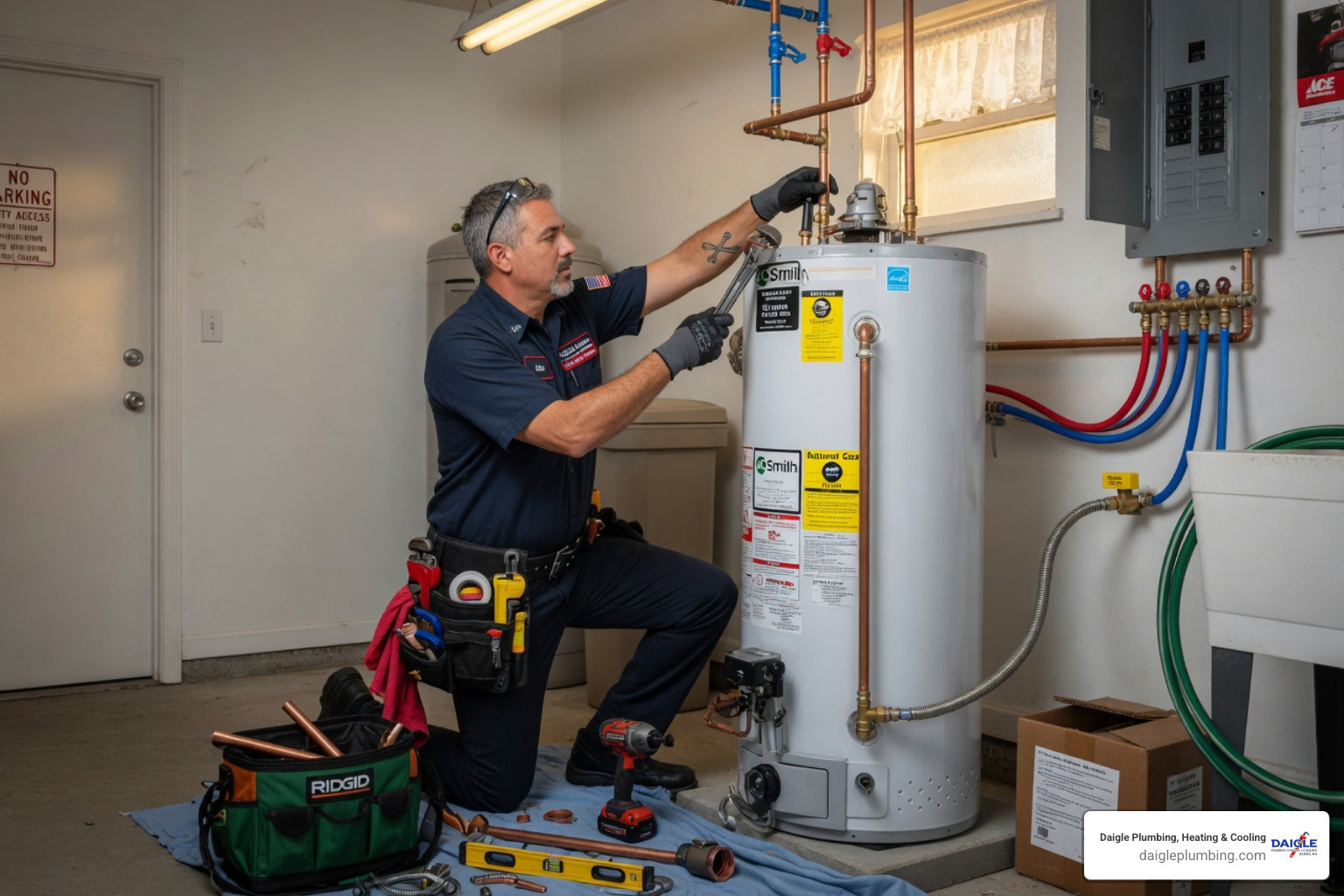
When we provide a quote for new water heater cost and installation, we aren’t just looking at the box. Several “invisible” factors dictate the final price on your invoice.
- Labor Rates: In the Northeast, professional plumbers typically charge between $75 and $200 per hour. A standard tank swap takes 2–4 hours, while a tankless conversion can take 6–10 hours.
- Permit Fees: In New Hampshire, most municipalities require a permit for water heater replacement to ensure the work meets safety codes. These usually run between $50 and $300.
- Disposal Costs: Getting rid of that old, heavy, rusted tank isn’t free. Most contractors charge $25 to $100 to haul it away and pay the recycling center fees.
- Accessibility: If your water heater is in a tight crawl space, an attic, or requires us to navigate three flights of stairs, expect an additional $100 to $400 in labor.
For a detailed look at what we offer in our local area, visit our Water Heater Installation & Repair Derry NH service page.
Regional Price Variations and Local Codes
Location matters. If you were in South Florida, you might pay 20% less than the national average. However, here in the Northeast, costs tend to be higher due to labor demand and strict building codes.
In New Hampshire, your final price can also be shaped by local code requirements. A common example is the thermal expansion tank, a small add-on installed near the water heater to manage pressure changes in the plumbing system. That upgrade often adds roughly $150 to $350. New Hampshire does not usually have the seismic strapping rules seen in some other states, but cold winters do matter. If a unit sits in an unheated basement or garage, freeze protection and proper installation become especially important.
Hidden Expenses: Lines, Valves, and Vents
The “hidden” costs are what usually cause that mid-project price jump with less experienced contractors. At Daigle, we try to catch these during the initial quote:
- Fuel Conversion: Switching from electric to gas? That’s a $1,500 to $2,300 upgrade for new lines and venting.
- Water Shutoff Valves: If your old valves are “frozen” or leaking, they must be replaced ($50–$150).
- Drain Pans: We highly recommend a $50–$150 drain pan. It’s a cheap insurance policy against a slow leak that could otherwise cause $15,000 in damage to your subfloors.
If you’re currently dealing with a puddle, you might be wondering, Why is my water heater leaking in Derry, NH? It could be a simple valve or a total tank failure.
When to Choose Repair vs. Replacement
It’s the age-old dilemma: do you patch it up or start fresh? We generally follow two rules of thumb:
- The 10-Year Rule: If your tank-style heater is over 10 years old, it’s living on borrowed time. Most last 8–12 years.
- The 50% Threshold: If a repair costs more than half the price of a new water heater cost and installation, it’s time to replace.
Sediment buildup is the silent killer of water heaters in Southern New Hampshire. Hard water minerals settle at the bottom, causing the tank to overheat and eventually crack. You can learn more about these timelines in our blog: How Often Does a Water Heater Need to Be Replaced?
Warning Signs of a Failing Unit
Don’t wait for a flooded basement to take action. Keep an eye (and ear) out for these red flags:
- Rusty Water: This usually means the internal “anode rod” has failed and the tank itself is corroding.
- Metallic Taste/Smell: A sign of internal tank breakdown.
- Rumbling or Banging: This is the sound of water boiling under a thick layer of sediment. It’s like a tea kettle at the bottom of your tank.
- Pilot Light Issues: If your gas pilot won’t stay lit, it could be a faulty thermocouple or a more serious gas valve issue ($150–$500 repair).
For a complete checklist, see The Warnings Signs You Need Water Heater Repair Solutions.
Benefits of Proactive Replacement in 2026
Replacing your unit before it bursts is almost always cheaper. Emergency service calls on a Sunday night can add 25% to 50% to your labor bill. By planning your replacement, you can:
- Shop for Sales: You have time to look for seasonal discounts or utility rebates.
- Boost Home Value: A new, high-efficiency unit is a great selling point for New Hampshire buyers.
- Prevent Catastrophe: Avoid the $5,000+ average cost of water damage restoration.
Maximizing Your Investment and Long-Term Savings
Once you’ve paid for new water heater cost and installation, you want that unit to last as long as possible.
- Warranties: Standard tanks come with 6–12 year warranties. Tankless units often go up to 20 years. Always read the fine print; some warranties are voided if you don’t perform annual maintenance.
- Annual Flushing: For just a small service fee (or a bit of your own time), flushing the sediment out once a year can add 3–5 years to a tank’s life.
- Anode Rod Replacement: Think of this as a “lightning rod” for rust. Replacing it every 3–5 years ($150–$300) prevents the tank from rusting.
Professional Installation vs. DIY Risks
We get it—the “DIY” videos make it look easy. But water heater installation involves high-voltage electricity, natural gas, and scalding water pressure. One mistake can lead to:
- Gas Leaks or Carbon Monoxide: Improper venting is a lethal risk.
- Voided Warranties: Most manufacturers require professional installation for the warranty to be valid.
- Insurance Issues: If a DIY water heater leaks and floods your house, your insurance company may deny the claim because the unit wasn’t installed by a licensed professional.
It’s simply not worth the risk. Why It’s Never a Good Idea to Delay Your Water Heater Repair Call explains why professional oversight is the safest and most cost-effective path.
Frequently Asked Questions about Water Heater Costs
How long does a new water heater typically last?
In 2026, a standard tank water heater usually lasts 8 to 12 years. Tankless models often last 20 years or more, while heat pump units typically last around 10 to 15 years. Water quality can make a big difference. In areas with hard water, mineral buildup can shorten the lifespan if maintenance is skipped. Regular care, like flushing and descaling, helps protect your investment.
What size water heater does a family of four need?
For a family of four, we almost always recommend a 50-gallon tank. This provides enough “first-hour rating” to handle morning showers and a load of laundry. If you go tankless, you need to look at “flow rate” (gallons per minute). A 5–7 GPM unit is usually sufficient for a two-bathroom home in New Hampshire.
Are there rebates available for high-efficiency models in 2026?
Yes! Between federal tax credits (Inflation Reduction Act) and local utility incentives from companies like Liberty Utilities or Eversource, you can often save between $500 and $2,500 on high-efficiency heat pump or tankless models. Always look for the Energy Star label to ensure eligibility.
Conclusion
Navigating new water heater cost and installation doesn’t have to be a headache. Whether you’re looking for a budget-friendly electric tank or a high-efficiency tankless system, the key is choosing a solution that fits your household’s demand and your long-term financial goals.
At Daigle Plumbing, Heating & Cooling, we’ve been serving the Derry, NH community for over 40 years. As a family-owned business, we pride ourselves on providing licensed, insured expertise with a satisfaction guarantee. We offer flexible financing options to make your emergency replacement manageable and special offers to keep your costs down.
Don’t wait for a cold shower to ruin your morning. Contact our water heater experts and schedule your professional water heater installation today, and let our experts ensure your home has reliable, efficient hot water for years to come.