When is a Well Pump Horsepower Upgrade Actually Necessary?
Deciding on a well pump horsepower upgrade isn’t as simple as picking a bigger engine for a truck. In the well world, horsepower (HP) represents the motor’s ability to lift water against gravity and push it into your home at a specific pressure.
There are several legitimate scenarios where we at Daigle Plumbing, Heating & Cooling recommend increasing your pump’s power:
- Household Expansion: If you’ve added two new bathrooms, a high-capacity dishwasher, or a sprawling lawn irrigation system, your old pump might struggle to keep up.
- Increased Vertical Lift: If your water table has dropped significantly over the years, or if you’ve had to deepen your well, your current pump may no longer have the “muscle” to push water to the surface efficiently.
- Static Water Level Changes: The distance from the ground surface to the water level in your well (the static level) dictates how much work the pump has to do. If this level drops, the Total Dynamic Head (TDH) increases, often requiring more HP to maintain the same flow.
To help you visualize the jump in performance, here is a general comparison of how horsepower affects flow rate:
| Pump Type | Typical HP | Average GPM (Gallons Per Minute) | Max Depth Capability |
|---|---|---|---|
| Shallow Well Jet | 1/2 – 3/4 HP | 8 – 15 GPM | 25 feet |
| Convertible Jet | 1 HP | 10 – 16 GPM | 110 feet |
| Submersible | 1/2 – 1 HP | 10 – 26 GPM | 325 feet |
| High-Capacity Submersible | 1.5 – 2+ HP | 25 – 50+ GPM | 400+ feet |
For a deeper dive into how these units are physically set up, check out our page on well pump installation and repair.
Assessing Your Well’s Natural Yield
Before you buy a 2 HP beast of a pump, you must know your well’s “yield.” This is the rate at which the aquifer refills your well. If your well only yields 5 GPM and you install a pump capable of 20 GPM, you will literally pump your well dry in minutes. This leads to “dry running,” which can melt the internal components of your brand-new pump.
We always recommend reviewing your original well driller’s logs. These documents list the sustainable production rate and the drawdown level (how far the water level drops during pumping). If your well is a low-producer, a well pump horsepower upgrade won’t give you more water; it will just give you a broken water well pump faster.
Identifying Underpowered Systems
How do you know if your current system is truly underpowered versus just broken? Look for these signs:
- Low PSI at the Faucet: If your pressure is fine for one shower but drops to a trickle when the toilet flushes, your GPM (flow) is likely insufficient for your demand.
- Friction Loss: If your home is far away from the well or sits on a hill, the water has to fight friction inside the pipes. A 3/4 HP jet pump that worked for a small cabin might fail to provide adequate pressure for a modern, multi-story home in Derry or Windham.
- Reaching the Limit: A 1 HP submersible pump is a workhorse, but it has physical limits. If your household demand exceeds 20 GPM simultaneously, you’ll feel the lag.
The Risks of Oversizing: Why More HP Can Hurt Your System
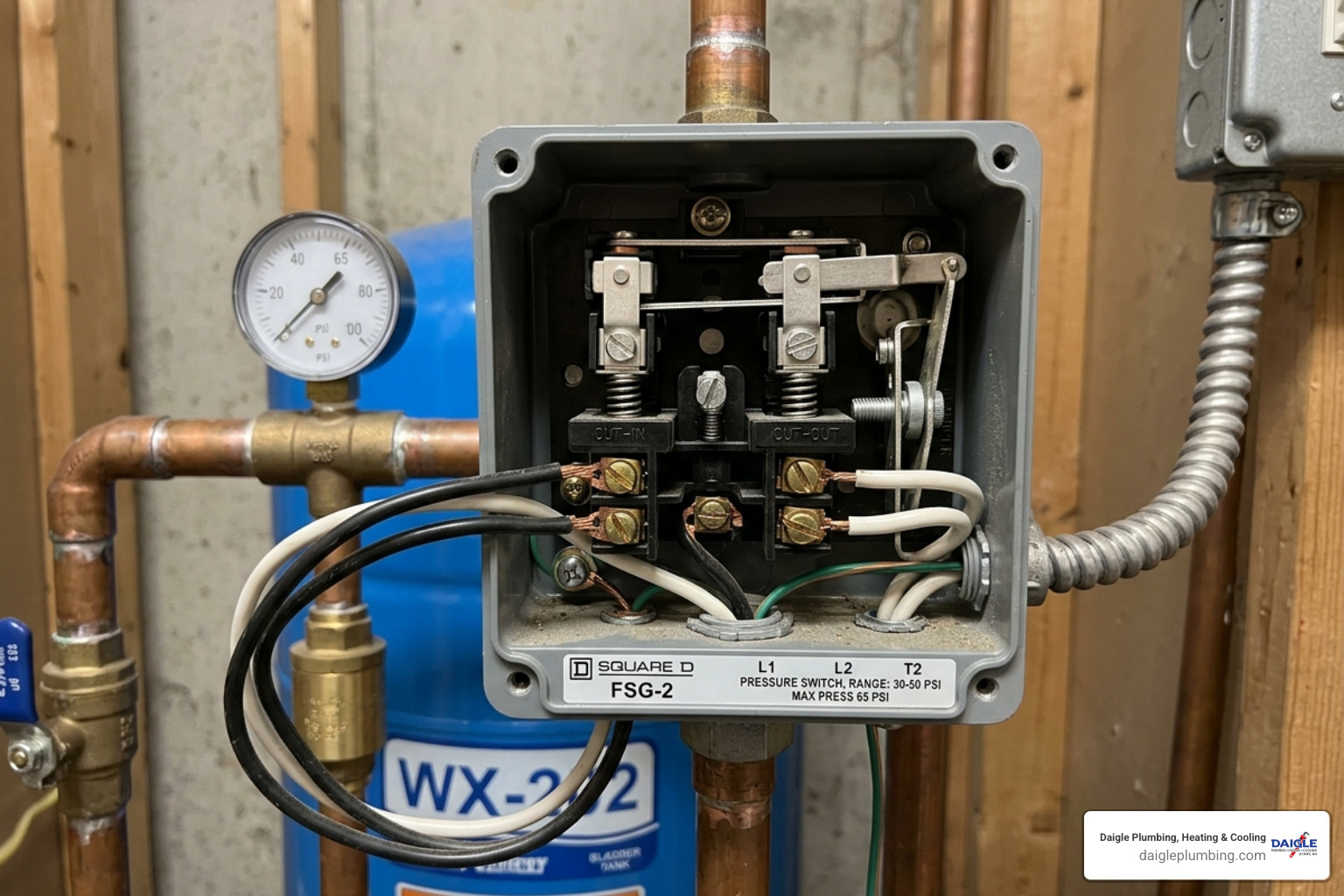
In the plumbing world, we have a saying: “Bigger is not always better.” This is especially true with well pumps. If you install a pump that is too powerful for your plumbing or your well yield, you run into several expensive problems.
The most common issue is short cycling. This happens when a high-HP pump fills your pressure tank so quickly that the motor only runs for 20 or 30 seconds before the pressure switch cuts it off. Frequent starting and stopping generates massive amounts of heat in the motor windings, leading to premature burnout.
Additionally, a pump that is too strong can create a “vortex” in the well, sucking up sediment, sand, and debris from the bottom. This grit acts like sandpaper on the pump’s impellers, grinding them down until the pump fails. You might also experience cavitation, where air bubbles form and implode against the pump components, causing physical damage.
For more on why your pump might be acting up, read our guide on well pump short cycling causes and solutions. We’ve seen many homeowners attempt to upgrade the well pump motor from 3 hp to 5 hp only to find that their electrical panel or pipe sizing couldn’t handle the jump, leading to even more repairs.
The Two-Minute Run Time Rule
To keep a well pump motor healthy, it needs to stay cool. Submersible pumps are cooled by the water flowing past the motor. For pumps larger than 1 HP, the industry standard is that the pump should run for at least two minutes every time it starts.
This allows the heat generated during the “start-up” phase to dissipate. To achieve this, your pressure tank must have enough “tidal capacity” (the amount of water it can hold between the pump turning on and off). If you upgrade to a 35 GPM pump, you would need a pressure tank drawdown of at least 70 gallons to meet the two-minute rule. Without this, your high-HP upgrade will be a short-lived investment. You can learn to properly size a well pressure tank to ensure your new pump lives a long, happy life.
Technical Considerations for a Well Pump Horsepower Upgrade
When we sit down to calculate the right pump for a home in Londonderry or Bedford, we don’t guess. We use pump curves. A pump curve is a graphical representation of how many gallons per minute a specific pump can produce at various depths (Total Dynamic Head).
The “Design Point” is the sweet spot where the pump operates at its highest efficiency. If you pick a pump that is too large, you operate on the far end of the curve, which is inefficient and puts a strain on the motor.
Some homeowners also consider converting a modular hand well pump to a motorized setup for backup use. While these systems differ from a primary house pump, the same basic rules of lift, pressure, and total head still apply.
Electrical and Plumbing Requirements for a Well Pump Horsepower Upgrade
You can’t just swap a 1/2 HP pump for a 2 HP pump and call it a day. Higher horsepower requires more “juice.”
- Wire Gauge: A larger motor draws more Amps. If your existing wire is too thin (e.g., 14-gauge instead of 10-gauge), the voltage will drop over the distance of the well, causing the motor to overheat and fail.
- Circuit Breakers: You will likely need to upgrade the breaker in your electrical panel.
- Voltage: Most small pumps run on 115V, but almost all high-HP pumps (1.5 HP and up) require 230V. This might require running new electrical lines.
- Control Boxes: If you move from a 2-wire pump to a 3-wire pump, you’ll need to install a separate control box on the wall near your pressure tank.
Before making these changes, it’s often wise to adjust your well pump pressure switch to see if a simple calibration fix solves your pressure woes without the need for new wiring.
Matching HP to Total Dynamic Head (TDH)
TDH is the “final boss” of pump sizing. It is the sum of:
- Static Head: The vertical distance from the pump to the highest fixture in the house.
- Pressure Head: The amount of “push” you want at the faucet (e.g., 50 PSI). Since 1 PSI = 2.31 feet of lift, a 50 PSI requirement adds 115 feet to your TDH.
- Friction Loss: The resistance created by water rubbing against the inside of your pipes.
If you don’t account for all three, your well pump horsepower upgrade will underperform. We’ve seen cases where a homeowner buys a powerful pump but uses old, narrow 3/4-inch piping, which creates so much friction that the pressure at the shower is still terrible. This is also a good time to check if your tank is failing, as what happens when a well pressure tank goes bad often mimics the symptoms of an underpowered pump.
Alternatives to a Well Pump Horsepower Upgrade
Before you commit to the cost of a new pump and electrical work, consider these alternatives that often solve “low pressure” problems more effectively:
- Larger Pressure Tanks: This is our favorite “hack.” By increasing the size of your tank, you store more pressurized water. This means you can run the shower, the laundry, and the dishwasher at the same time using stored energy, rather than relying solely on the pump’s GPM.
- Booster Pumps: If your well is healthy but your house is tall, a small booster pump installed inside the home can “kick” the pressure up for the upper floors without needing to pull the deep well pump.
- Constant Pressure Systems (VFD): A Variable Frequency Drive (VFD) acts like a cruise control for your pump. Instead of being “all on” or “all off,” it slows the motor down or speeds it up based on demand. This provides “city-like” constant pressure and is much easier on your plumbing.
Optimizing Storage with Larger Pressure Tanks
A larger tank doesn’t just give you more water; it protects your investment. By increasing the “drawdown volume,” you ensure the pump stays off longer between cycles. This is the best way to prevent waterlogged pressure tank issues.
If you have a large family in Nashua or Manchester, upgrading to a 119-gallon tank (or manifolding two 80-gallon tanks together) can provide a massive boost in usable water during peak morning hours without ever touching the pump horsepower.
Frequently Asked Questions about Well Pump Sizing
Will a higher HP pump last longer?
Not necessarily. In fact, if the pump is oversized for the well’s yield or the pressure tank’s size, it will die much sooner due to short cycling and heat stress. A correctly sized 1/2 HP pump will outlast an incorrectly sized 2 HP pump every time.
How do I know my well’s GPM limit?
The only way to be 100% sure is a professional yield test. We use specialized equipment to measure how much the water level drops while pumping at a specific rate. This ensures we never install a pump that “outruns” the aquifer.
Can I change from a jet pump to a submersible?
Yes, and we often recommend it! Submersible pumps are more efficient, quieter (since they are 200 feet underground), and they don’t require priming. While the initial installation is more involved, the long-term energy savings and pressure consistency are usually worth the switch.
Conclusion
At Daigle Plumbing, Heating & Cooling, we’ve spent over 40 years helping our neighbors in Derry, Salem, and throughout New Hampshire navigate the complexities of well water. We know that a well pump horsepower upgrade sounds like a simple fix, but the “Bigger is Better” mentality can lead to burned-out motors and dry wells.
Whether you’re in Hudson, Merrimack, or Hampstead, our team of licensed and insured experts is here to perform a total system evaluation. We don’t just sell you a pump; we design a water solution that fits your home’s specific needs and your well’s natural capacity. With our satisfaction guarantee and decades of local experience, you can trust us to get the water flowing—and keep it flowing.
Ready for better water pressure? Contact us today for professional well pump services in Derry, NH and the surrounding areas!