What Are Heating Services and Which One Do You Need?
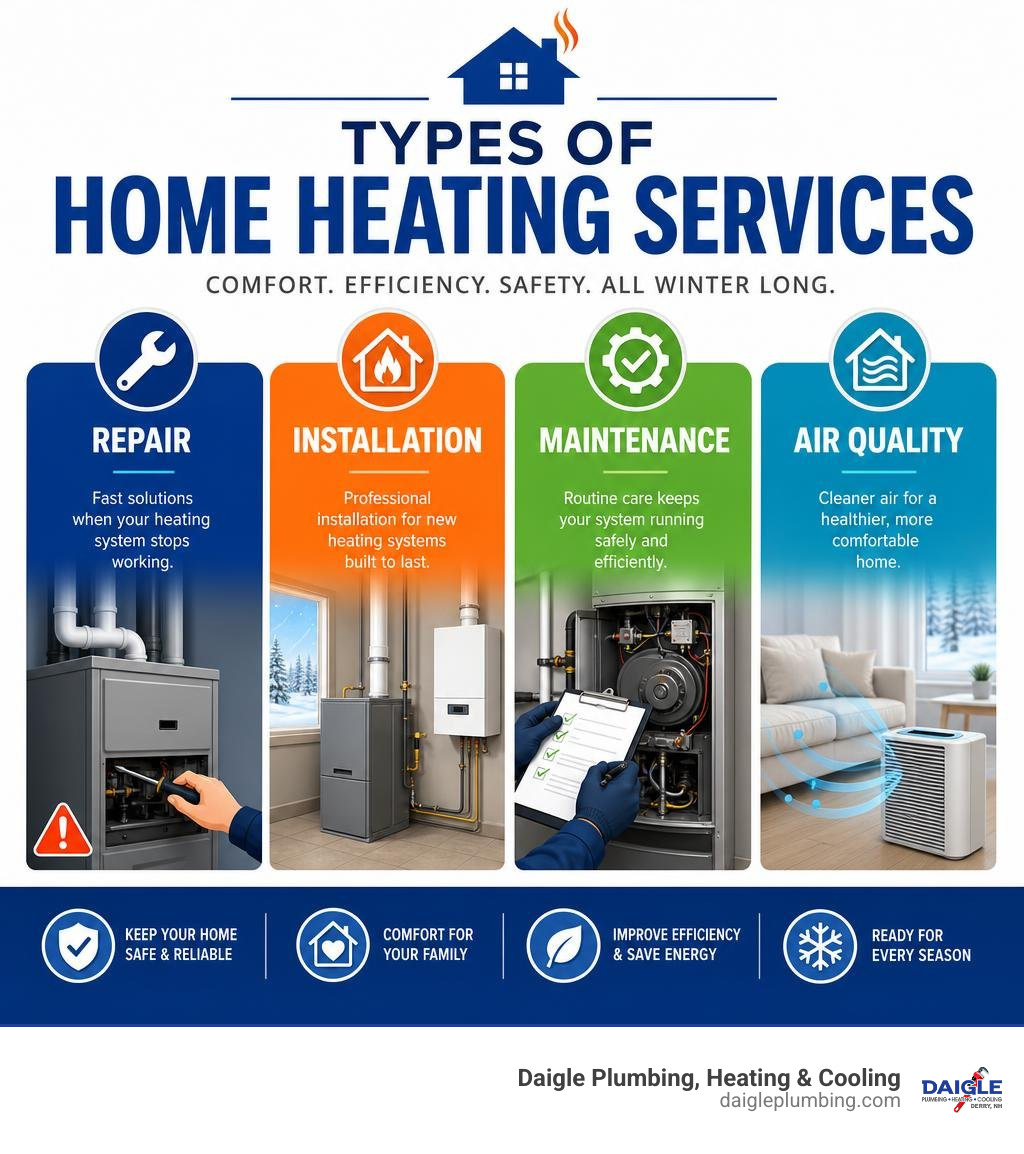
Heating services cover everything a homeowner might need to keep their system running safely through a New Hampshire winter. Here’s a quick look at the main types:
| Service Type | What It Covers | When You Need It |
|---|---|---|
| Urgent Repair | Quick response | Furnace stops working mid-winter |
| System Installation | New furnace, boiler, or heat pump | Old system failing or inefficient |
| Replacement | Full system swap | System over 15 years old |
| Annual Maintenance | Tune-up, cleaning, safety check | Every fall before heating season |
| Indoor Air Quality | Filter checks, carbon monoxide testing | Poor air, unexplained health symptoms |
| Specialized Upgrades | Oil-to-gas conversions, zoning systems | Upgrading fuel source or comfort control |
New Hampshire winters are unforgiving. When your furnace goes out on a January night, every hour without heat matters. The difference between a minor repair and a full system failure often comes down to one thing: how well your heating system has been maintained and whether you know who to call when things go wrong.
Most homeowners don’t think about their heating system until something breaks. But a poorly maintained furnace doesn’t just fail unexpectedly. It can also circulate dust and allergens, drive up energy bills, and in serious cases, create dangerous carbon monoxide risks.
This guide walks you through the most important heating services available to Derry, NH homeowners, so you can make smart decisions before, during, and after heating season.
At Daigle Plumbing, Heating & Cooling, our licensed HVAC team brings decades of hands-on heating experience to every repair, installation, maintenance visit, and safety recommendation. That team-focused experience shapes how we help local homeowners keep their homes comfortable, efficient, and safe.
1. Urgent Heating Services for Sudden Breakdowns
A no-heat situation can move from uncomfortable to risky quickly during a Southern New Hampshire cold snap. If your furnace stops running, your home may lose heat fast, and freezing temperatures can put plumbing at risk. The safest next step is to contact a qualified heating technician promptly, especially if you notice unusual noises, weak airflow, repeated shutdowns, or signs that the system is not operating safely.
That is why urgent heating services are designed for prompt response when heating problems cannot wait. When you need help quickly, clear symptoms like uneven heat, strange noises, short cycling, or a system that will not turn on can help a technician diagnose the issue and recommend the safest next step without overstating service availability.
Whether your furnace has completely shut down or is struggling to maintain a basic level of warmth, professional heating system repair in Derry, NH can help protect your family and your property when fast diagnosis matters most.
Identifying When You Need Urgent Heating Services
How do you know when a heating issue needs prompt attention rather than waiting for a regular appointment? While a total lack of airflow is an obvious sign, other warning signs are more subtle but still serious enough to contact a qualified heating technician as soon as possible.
Keep an eye out for these critical indicators:
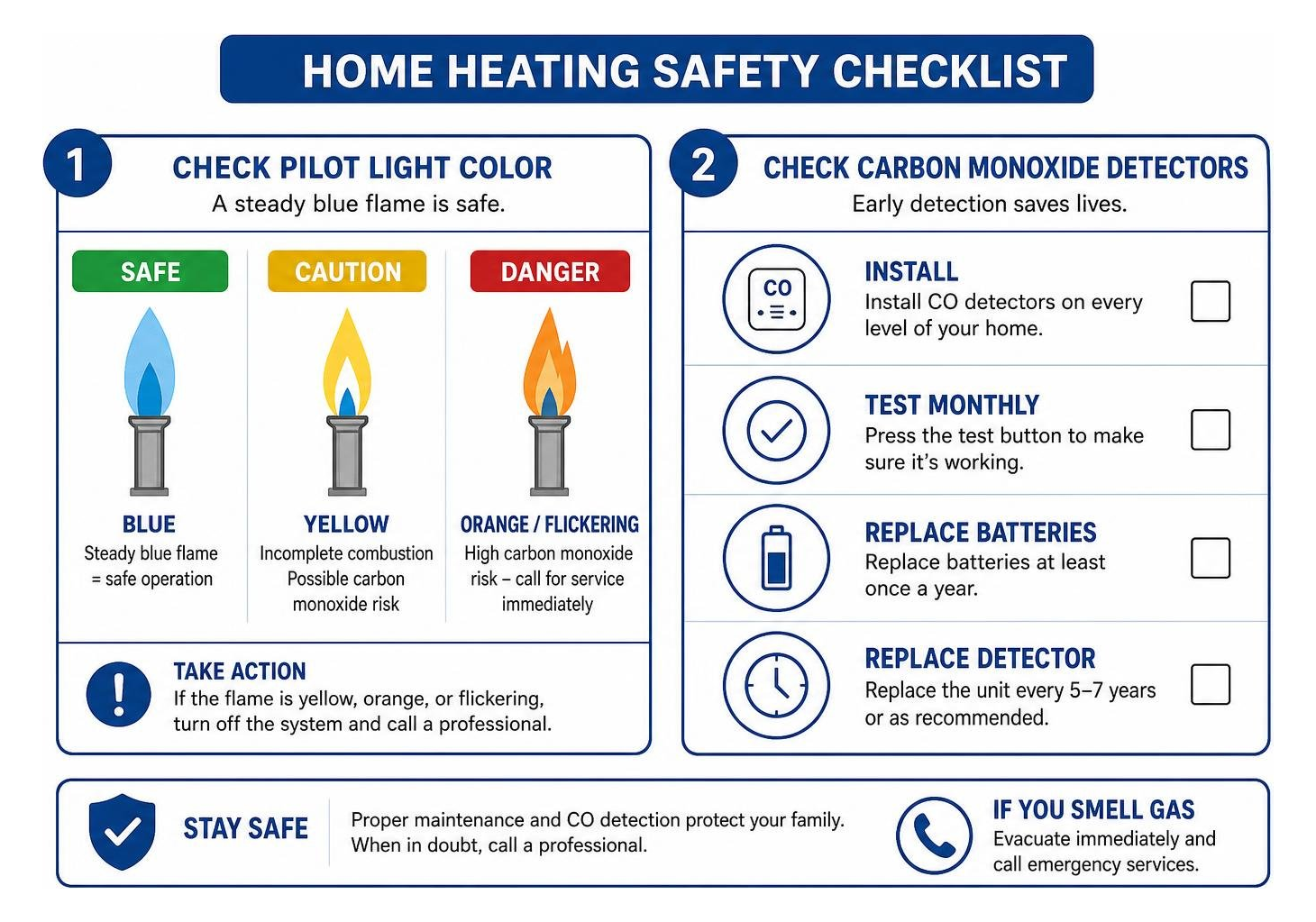
- A yellow or flickering pilot light: On gas furnaces, a healthy pilot light flame should always be a crisp, steady blue. A blue flame indicates safe, complete fuel combustion. If the pilot light is yellow, orange, or flickering, it is a major warning sign that carbon monoxide is not dissipating properly. This increases the risk of combustion issues and lethal gas leaks.
- The smell of gas or rotten eggs: Natural gas and propane companies add an odorant called mercaptan to make leaks obvious. If you smell this, immediately evacuate your home and call emergency services.
- Rapid short-cycling: If your heater turns on and off every few minutes without actually warming your home, it is placing massive stress on its internal components and could fail entirely at any moment.
- Strange noises: Loud clanging, screeching, or banging sounds indicate broken or loose mechanical parts.
Warning signs such as weak airflow, repeated resets, burner problems, and unusual odors are covered in more detail in the blog on signs you need heating repair in Derry, NH. Taking steps to prevent carbon monoxide exposure is also one of the most important safety measures you can take, especially if your system is older or has not been inspected recently.
How Quickly Can Heating Service Be Scheduled?
During a severe New Hampshire freeze, response time is everything. A reliable local contractor keeps fully stocked service trucks on the road to resolve issues on the very first visit.
When you call for prompt service, technicians prioritize safety and speed. Fast furnace repair helps prevent frozen pipes, avoid costlier secondary damage to your heat exchanger, and protect your family from dangerous carbon monoxide exposure.
2. System Installation, Replacement, and Specialized Upgrades
No heating system lasts forever. Whether you are dealing with a furnace that has reached the end of its operational lifespan or you want to lower your monthly utility bills, upgrading your equipment is one of the most impactful investments you can make in your home.
Modern heating technology has advanced significantly over the last decade, offering levels of energy efficiency that were once impossible. When planning an upgrade, it helps to understand the factors that influence heating system installation cost in Derry, NH, including equipment type, system size, home layout, venting, ductwork, and efficiency goals.
Choosing Between Furnaces, Boilers, and Heat Pumps
Every home has different heating requirements based on its layout, existing ductwork, and insulation. The three primary central heating systems used in New Hampshire are furnaces, boilers, and heat pumps.
To choose the right system, compare how each option distributes heat, how it fits your existing home, and what kind of comfort control it provides:
| System Type | Heat Distribution Method | Best For | Key Advantage |
|---|---|---|---|
| Furnace | Forced hot air through ductwork | Homes with existing ductwork or central AC | Heats up rooms very quickly; highly compatible with filtration systems |
| Boiler | Hot water or steam through radiators/baseboards | Older homes, multi-story layouts, or radiant flooring | Provides consistent, draft-free warmth; doesn’t dry out the indoor air |
| Heat Pump | Refrigerant lines (ductless mini-splits or central ducted) | Zoned heating and cooling; energy-conscious homes | Provides both heating and air conditioning; high operating efficiency |
If you are trying to decide between a forced-air system and a hydronic system, pay close attention to comfort preferences. Furnaces can pair well with AC and filtration, while boilers deliver steady radiant-style heat without blowing air through the home.
For homeowners considering electrification or zoned comfort, heat pump repair and installation services can support both heating and cooling needs while giving individual rooms more precise temperature control.
High-Efficiency Upgrades and Rebates
If your heating system is more than 15 years old, it likely has an Annual Fuel Utilization Efficiency (AFUE) rating of around 70% to 80%. This means that up to 30% of the fuel you pay for is wasted as exhaust gas. Modern high-efficiency condensing furnaces can reach AFUE ratings of up to 98%, converting nearly all of your fuel directly into usable heat.
Here is why you should consider upgrading:
- Lower fuel bills: High-efficiency furnaces use less fuel to deliver the same amount of heat, so the monthly savings can compound over time.
- Zoned savings: Ductless mini-split heat pumps let you heat only the rooms you actually use, rather than wasting energy on empty guest rooms.
- Local utility rebates: In New Hampshire, programs like NHSaves may offer rebates for eligible high-efficiency equipment, which can offset part of your upfront installation cost.
Unsure where your current system stands? Check its yellow EnergyGuide label, compare fuel use from recent winters, and ask a licensed HVAC technician to evaluate whether repair, replacement, or maintenance is the smarter next step.
Managing Complex Installations, Zoning, and Conversions
Installing a new heating system is rarely a simple “swap-out.” Complex projects require specialized engineering and a deep understanding of local building codes.
For example, many homeowners in Southern New Hampshire are choosing to convert their old oil-burning systems to clean-burning natural gas or high-efficiency propane. This process involves safe oil tank decommissioning, professional gas piping installation, and proper venting configurations to prevent dangerous exhaust accumulation.
Similarly, if you are building a new home or adding an addition, the installation plan should account for accurate load calculations, ductwork or piping design, equipment location, and future service access so the system is sized correctly for the space.
An experienced heating contractor can also design custom zoning systems, allowing you to control different temperatures on different floors of your home, maximizing both comfort and efficiency.
3. Preventative Maintenance and Indoor Air Quality
The best emergency heating call is the one you never have to make. Just like your car needs regular oil changes to keep running smoothly, your home heating system requires annual preventative maintenance.
By investing in a professional tune-up every autumn, you can extend your system’s lifespan, keep your manufacturer’s warranty valid, and enjoy significant energy savings. A seasonal heating system maintenance guide can help homeowners understand the inspection, cleaning, calibration, and safety steps that happen during a professional visit.
If you are still on the fence about scheduling a tune-up, think about the practical benefits: fewer surprise breakdowns, cleaner operation, better comfort, and more reliable performance through long New Hampshire cold snaps.
The Value of Pre-Season Inspections
The ideal time to schedule your heating maintenance is in September or October, well before the first New Hampshire cold front arrives. Heating systems that sit idle during the humid summer months can collect dust, suffer from rusted electrical connections, or develop minor mechanical issues that turn into full-blown failures the first time the thermostat calls for heat.
Pre-season inspections reduce those surprises by giving a technician time to clean burners, test safety controls, check airflow, inspect venting, and confirm that the thermostat is communicating properly before the system is under heavy demand.
If your home uses a combined central heating and cooling setup, carefully switching from cooling to heating for the season will protect your compressor and ensure clean, warm air flows from your registers on day one.
Boiler and Heat Pump Maintenance Specifics
Different systems require highly specialized maintenance steps. A standard furnace tune-up focuses on burners and blowers, but boilers and heat pumps have entirely different mechanical needs:
- Boilers: Hydronic systems require checking water pressure, flushing mineral scale buildup that acts as an insulator, validating zone valves, and checking for tiny leaks. Regular boiler maintenance is essential to prevent corrosion and ensure even heat distribution across all radiators.
- Heat pumps: Because heat pumps run year-round to provide both heating and cooling, they undergo twice the wear and tear of a standard furnace. Seasonal heat pump service keeps your system operating at peak efficiency and helps protect the equipment from premature failure.
Recognizing Heating-Related Air Quality Issues
Your heating system does more than just control the temperature; it also directly impacts the air your family breathes. A poorly maintained system can circulate dust, pet dander, mold spores, and other allergens throughout your home, leading to dry skin, irritated eyes, and respiratory issues.
The most critical indoor air quality component to monitor is your furnace’s heat exchanger. If a heat exchanger becomes cracked due to age or poor airflow, it can leak lethal carbon monoxide gas directly into your home’s air supply.
Understanding heat exchanger function, risks, and maintenance needs is essential for every homeowner. By combining regular maintenance with professional indoor air quality solutions, such as high-efficiency media filters, whole-house humidifiers to combat dry winter air, and carbon monoxide detectors, you can keep your home both warm and safe.
Frequently Asked Questions about Home Heating
How do I know if my heating system needs repair or replacement?
Knowing whether to repair your current heater or invest in a new one is a common homeowner dilemma. As a general rule of thumb, if your system is over 15 years old, requires frequent repairs, or if the cost of a single repair is more than half the cost of a new system, replacement is usually the smarter long-term financial decision.
To make an informed choice, consider your system’s age, repair history, energy use, comfort problems, and whether replacement would improve both reliability and efficiency.
What are the benefits of annual heating maintenance?
Regular maintenance keeps your system running at peak efficiency, which lowers your monthly energy bills and reduces the likelihood of an unexpected mid-winter breakdown.
Additionally, routine tune-ups extend the overall lifespan of your equipment and ensure that your manufacturer’s warranty remains valid. Maintenance also gives a technician the opportunity to identify safety issues before they become urgent.
What should I look for in a reliable heating contractor?
When choosing a contractor, you should always verify that they are fully licensed, bonded, and insured to work in New Hampshire. Look for companies with NATE-certified technicians, excellent local reviews, and transparent pricing.
A reliable contractor should also explain your options clearly, document safety findings, recommend repairs without pressure, and understand the heating demands of homes in Derry, NH and surrounding Southern New Hampshire communities.
Conclusion
At Daigle Plumbing, Heating & Cooling, we have spent over 40 years keeping homes in Southern New Hampshire safe, warm, and comfortable. As a family-owned business based right here in Derry, NH, we pride ourselves on delivering top-tier plumbing, HVAC, heating, and cooling services backed by licensed experts and our 100% satisfaction guarantee.
Whether you need a rapid response, a precision seasonal tune-up, or a high-efficiency system replacement, our team is here to help. Contact our professional heating technicians today, and let us take the stress out of your winter prep.