What to Do When a Furnace Inducer Motor Will Not Start
If your furnace inducer motor is not turning on, start by checking that the thermostat is set to Heat, the furnace has power, and the access panel is fully closed. Next, look for a control-board error code and inspect the outdoor intake and exhaust pipes for snow, ice, leaves, or nests. If the motor receives 120V during a call for heat but does not spin, the motor, its capacitor, or the inducer assembly may have failed.
The inducer motor is the small exhaust fan that starts before burner ignition. It clears old combustion gases and creates the draft needed to close the pressure switch. Until that safety check passes, the furnace should not light.
Do not bypass the pressure switch or work on live wiring. A humming, grinding, burning smell, seized fan wheel, or repeated furnace lockout is a good reason to stop troubleshooting and call an HVAC professional.
Understanding the Draft Inducer Motor and Ignition Sequence
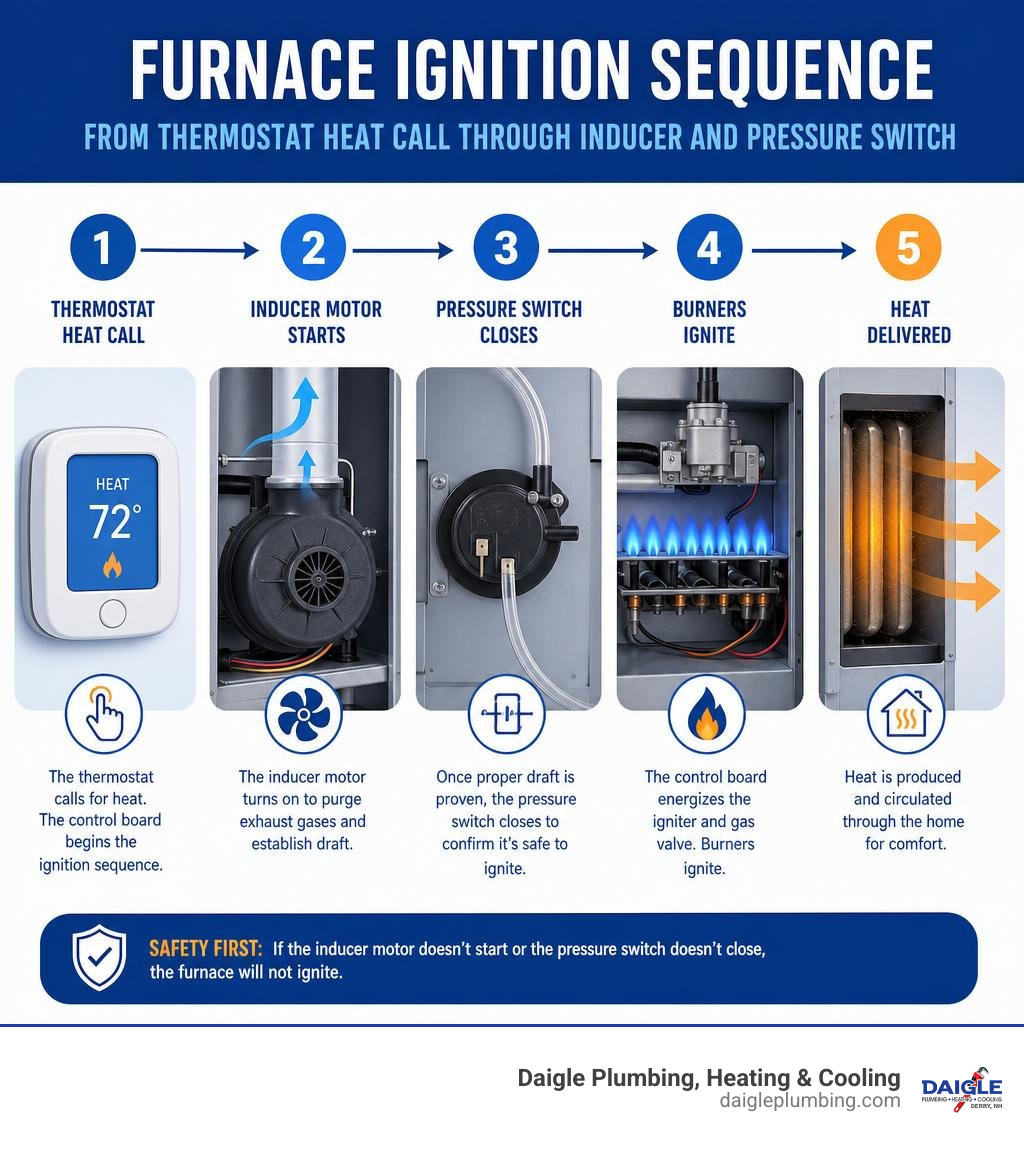
The draft inducer motor, often called the combustion blower, is the gatekeeper of your heating system. When your thermostat calls for heat, the furnace control board does not immediately light the burners. Instead, it powers the inducer motor first. This small blower purges residual gases from the heat exchanger and establishes a steady negative pressure draft, venting toxic byproducts like carbon monoxide safely through the flue.
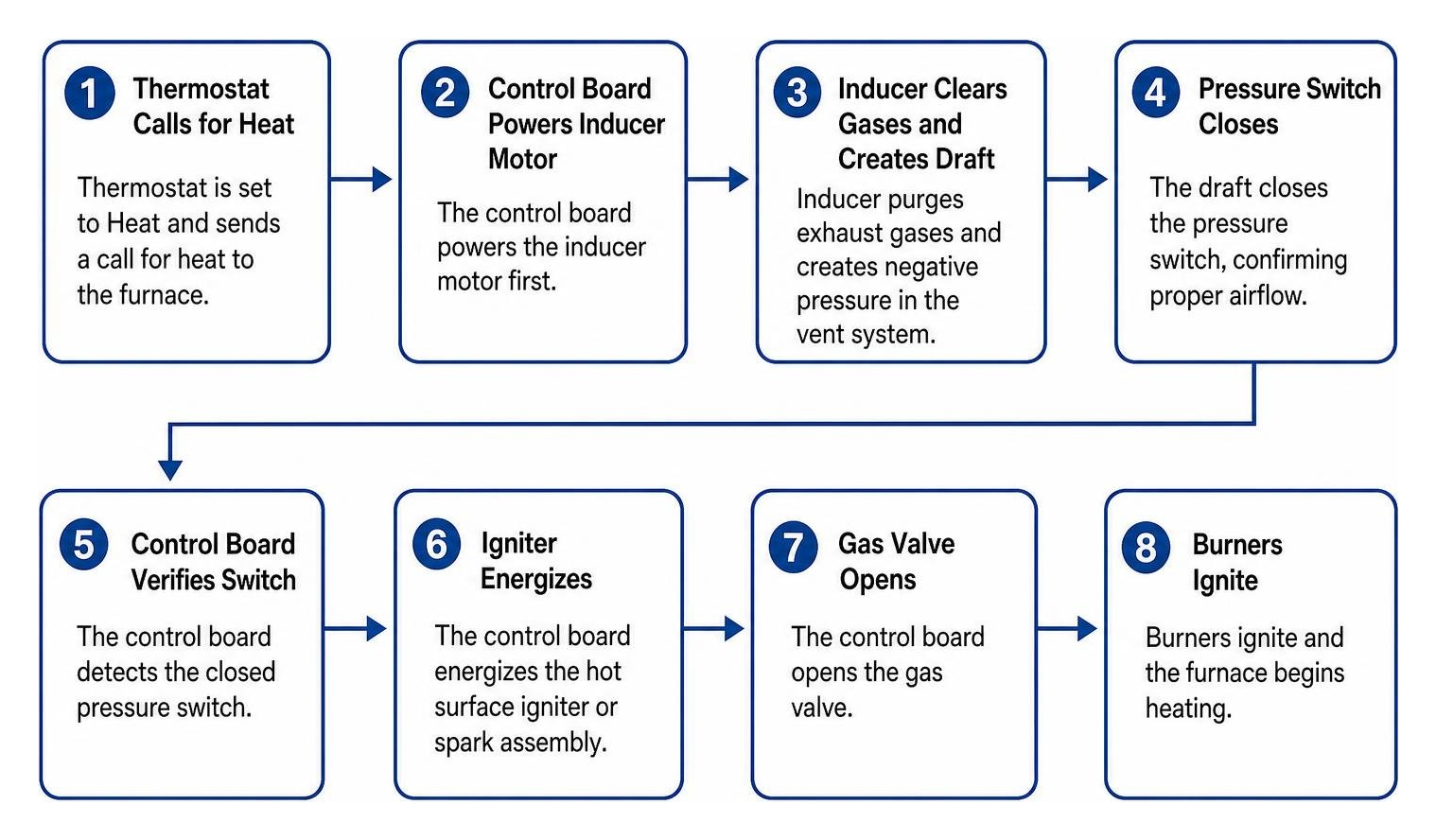
As the inducer spins up to speed, the airflow creates a vacuum that closes the safety pressure switch. Once the control board detects this switch closure, it energizes the hot surface igniter or spark assembly and opens the gas valve. If the inducer fails to turn on, the pressure switch remains open, halting the entire ignition process.
Inducer motors typically last between 10 and 15 years. Because modern units are built with permanently sealed bearings, they cannot be oiled or lubricated. When mechanical wear sets in, recognizing warning signs of a failing furnace early can help you avoid unexpected mid-winter heating breakdowns.
Primary Causes of a Furnace Inducer Motor Not Turning On
A draft inducer might remain completely silent or hum loudly without turning. Electrical supply issues are among the most straightforward culprits. A tripped circuit breaker, a blown low-voltage fuse on the control board, or an unseated door interlock safety switch will cut power to the entire system.
Mechanical failures are equally common. Over years of thermal stress, internal bearings can seize completely, preventing the motor shaft from rotating. In systems utilizing Permanent Split Capacitor (PSC) inducer motors, a weakened or blown run capacitor can leave the motor without sufficient starting torque, resulting in an audible hum accompanied by zero fan rotation. High-limit safety switches or rollout sensors that trip due to overheating can also cut the 24VAC signal before the control board ever calls the inducer to start. Identifying these triggers is part of resolving common furnace problems and fixes before minor electrical faults escalate.
Pressure Switch and Flue Restriction Problems
The pressure switch and inducer motor work in direct partnership. While a faulty motor causes a pressure switch to stay open, exterior venting issues can also cause safety shutoffs.
If your furnace exhaust vent is blocked by snow, autumn leaves, or nesting birds, backpressure builds inside the housing. In cold climates across New England, freezing temperatures can cause condensation lines in high-efficiency condensing furnaces to freeze solid, backing water into the inducer housing. When this happens, the motor may struggle against water resistance or fail to pull adequate vacuum, prompting the control board to flash a diagnostic LED code, typically 2 or 3 blinks, and lock out the system.
How to Fix a Non-Starting Inducer Motor in 5 Steps
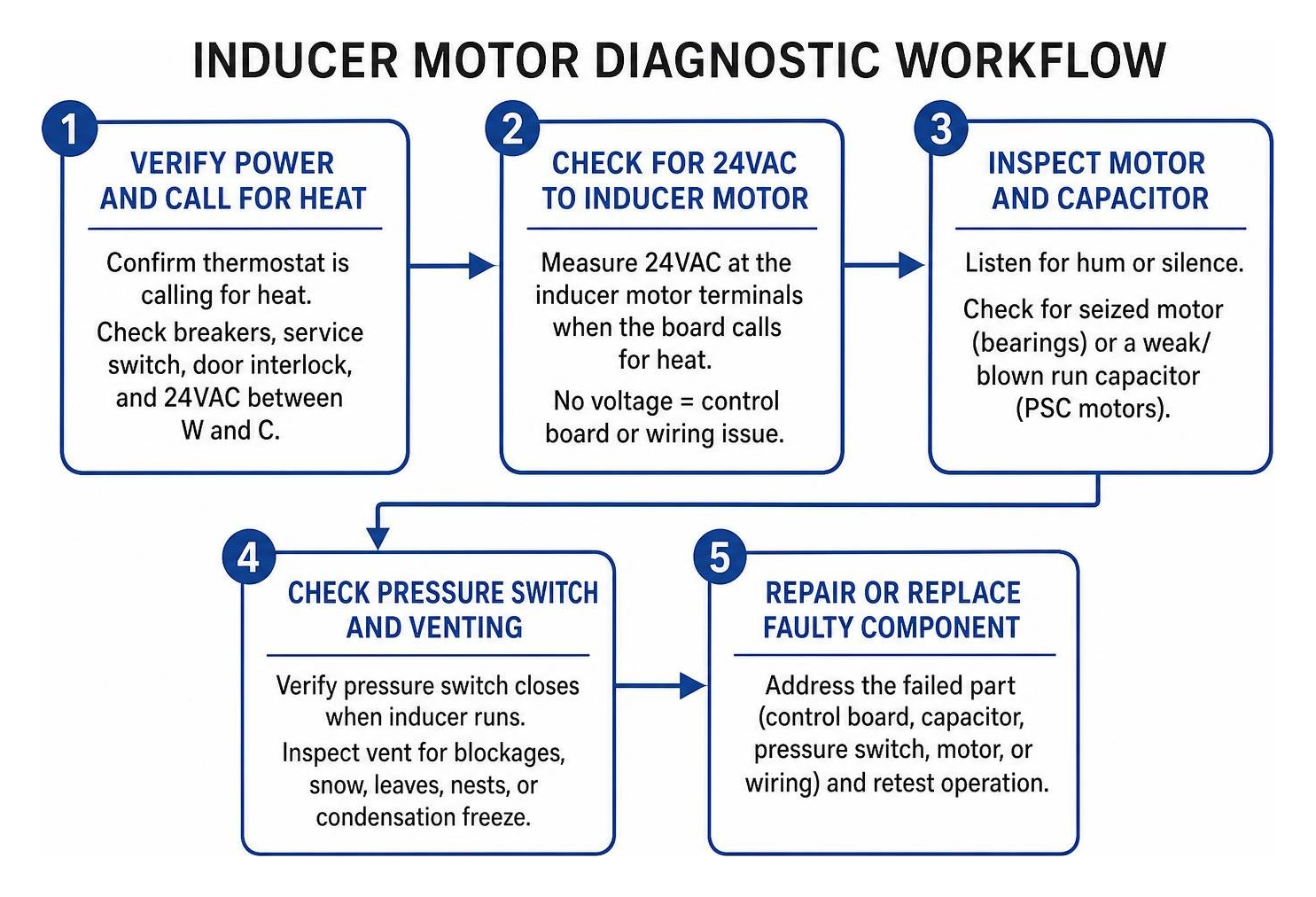
Troubleshooting an inducer motor requires a logical, safety-first workflow. Before touching any internal parts, always turn off the electrical disconnect switch on or near the furnace cabinet.
Step-by-Step Fixes for a Furnace Inducer Motor Not Turning On
Step 1: Verify the Thermostat Call and Power Supply
Confirm that your thermostat is set to “Heat” and the temperature setpoint is at least 3 to 5 degrees above current room temperature. Check your home electrical panel for tripped breakers. Ensure the furnace service switch is flipped on and the blower compartment door is securely fastened to depress the safety switch. Using a multimeter, check for 24VAC between the “W” (heat call) and “C” (common) terminals on the furnace control board.
Step 2: Check for Free Fan Rotation (Mechanical Bindings)
With the furnace power turned completely off, access the inducer motor assembly. Carefully spin the cooling fan or internal impeller by hand. The wheel should rotate freely without grinding, scraping, or heavy resistance. If the shaft is locked solid, the internal sealed bearings have seized, and the entire assembly must be replaced.
Step 3: Test Voltage at the Inducer Motor Leads
Restore power to the unit and initiate a call for heat at the thermostat. Set your digital multimeter to measure AC voltage (VAC). Carefully place the meter probes on the power harness feeding the inducer motor:
- If the meter reads 120VAC (or the rated line voltage) but the motor remains stationary or only hums, the control board is delivering power properly. The fault lies within the motor itself or its run capacitor.
- If the meter reads 0VAC, the control board is not sending power. This points to a blown board fuse, an open limit switch, or a failed control board relay.
Step 4: Test the Run Capacitor and Motor Windings
If line voltage is present but the motor does not turn, turn off furnace power again. If your inducer utilizes an external capacitor, discharge it safely and test its capacitance with a multimeter set to microfarads (µF). A reading significantly below the rating printed on the casing means the capacitor must be replaced.
Next, disconnect the wiring harness and check the resistance across the motor leads using the Ohms (Ω) setting. A normal, functional winding typically measures between 10 and 80 Ohms. A reading of 0 Ohms indicates an electrical short, while an “OL” (open line) reading indicates a broken internal wire winding.
Step 5: Inspect Tubing, Vacuum Ports, and Exhaust Vents
Examine the small rubber vacuum hose running from the inducer housing to the pressure switch. Check for cracks, brittle rubber, or trapped moisture droplets. Disconnect the hose and use a straightened paperclip to gently clear any oxidation or debris from the small metal barb on the inducer housing. Finally, head outside to verify that the exterior intake and exhaust pipes are free of snow drifts, ice caps, or animal debris.
Inducer Motor Repair Costs and Replacement Expectations

When an inducer motor fails electrically or mechanically, replacing the entire modular assembly is the industry-standard repair. While older models occasionally permitted motor-only replacements, modern assemblies integrate the motor, cooling fan, impeller wheel, and housing into a single factory-balanced unit.
Attempting to rebuild an inducer motor in the field is rarely practical due to factory-sealed bearings and delicate impeller balancing. A replacement assembly provides reliable draft operation and preserves factory safety tolerances.
For homeowners in Derry, Salem, Manchester, Nashua, Auburn, Hampstead, Merrimack, Bedford, and nearby communities, Daigle Plumbing, Heating & Cooling provides furnace repair in Derry when inducer motor problems, pressure-switch errors, or ignition failures require professional diagnosis.
Our team also supports broader professional heating services for furnaces, boilers, heat pumps, and related HVAC equipment, so homeowners can address the inducer issue and the overall heating system in one coordinated visit.
When to Seek Help for a Furnace Inducer Motor Not Turning On
While basic checks like clearing exterior vent pipes and checking breakers are safe for homeowners, advanced electrical and combustion diagnostics carry inherent hazards. Inducer circuits involve high-voltage electricity, and improper repairs can lead to electrical fires or dangerous carbon monoxide leaks inside your living space.
If your furnace control board is not delivering voltage, if wiring harnesses show signs of heat damage, or if you suspect a cracked heat exchanger, compare your symptoms with these reasons your furnace won’t turn on automatically to better understand the startup sequence before arranging service.
Frequently Asked Questions About Furnace Inducer Motors
Can I run my furnace if the inducer motor is not turning on?
No. Modern gas furnaces are engineered with automatic safety interlocks that prevent operation without an active inducer motor. If the motor fails to run, the pressure switch will not close, preventing the control board from opening the gas valve or lighting the burners to protect your home from carbon monoxide accumulation.
How do I know if the problem is the inducer motor or the pressure switch?
Use a multimeter to measure the voltage delivered to the inducer motor during a call for heat. If the motor receives 120V but fails to spin, the motor or its capacitor has failed. If the inducer spins up to full speed but the furnace shuts down with a pressure switch error code, the issue is typically a clogged vacuum port, cracked tubing, or a blocked exhaust vent.
How long do furnace inducer motors typically last?
Furnace inducer motors generally last between 10 and 15 years. Their operational lifespan can be shortened by high runtime demands, poor venting design, excessive humidity in utility rooms, or acidic flue gas condensation leaking into the motor housing.
Conclusion
A draft inducer motor is an essential safety component that protects your household by clearing toxic combustion gases before your furnace ever lights a flame. When your inducer fails to start, running through systematic checks on power supplies, mechanical movement, and vent pipes can help you isolate the root cause quickly.
If your troubleshooting points to failed motor windings, damaged control relays, or persistent startup errors, Daigle Plumbing, Heating & Cooling is ready to help restore safe, reliable warmth to your home. To schedule service for this furnace issue, contact our professional heating technicians.