When Standing Water Becomes a Real Problem: Finding Drainage Help Near You
If you’re searching for drainage near me, here’s what you need to know right away:
Quick Answer: How to Find Local Drainage Help
| What You Need | Who to Call | When to Act |
|---|---|---|
| Standing water in yard | Drainage contractor or plumber | Water sits 24+ hours after rain |
| Basement moisture or seepage | Plumber or waterproofing specialist | Immediately |
| Clogged exterior drain | Plumber with hydro jetting | Recurring blockages |
| Downspout or gutter overflow | Plumber or drainage contractor | Before next heavy rain |
| Foundation pooling | Drainage contractor | As soon as noticed |
Over 60% of U.S. homeowners deal with drainage problems at least once a year. For homeowners in Derry, NH and surrounding southern New Hampshire communities, the combination of heavy spring rain, rapid snowmelt, and freeze-thaw soil cycles makes that number feel even higher.
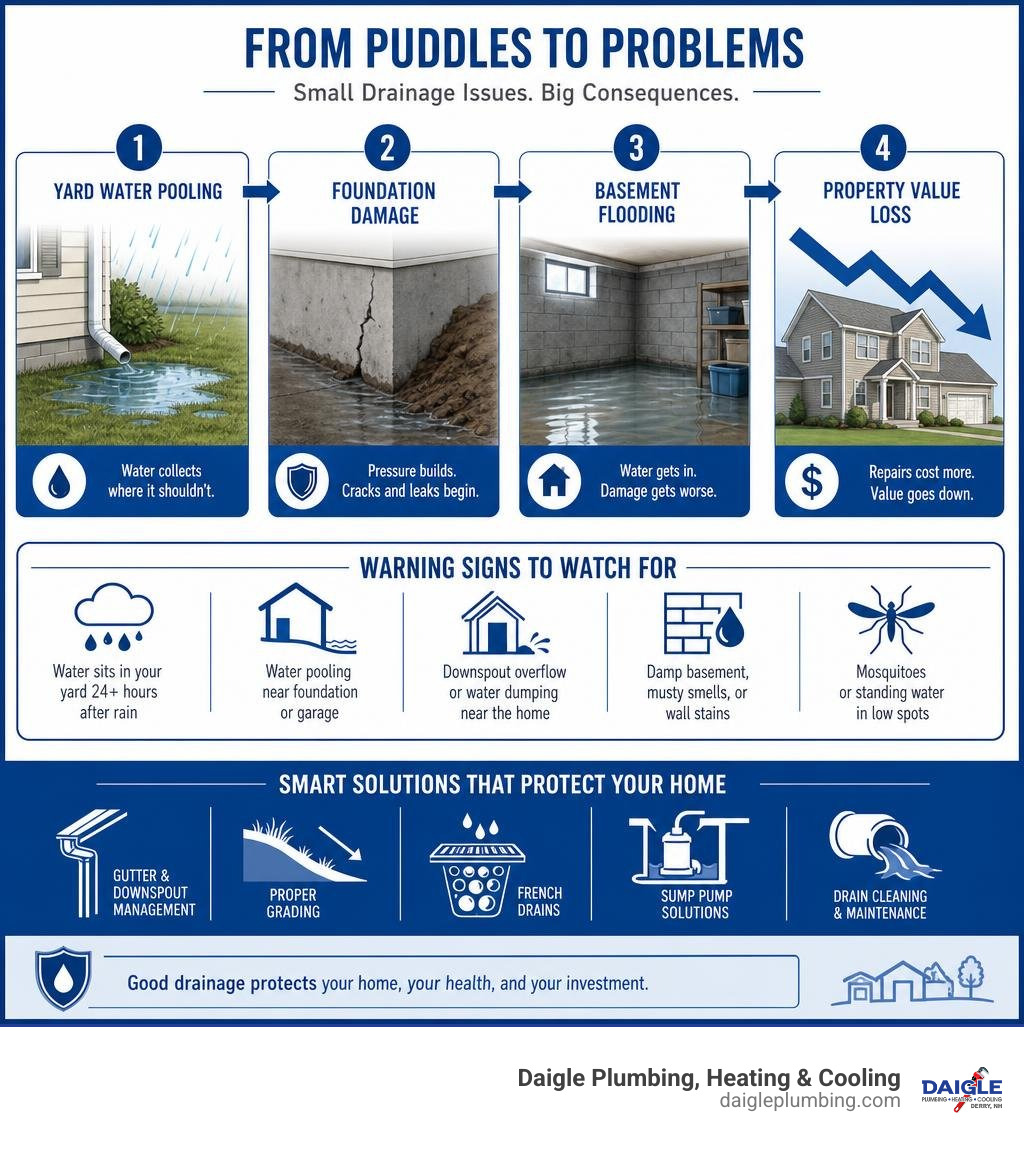
Poor drainage isn’t just a soggy lawn problem. Left alone, it can flood your basement, erode your foundation, attract mosquitoes, and quietly chip away at your property value. The U.S. sees roughly $2.5 billion in annual property damage tied to drainage failures, and most of it starts with warning signs homeowners ignored.
This guide walks you through everything you need to hire the right local drainage contractor, understand your options, and protect your home before the next storm arrives.
At Daigle Plumbing, Heating & Cooling, our plumbing and drainage experience shapes how we diagnose and solve drainage near me calls every day. That field-tested knowledge guides every recommendation in this guide.
Why Derry-Area Homes Develop Drainage Problems
Southern New Hampshire gives drainage systems a workout. Homes in Derry, Salem, Manchester, Nashua, Auburn, Hampstead, Merrimack, Bedford, Windham, Hooksett, Hudson, and Londonderry deal with a mix of heavy rain, melting snow, frozen ground, clay-heavy or compacted soil, sloped lots, and older grading patterns.
When the ground is frozen, water cannot soak in easily. When snow melts quickly during a warm spell, it runs wherever gravity takes it. If your gutters are clogged, your downspouts dump water too close to the foundation, or your yard slopes toward the house, that water may end up exactly where you do not want it.
Common local causes include:
- Spring snowmelt overwhelming low spots in the yard
- Freeze-thaw cycles shifting soil and creating new drainage paths
- Compacted soil that sheds water instead of absorbing it
- Driveway runoff flowing toward the garage or foundation
- Older homes with grading that has settled over time
- Clogged gutters and short downspouts
- Root intrusion or debris in exterior drains
- Basement seepage from hydrostatic pressure
- Sewer or drain backups during heavy use or storms
The tricky part? Drainage problems often look small at first. A little puddle near the bulkhead. A damp basement corner. Mulch that keeps washing out after rain. But water is patient. It will keep looking for a way in.
The Most Common Drainage Problems Homeowners Face Locally
The most common drainage problems we see around southern New Hampshire homes include:
- Standing water in the yard: Puddles that remain more than 24 to 48 hours after rain usually mean the soil, slope, or drainage path is not working.
- Soggy lawn areas: Soft, muddy turf can point to poor grading, subsurface water, or buried drainage failure.
- Water pooling near the foundation: This is one of the biggest warning signs because it increases basement seepage risk.
- Basement moisture or musty odors: Damp smells can indicate water intrusion, mold risk, or hidden drainage issues.
- Driveway and walkway puddles: Poor hardscape drainage can create ice hazards in winter and erosion in warmer months.
- Washed-out mulch or gravel: If storms keep moving your landscaping, water is moving too fast or in the wrong direction.
- Soil erosion: Exposed roots, channels in the lawn, or sinking soil can mean runoff is cutting through your property.
- Lawn fungus and algae: Constant moisture can encourage growth on grass, patios, walkways, and foundation walls.
- Mosquito breeding: Standing water turns the yard into a tiny mosquito resort. Sadly, they never pay rent.
- Clogged exterior drains: Leaves, sediment, roots, and debris can block yard drains, driveway drains, and exterior piping.
- Slow drains or backed-up lines indoors: Sometimes the issue is not only yard drainage. It may be a clogged drain or sewer line.
If you are seeing slow drains, foul odors, or repeated clogs inside the home too, review our guide on signs your home needs drain cleaning.
When “drainage near me” Is a Professional Job, Not a DIY Fix
Some drainage maintenance is homeowner-friendly. Cleaning leaves off a drain grate? Absolutely. Extending a downspout a few feet? Often doable.
But some signs mean it is time to stop guessing and call a professional:
- Puddles remain 24 to 48 hours after rain
- Water collects near the foundation
- Your basement smells musty or feels damp
- You see water near electrical panels, outlets, or appliances
- Multiple drains are slow at the same time
- Pipes gurgle when toilets, tubs, or sinks drain
- You smell sewage or rotten odors near drains
- Exterior drains clog repeatedly
- Soil is sinking near the foundation, walkway, or driveway
- Walkways, patios, or slabs are cracking or settling
- Water enters the basement during storms
- You have emergency flooding or a sewer backup
Recurring clogs and sewer smells are especially important. A single slow sink may be a local clog. Multiple slow drains may indicate a main line issue. For more warning signs, see our article on top professional drain cleaning signs.
Local Drainage Solutions That Protect Yards, Foundations, and Pipes
A good drainage system is not one-size-fits-all. The right solution depends on where water starts, where it flows, how your soil absorbs moisture, and what needs protection.
Local drainage solutions may include:
- French drains
- Catch basins
- Dry wells
- Channel drains
- Foundation drains
- Downspout extensions
- Sump pump discharge routing
- Swales
- Regrading
- Culverts
- Hydro jetting
- Camera inspections
- No-dig pipe repair when appropriate
In many cases, the best fix combines more than one solution. For example, a home may need downspout extensions to manage roof runoff, a French drain to intercept groundwater, and drain cleaning to clear a clogged discharge line.
French Drains, Catch Basins, Dry Wells, and Channel Drains
French drains, catch basins, dry wells, and channel drains are some of the most common yard drainage solutions. French drains and catch basins are among the most requested systems nationwide, and properly designed French drains can significantly reduce yard flooding by redirecting subsurface water.
| Drainage Solution | Best Use | Cost Factors | Maintenance | Ideal Yard Conditions |
|---|---|---|---|---|
| French drain | Subsurface water, soggy lawns, foundation protection | Trench length, depth, gravel, pipe, fabric, excavation access | Periodic inspection, keep outlet clear | Wet soil, sloped yards, foundation pooling |
| Catch basin | Surface water collection from low spots | Basin size, piping route, number of basins, debris load | Clean leaves, sediment, and grates | Yard dips, driveway runoff, patio pooling |
| Dry well | Dispersing collected runoff underground | Soil percolation, size, depth, stone, chamber type | Inspect for sediment buildup | Properties with suitable soil and safe setback areas |
| Channel drain | Hardscape drainage | Drain length, grate material, concrete/asphalt work | Clear debris from grates | Driveways, walkways, patios, garage entries |
A French drain typically uses a perforated pipe set in a gravel trench, often wrapped with geotextile fabric to help reduce sediment intrusion. It collects groundwater and moves it away from the problem area.
A catch basin collects surface water through a grate and sends it through underground piping. It is useful where water visibly pools.
A dry well stores runoff underground and lets it slowly soak into suitable soil. It is not right for every property, especially where soils drain poorly or groundwater is high.
A channel drain is a long, narrow drain often installed in driveways, patios, and walkways to stop water from crossing hard surfaces or entering garages.
Downspouts, Gutters, Sump Pumps, and Drain Cleaning Connections
More than 70% of drainage service calls in suburban areas are tied to clogged or poorly installed gutters and downspouts. That makes roof runoff one of the first things we check.
If your gutters overflow or your downspouts dump water at the foundation, your yard drainage system is already fighting uphill. Literally, in some New Hampshire yards.
Important connected systems include:
- Gutters: They must be clear and pitched correctly.
- Downspouts: They should move roof water away from the foundation.
- Buried downspout drains: These need proper slope and clear discharge points.
- Sump pump discharge lines: These must release water far enough away that it does not cycle back toward the home.
- Main drains and sewer lines: Clogs, grease buildup, roots, or damaged piping can cause backups that look like drainage trouble.
Professional drain cleaning may include camera inspection, mechanical augering, or hydro jetting. Hydro jetting uses high-pressure water to clear grease, sludge, sediment, and debris from pipes when appropriate.
Cost, Timeline, and Permit Questions Before You Start Drainage Work
Before hiring a contractor, you need clear answers on cost, timing, and local requirements. Drainage work can be simple or complex depending on the property.
A small clogged exterior drain may be resolved with cleaning. A full yard drainage installation may involve trenching, piping, gravel, catch basins, lawn restoration, and coordination with local rules.
Typical 2026 Drainage Installation and Repair Costs in Southern New Hampshire
In 2026, drainage pricing in southern New Hampshire commonly depends on project scope, access, depth, soil conditions, materials, and whether excavation is needed. Exact pricing should always come from an on-site evaluation and written estimate.
Typical ranges homeowners may encounter include:
- Minor drain cleaning: often a few hundred dollars, depending on access and severity
- Camera inspection: commonly a few hundred dollars, depending on line length and conditions
- Downspout extensions: lower-cost when above-ground, more when buried
- Catch basin cleaning or repair: varies by basin size, debris, and piping condition
- French drain installation: can range from moderate to several thousand dollars depending on length, depth, and restoration
- Dry well installation: varies based on soil testing, size, excavation, and materials
- Sump discharge routing: depends on distance, trenching, outlet location, and freeze protection
- Emergency drainage or sewer repair: usually costs more when after-hours response, excavation, or urgent cleanup is needed
Factors that raise or lower drainage project pricing:
- Length and depth of trenching
- Soil type, rocks, roots, and ledge
- Equipment access to the work area
- Pipe material and diameter
- Gravel, fabric, basin, or dry well materials
- Need for camera inspection or hydro jetting
- Existing landscaping, patios, walkways, or driveways
- Lawn restoration and cleanup requirements
- Permit needs or municipal coordination
- Emergency timing
- Whether financing or specials are available
At Daigle Plumbing, Heating & Cooling, we believe in clear recommendations and practical options. We also offer specials and financing when available, because water problems rarely wait for a convenient month.
How Long Drainage Installation Takes and What the Process Looks Like
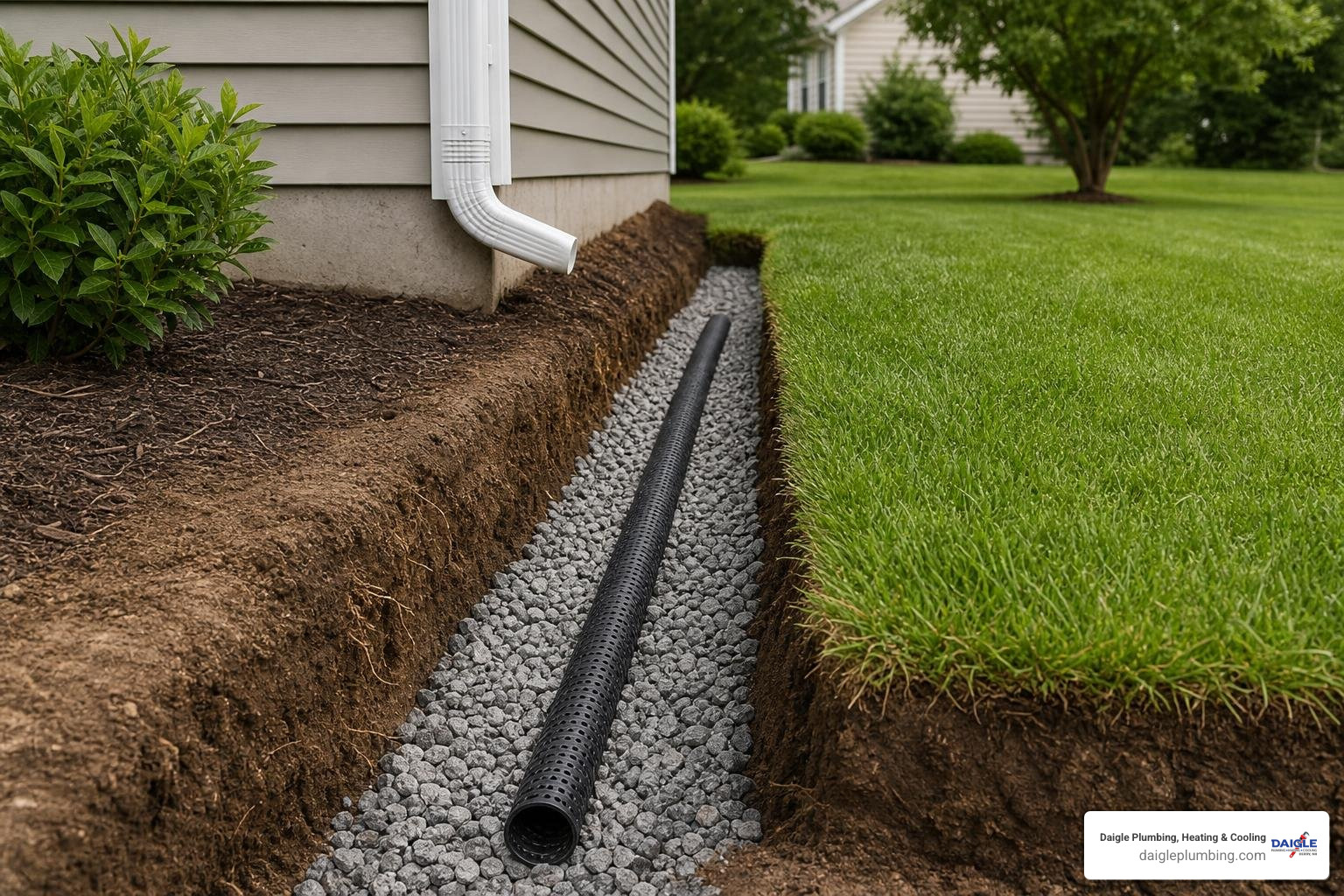
Many residential drainage projects can be completed in one to three days, depending on size and conditions. Larger or more complex stormwater systems may take longer.
A professional process usually looks like this:
- On-site assessment: We inspect the property, problem areas, drains, gutters, downspouts, and basement symptoms.
- Water flow mapping: We identify where water starts, where it collects, and where it can safely discharge.
- Utility marking: Underground utilities should be located before digging.
- System design: The plan may include pipe routes, pitch, basin placement, discharge points, and restoration.
- Material selection: This may involve perforated pipe, solid pipe, gravel, filter fabric, basins, fittings, or sump discharge components.
- Excavation: Trenches are dug to the proper depth and slope.
- Installation: Pipe, gravel bedding, fabric, basins, or other components are installed.
- Testing: The system is checked to confirm water moves as intended.
- Backfill and cleanup: Soil is replaced, areas are cleaned, and lawn or surface restoration is addressed.
- Aftercare guidance: You should know how to maintain the system and what warning signs to watch.
Good drainage work is part plumbing, part excavation, part math, and part “where is this water trying to go?” Skipping the evaluation step is how bad fixes happen.
Local Regulations, Permits, and Stormwater Rules to Ask About
Drainage work can affect neighbors, roads, wetlands, septic systems, and public stormwater infrastructure. That means permits or approvals may be needed depending on the job.
Ask about rules related to:
- Town permits
- Driveway cuts or work in the right-of-way
- Wetlands and buffer zones
- Public drainage tie-ins
- Septic system setbacks
- Discharging water onto neighboring property
- Erosion control
- Stormwater maintenance requirements
- Inspection records for installed systems
Rules can vary by municipality. Manchester homeowners can review local stormwater project information through the city, while Hampstead residents can start by contacting the town’s Public Works Department for drainage-related guidance.
For Derry, Salem, Nashua, Auburn, Merrimack, Bedford, Windham, Hooksett, Hudson, Londonderry, and other nearby communities, check with the local building, public works, or conservation department before work begins.
How to Choose the Best “drainage near me” Contractor Without Getting Burned
When you search for drainage near me, you are not just looking for someone with a shovel. You are looking for someone who can diagnose water movement, protect your home, communicate clearly, and stand behind the work.
Look for:
- Local experience in southern New Hampshire
- Licensed and insured professionals
- Clear inspection process
- Camera diagnostics when pipe issues are suspected
- Written quote with defined scope
- Transparent pricing
- Permit guidance
- Quality materials
- Warranty or workmanship guarantee
- Good communication
- Cleanup standards
- Emergency response when needed
Daigle Plumbing, Heating & Cooling is family-owned, has 40+ years of experience, and serves homeowners across Derry and surrounding New Hampshire communities. We bring licensed and insured expertise to plumbing, drain, heating, cooling, HVAC, and bathroom remodeling work.
Questions to Ask a “drainage near me” Contractor Before Hiring
Before hiring any drainage professional, ask:
- Are you licensed and insured for this type of work?
- What do you believe is causing the drainage problem?
- Will you inspect the full water path, including gutters, downspouts, and discharge points?
- Do you use camera inspection if a pipe blockage or damage is suspected?
- What system do you recommend, and why?
- Are there simpler options we should try first?
- What materials will you use?
- Who handles permits if they are needed?
- Where will the water discharge?
- Could this affect my neighbor, septic system, driveway, or public drainage?
- How long will the job take?
- How much yard disruption should I expect?
- What cleanup and restoration are included?
- Is the estimate written and itemized?
- Is there a warranty or satisfaction guarantee?
- Do you offer emergency service if flooding happens?
If you are unsure whether your issue requires a plumber, see our guide on 5 signs it is time to call a plumber.
Red Flags That Point to the Wrong Contractor
Be careful if a contractor:
- Gives a quote without inspecting the property
- Offers a vague estimate with no written scope
- Recommends the same fix for every yard
- Ignores gutters and downspouts
- Does not discuss discharge location
- Skips permit questions
- Refuses to show proof of insurance
- Pressures you into cash-only payment
- Has no cleanup plan
- Offers no warranty or aftercare guidance
- Promises results without checking slope, soil, or pipe condition
- Wants to dig before considering camera inspection for buried drain issues
Drainage work should solve the root cause, not just move the puddle to a different part of the yard. If you have active flooding, sewage backup, or water threatening electrical equipment, treat it as urgent. Here is more on plumbing emergencies needing immediate service.
Maintenance and Prevention: Keep Water Moving Year-Round
Even a well-installed drainage system needs maintenance. Water carries leaves, sand, roof grit, sediment, mulch, and debris. New Hampshire weather adds ice, snowbanks, and spring thaw to the mix.
Good maintenance keeps small issues from becoming expensive repairs.
Seasonal Drainage Maintenance for New Hampshire Homes
Use this seasonal checklist:
Spring
- Watch how snowmelt moves across the yard
- Check for new low spots or erosion
- Test sump pumps before heavy rain
- Inspect discharge lines for blockage or freeze damage
- Clear catch basin grates
Summer
- Monitor soggy lawn areas after thunderstorms
- Keep landscaping from blocking drainage paths
- Check for mosquitoes around standing water
- Flush or inspect problem drains if needed
Fall
- Remove leaves from gutters, downspouts, and yard drains
- Clean driveway and channel drain grates
- Make sure buried drain outlets are open
- Trim roots or vegetation near drain exits
Winter
- Keep snow piles away from foundation walls when possible
- Avoid blocking drain outlets with plowed snow
- Watch for ice buildup near sump discharge lines
- Note areas where meltwater refreezes on walkways or driveways
How to Prevent Future Drainage Issues on Your Property
Prevention starts with keeping water moving away from the home.
Smart steps include:
- Extend downspouts away from the foundation
- Clean gutters regularly
- Maintain a positive slope away from the house
- Avoid creating mulch dams against the foundation
- Keep catch basin and channel drain grates clear
- Fix small clogs before they become backups
- Redirect roof runoff safely
- Protect exposed foundation soil from erosion
- Schedule inspections if problems repeat
- Avoid pouring grease down drains
- Watch for musty basement odors
- Keep tree roots in mind near buried lines
- Test sump pumps before storm season
Frequently Asked Questions About Hiring Local Drainage Contractors
What signs indicate poor drainage around my home or yard?
Common signs include persistent puddles, soggy turf, water against the foundation, damp basement walls, musty odors, visible mold risk, washed-out mulch, soil erosion, algae on hard surfaces, mosquitoes, and slow exterior drains.
Inside the home, watch for gurgling pipes, multiple slow drains, foul odors, or backups. Those can point to a clogged drain, sewer line issue, or drainage connection problem.
What type of drainage system does my yard need?
It depends on the source of the water.
- If water is coming from the roof, you may need gutter repairs, downspout extensions, or buried downspout drainage.
- If water is collecting below the surface, a French drain may help.
- If water pools in a low spot, a catch basin may be the right collection point.
- If runoff needs to soak into the ground and soil conditions allow it, a dry well may be useful.
- If the yard slopes toward the house, regrading or a swale may be needed.
- If basement water is involved, sump pump discharge routing or foundation drainage may be part of the solution.
- If drains are clogged, hydro jetting or camera inspection may come first.
The best answer comes from an on-site evaluation. Drainage is too property-specific for guesswork.
Is professional drainage work worth the investment?
Yes, when water is threatening your home, basement, yard, or foundation. Proper drainage systems can reduce basement flooding risk by up to 90% and may help protect property value. Some estimates show well-managed drainage and water protection can support property value by 5% to 10%, especially when it prevents visible water damage.
Professional drainage work can help:
- Reduce basement flooding risk
- Protect the foundation
- Preserve landscaping
- Reduce mold and mildew risk
- Make the yard usable again
- Limit erosion
- Reduce emergency plumbing calls
- Protect patios, walkways, and driveways
- Prevent repeated DIY spending on temporary fixes
The goal is not just a dry lawn. It is a safer, healthier, more protected home.
Conclusion
A wet yard is annoying. A wet basement, damaged foundation, or backed-up drain is much worse.
If you are searching for drainage near me in Derry, Salem, Manchester, Nashua, Auburn, Hampstead, Merrimack, Bedford, Windham, Hooksett, Hudson, Londonderry, or nearby southern New Hampshire communities, start with a professional evaluation. The right contractor will identify the source of the water, explain your options, provide a written estimate, and help you prevent the problem from coming back.
At Daigle Plumbing, Heating & Cooling, we bring 40+ years of family-owned experience, licensed and insured experts, a satisfaction guarantee, specials, and financing options to help protect your home.
Ready to stop your yard from auditioning as a pond? Contact our drain specialists and schedule professional plumbing service with our team today.