Why Regular AC Vents Cleaning is the Secret to Fresh Indoor Air
When it comes to maintaining a healthy home, staying on top of regular AC vents cleaning is one of the easiest ways to improve your indoor air quality. Dusty registers and grilles restrict airflow, make your HVAC system work harder, and spread allergens through your rooms every time the system kicks on.
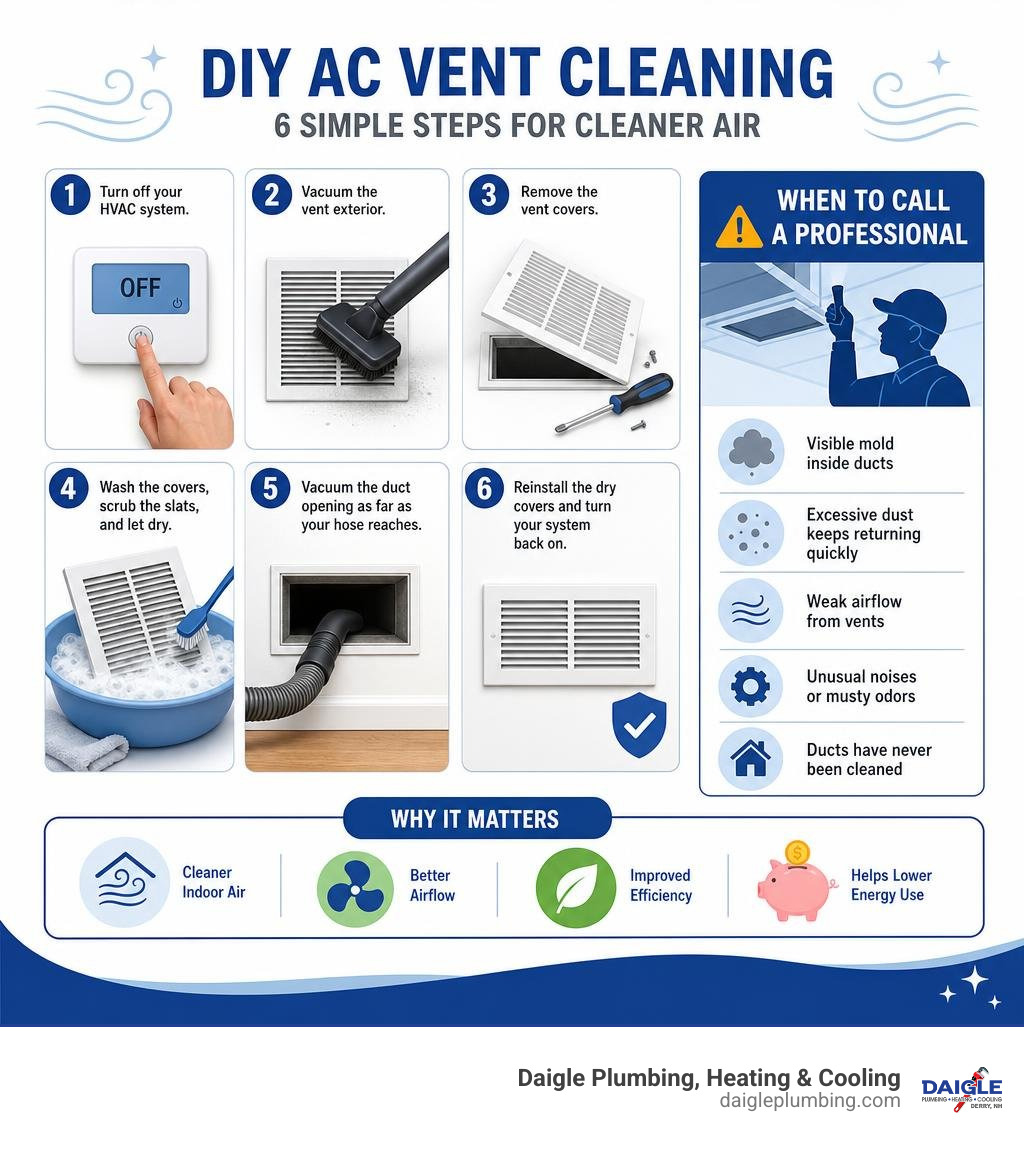
Fortunately, you do not need to be a professional technician to keep your surface vents clean. Here is how you can clean your home’s AC vents in six simple steps:
- Turn off your HVAC system at the thermostat to keep dust from blowing around while you work.
- Vacuum the vent exterior with a soft brush tool to catch loose dust and soot.
- Remove the vent covers by unscrewing them (gently score painted edges with a utility knife if they are stuck).
- Wash the covers in warm, soapy water, scrub the slats with an old toothbrush, and let them dry completely.
- Vacuum the duct opening only as far as your household vacuum hose can naturally reach.
- Reinstall the dry covers snugly and turn your system back on.
At Daigle Plumbing, Heating & Cooling, our experienced team helps local families master basic HVAC care and AC vents cleaning. Our technicians and service managers have seen how simple DIY vent maintenance can protect your system, lower your utility bills, and keep your Derry, NH home comfortable in every season.
Why Regular AC Vents Cleaning Matters for Your Home
Every day, your heating and cooling system circulates thousands of cubic feet of air throughout your home. Along with that air, it carries microscopic particles like skin cells, pet dander, pollen, outdoor dust, and cooking oils. Over time, these particles settle on the grilles, slats, and interior walls of your ventilation system.
When dust and moisture combine, they create a sticky film on your vent covers. Because of static electricity, this film acts like a magnet, trapping even more airborne debris. In our beautiful corner of New Hampshire, from Derry and Salem to Manchester and Nashua, we experience highly humid summers and freezing, dry winters. This seasonal swing plays a massive role in how dirty your vents get:
- Summer Humidity: High humidity levels can cause cool air escaping your vents to create condensation on the metal grilles. When dust particles hit this moisture, they stick and form a dark, fuzzy residue.
- Winter Heating: When your forced-air heating system kicks on in the winter, it dries out the accumulated dust, making it highly airborne and circulating it right back into your living spaces.
This cycle can lead to a common cosmetic and hygienic issue: those unsightly gray streaks on your ceiling. These streaks occur when cold air from the vent meets the warmer ceiling drywall, creating localized condensation. The passing dust sticks to this moisture, leaving dark tracks on your paint. If you notice dust, odors, or humidity issues returning right after you clean the grilles, Daigle Plumbing, Heating & Cooling can evaluate your home’s indoor air quality in Derry, NH and recommend practical options for cleaner air.
Routine vent cleaning also pairs naturally with homeowner education. The Daigle Plumbing, Heating & Cooling blog shares seasonal HVAC maintenance tips through its home comfort and HVAC blog, helping Derry, Salem, Manchester, and Nashua homeowners understand when dust is a simple surface issue and when it may point to a larger airflow or indoor air quality concern.
Most importantly, neglected vents can affect your comfort and health. When mold spores, dust mites, and pet dander accumulate in dark, damp HVAC environments, they can be recirculated through your living spaces. For family members struggling with asthma or seasonal allergies, this repeated exposure may trigger respiratory issues. Keeping your home’s indoor air quality at its best starts with ensuring the pathways delivering your air are clean and free of contaminants.
Step-by-Step Guide to DIY AC Vents Cleaning
Taking care of your vent covers and registers is a highly rewarding Saturday morning project. By tackling this yourself, you can keep your home smelling fresh and looking immaculate without spending a fortune.
Before you begin, it is important to understand what you can safely handle on your own and what requires professional equipment. As a general rule, DIY cleaning is perfect for vent covers, registers, and the first few inches of accessible ductwork. Deep mechanical cleaning of the entire duct network should always be left to licensed professionals.
Preparing Your System for DIY AC Vents Cleaning
Preparation is the secret to a mess-free cleaning project. Before you grab your tools, complete these quick safety steps:
- Shut Down the HVAC System: Always turn your system completely off at the thermostat. If the fan kicks on while you are cleaning, it will blow loose dust directly into your face and scatter debris all over your furniture.
- Protect Your Surroundings: Lay down a drop cloth or old sheet directly beneath the ceiling or wall vents you plan to clean. This will catch any falling soot, drywall dust, or loose screws.
- Gather Your Supplies: You will need a sturdy ladder, a screwdriver (flathead or Phillips, depending on your vent covers), a vacuum cleaner with a soft brush attachment, a bucket of warm water, mild dish soap, microfiber cloths, and an old toothbrush.
- Wear Safety Gear: If your vents are heavily soiled, wear an N95 respirator mask and safety goggles to protect yourself from inhaling mold spores or getting dust in your eyes.
How to Handle AC Vents Cleaning for Registers and Covers
Once your system is off and your drop cloths are in place, you can begin the deep cleaning process:
- Vacuum Before Removing: Before unscrewing the vent, use your vacuum’s brush attachment to clear away the loose, hanging dust bunnies. This prevents a shower of debris from falling when you loosen the grilles.
- Remove Carefully: Hold the center of the grille with one hand while removing the final screw. This prevents the heavy metal cover from dropping, which could gouge your drywall or damage your flooring. If the vent is stuck to the wall by layers of old paint, gently score the perimeter with a utility knife to release it cleanly.
- Soak and Scrub: Take the removed covers to a bathtub or utility sink. Fill it with hot water and a few drops of grease-cutting dish soap. Let the vent covers soak for 15 to 20 minutes to loosen sticky oils and caked-on dust. Use an old toothbrush to scrub between the narrow slats and directional levers.
- Dry Completely: This is the most crucial step! Wipe the vents down and let them air-dry completely before reinstalling. Reinstalling a damp metal vent cover will invite rust and cause new dust particles to adhere to the surface almost instantly.
- Vacuum the Duct Opening: While the covers are drying, use your vacuum hose to clean the visible metal duct opening. Only go as far as your hose naturally reaches without forcing it.
If your vents keep collecting dust shortly after cleaning, your cooling equipment may need attention beyond the register covers. A seasonal AC tune-up in Derry, NH from Daigle Plumbing, Heating & Cooling gives the team a chance to check airflow, filters, coils, and overall system performance before small issues turn into comfort problems.
Window A/C units need care too, especially during New Hampshire’s humid July heat. The Daigle Plumbing, Heating & Cooling HVAC tips and maintenance blog can help homeowners build a practical cleaning routine for filters, vents, and seasonal system checks without turning every weekend into a major project.
DIY vs. Professional Air Duct Cleaning: Knowing the Limits
While cleaning your vent covers is an excellent DIY task, there is a major difference between surface cleaning and deep ductwork restoration.
A household vacuum simply lacks the suction power to clean the deep, twisting pathways of your home’s ventilation system. Furthermore, inserting rigid vacuum hoses or DIY brushes deep into your ductwork can be incredibly dangerous. If your home uses flexible ductwork, which is common in many New England homes, a DIY tool can easily tear the thin plastic lining or disconnect duct joints hidden behind your walls.
Additionally, if your home was built before 1980, the exterior of your ducts may be wrapped in asbestos insulation. Disturbing these materials during a DIY cleaning can release dangerous fibers into your indoor air.
| Cleaning Aspect | DIY Vent Cleaning | Professional Duct Cleaning |
|---|---|---|
| Scope of Work | Vent covers, registers, and the first 6 to 12 inches of metal duct. | The entire HVAC system, including supply and return ducts, registers, blower motor, and coils. |
| Equipment Used | Household vacuum, microfiber cloths, dish soap, and a toothbrush. | Industrial negative-pressure vacuums, specialized rotary whips, and compressed air. |
| Risk Level | Low, as long as you do not push tools deep into flexible ducts. | Very low, because technicians are trained to protect fragile duct joints. |
| Average Cost | $0 to $20 for basic cleaning supplies. | $300 to $1,000+ depending on home size and complexity. |
| Frequency | Every 3 to 6 months. | Every 3 to 5 years. |
Professional duct cleaning utilizes a highly specialized negative-pressure system. Technicians hook a massive, truck-mounted vacuum to your main duct trunk, creating a powerful vacuum throughout the entire house. They then insert rotary brushes and air whips through individual vents to dislodge deep-seated debris, pulling it directly out of your home without letting dust escape into your living areas.
Regular professional maintenance also ensures your system is operating safely. Combining your vent cleaning efforts with seasonal HVAC service is the best way to keep your cooling system running reliably all summer long.
Understanding the Costs and Avoiding Scams
If you decide that your home is due for a professional duct cleaning, it is helpful to know what to expect financially so you can budget accordingly and avoid common industry scams.
In 2026, the average cost of professional air duct cleaning for a typical single-family home ranges from $300 to $500. Some companies charge a flat rate based on square footage, while others charge a per-vent fee, which typically ranges from $25 to $50 per vent.
Several factors can affect this price, including:
- The Size of Your Home: Larger homes have more supply and return registers, requiring more labor.
- System Complexity: Homes with multiple HVAC zones or hard-to-reach ductwork in tight attics or crawlspaces will cost more to service.
- The Condition of the Ducts: If your ducts are heavily contaminated with construction debris or animal nesting material, the job will require extra time.
- Severe Mold Contamination: If mold has spread throughout your air handler and ductwork, standard cleaning will not suffice. Professional mold remediation in an HVAC system can cost anywhere from $2,000 to $10,000 depending on the severity of the growth and the size of the system.
How to Avoid Bait-and-Switch Scams
The air duct cleaning industry is unfortunately notorious for bait-and-switch marketing. You have likely seen flyers or social media advertisements offering whole-house duct cleaning for $99.
These ultra-low price tags are almost always a scam. Once the technicians arrive at your home, they will perform a cursory inspection and claim to find black mold or dangerous contaminants deep in your system. They will then use high-pressure sales tactics to scare you into purchasing expensive add-on services, quickly driving your bill up to thousands of dollars.
To protect your wallet and your home, always follow these best practices:
- Look for NADCA Certification: The National Air Duct Cleaners Association, or NADCA, is the global gold standard for HVAC hygiene. Always hire a contractor whose technicians hold NADCA certifications and follow their strict Code of Ethics.
- Get a Detailed, Written Quote: A reputable contractor will provide an upfront, transparent estimate detailing exactly what is included, such as cleaning the blower motor, coils, and registers.
- Ask Questions: Before work begins, ask the contractor what specific cleaning methods they use and verify that they are fully licensed and insured to work in New Hampshire.
By choosing a trusted, local HVAC provider in Derry, NH, you can rest easy knowing that your system is in safe, professional hands.
Frequently Asked Questions About AC Vents
Keeping your home’s air clean can bring up plenty of questions. Here are some of the most common inquiries we receive from homeowners in our community:
How often should air ducts and vents be cleaned?
For standard DIY maintenance, we recommend vacuuming your vent covers every 3 to 6 months (or every 2 to 3 months if you have shedding pets). For a deep, professional duct cleaning, the industry standard is every 3 to 5 years.
However, you should consider scheduling a professional cleaning sooner if:
- You have recently completed a major home renovation project (fine drywall dust travels through the air and settles deep inside your ductwork, even in rooms far from the construction zone).
- You are moving into a newly built home or a pre-owned property.
- You have household members who suffer from severe asthma, allergies, or immune deficiencies.
- You have multiple indoor pets that shed heavily.
Will cleaning my AC vents help reduce my energy bills?
Yes! When your vent covers and internal ductwork are clogged with thick layers of dust and pet hair, they restrict the natural flow of air. This restriction forces your blower motor to work much harder and run for longer cycles to keep your home at your desired temperature.
By removing these blockages and ensuring free airflow, you reduce the strain on your equipment. When combined with clean air filters and regular HVAC maintenance, keeping your vents clean can lower your heating and cooling energy consumption by 5% to 15%.
What does a professional car ventilation cleaning service involve?
Just like your home, your vehicle has an intricate ventilation system that can harbor dust, pollen, and musty odors. A professional automotive ventilation cleaning service is designed to remove debris and neutralize micro-organisms inside your car’s heating and cooling channels.
During this service, a technician will typically:
- Inspect the cabin air filter and replace it if it is clogged with outdoor debris.
- Inject a specialized, foaming disinfectant cleaner directly into the heater core and evaporator case to kill mold, bacteria, and mildew.
- Use pressurized air to blow dust and small debris out of the individual dashboard vents.
- Apply an odor-neutralizing treatment to ensure the air entering your vehicle’s cabin is fresh, clean, and free of allergens.
Conclusion
Taking the time to perform basic AC vents cleaning is a simple, highly effective way to protect your family’s health, keep your home looking beautiful, and help your heating and cooling system run as efficiently as possible. Whether you are washing away dusty ceiling streaks on a weekend or vacuuming your registers, these small DIY steps make a massive difference in your indoor comfort.
However, when DIY cleaning reaches its limits, or if you suspect your home’s air ducts are overdue for a deep, professional cleaning, our team at Daigle Plumbing, Heating & Cooling is here to help. As a family-owned business with over 40 years of experience serving Derry, NH, and the surrounding communities, we take pride in delivering honest, high-quality HVAC services backed by our satisfaction guarantee.
Ensure your home’s air is safe, clean, and fresh. Please contact our professional AC vent cleaning technicians at Daigle Plumbing, Heating & Cooling to schedule your professional AC vent inspection and cleaning today!