What Does Anode Rod Replacement Cost? (Quick Answer)
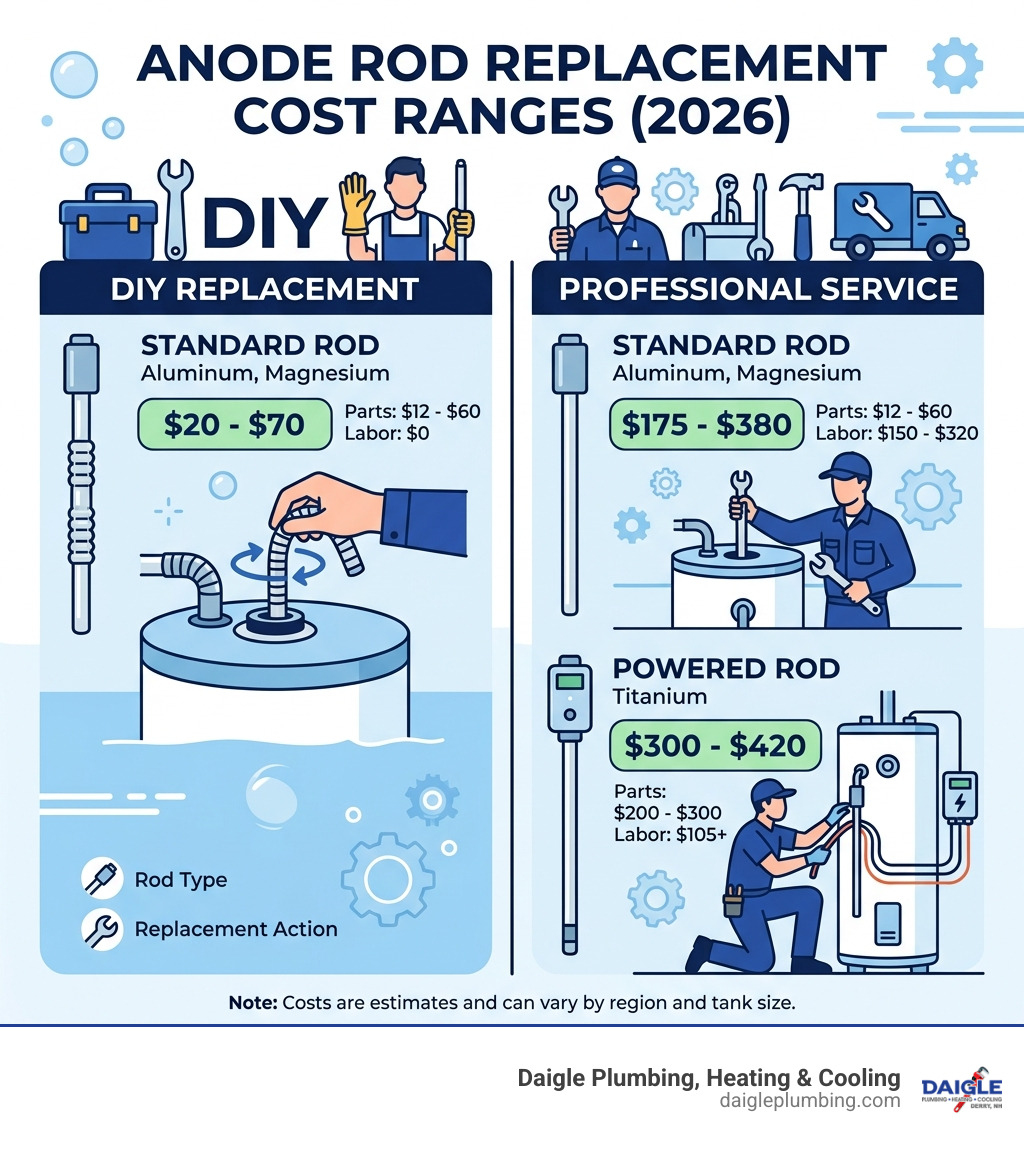
Anode rod replacement cost depends on the type of rod, water heater size, accessibility, local labor rates, and whether the work is handled professionally or as a DIY project.
Homeowners in Derry, NH and nearby communities can generally expect a standard replacement to be a manageable maintenance expense compared with replacing a corroded tank. DIY work may reduce the upfront expense, but it also brings safety and installation risks.
A rusty or rotten-egg smell from a hot water tap is more than unpleasant. It can signal that the water heater’s anode rod is depleted and that the steel tank may no longer be protected as effectively.
An anode rod is a small metal component that sacrifices itself to help protect the tank from internal corrosion. Replacing it before it wears away can extend the water heater’s service life and help prevent the much larger expense of a leaking tank replacement.
At Daigle Plumbing, Heating & Cooling, our plumbing team helps homeowners understand the condition of their water heater, choose an appropriate replacement rod, and address problems before they become major repairs. This guide explains the factors that affect anode rod replacement cost and how to make a practical decision for your home.
Understanding Anode Rod Replacement Cost Factors
An anode rod replacement cost is not a one-size-fits-all number. The total can vary with the parts selected, the labor involved, the condition of the existing rod, and the layout of your plumbing system. In Southern New Hampshire, our team commonly sees accessibility and water chemistry play an important role.
Tank Size and Capacity
The size of your water heater matters. A standard 40-gallon or 50-gallon tank typically uses a standard-length rod, while larger tanks may need a longer or thicker replacement. The correct rod should match the manufacturer’s specifications and the available clearance above the tank.
Labor Rates in New Hampshire
Professional labor reflects the time needed to shut down the unit safely, lower the water level, remove the existing rod, install the replacement, and check for leaks. A simple, accessible installation usually takes less time than a corroded rod in a tight mechanical space.
Accessibility and Condition
A water heater in an open basement is easier to service than one placed in a tight crawlspace, closet, or low-clearance area. If the old rod is seized by corrosion, removal can require additional time and specialized tools. Routine water heater maintenance, including descaling can help identify service needs before components become difficult to remove.
When a water heater inspection points to broader pipe, valve, or fixture concerns, Daigle Plumbing, Heating & Cooling can coordinate the work through its residential plumbing services rather than treating the anode rod as an isolated issue.
Material Impact on Anode Rod Replacement Cost
The rod material is a key factor in the parts portion of the project. An anode rod is made from a metal that is more reactive than the steel tank, so corrosive elements in the water attack the rod before they attack the tank walls.
For a general comparison of available replacement materials and configurations, homeowners can review water heater anode rod options from a major supplier while confirming compatibility with their water heater manufacturer.
| Rod Type | Typical Lifespan | Best For |
|---|---|---|
| Aluminum | 3 to 5 years | Hard water with higher mineral content |
| Magnesium | 2 to 4 years | Many residential water heaters |
| Aluminum-zinc | 3 to 5 years | Addressing sulfur or rotten-egg odors |
| Powered electric | 10 to 20 years | Long-term corrosion protection |
- Magnesium rods: These are a common choice for residential water heaters and provide strong corrosion protection, though they can wear faster in softened water.
- Aluminum-zinc rods: These can be useful when sulfur odor is a concern because zinc may help address odor-causing bacteria.
- Powered anode rods: These use a small electrical current to protect the tank instead of sacrificing metal over time. They may be a good long-term option for some homes.
Professional vs. DIY Anode Rod Replacement Cost
A DIY replacement may be suitable for an experienced homeowner with the right tools and a clear understanding of the unit’s safety requirements. Typical tools include a 1-1/16-inch socket, a breaker bar, and thread sealant. However, a stuck rod or damaged tank threads can turn routine maintenance into a much larger repair.
Professional service adds safety, diagnosis, and installation experience. During a visit, a technician can also determine whether sediment, a failed component, or tank corrosion is contributing to the issue. If the system needs more than an anode rod, our water heater repair service in Derry can address the underlying problem.
Homeowners can also use these signs that a water heater needs repair to recognize when an inspection should not wait.
When to Schedule Your Anode Rod Inspection
Waiting for a water heater to leak is like waiting for a car engine to seize before checking the oil. By then, the damage may already be done. To keep anode rod replacement cost manageable, it is important to identify wear early.
The Three-Year Rule
For many homes in Derry and surrounding towns, an anode rod inspection every three years is a practical starting point. Homes with water softeners may benefit from more frequent checks because softened water can increase conductivity and accelerate anode-rod wear.
Warning Signs You Need a New Rod
- A rotten-egg smell: This can occur when hydrogen sulfide gas reacts with a depleted or unsuitable anode rod.
- Rusty or discolored hot water: When cold water is clear but hot water is discolored, internal corrosion may be affecting the tank.
- Loud popping noises: Sediment is a common cause, although a fully depleted rod can also contribute to internal noise. These water heater repair warning signs can help homeowners distinguish routine maintenance from a developing problem.
- Age of the unit: If a water heater has gone years without service, the anode rod may be significantly worn.
If these signs are ignored, the result can be a leaking tank that needs replacement rather than repair. Understanding why water heaters leak can help homeowners act before water damage becomes part of the problem.
The Replacement Process and Potential Hidden Expenses
A standard replacement is straightforward, but older systems and difficult installations can add complexity. Here is what the process typically involves and what can affect the scope of the visit.
The Step-by-Step Process
- Preparation: The technician shuts off the power or gas and the cold-water supply.
- Draining: A small amount of water is drained to lower the level below the rod’s insertion point.
- Removal: The existing rod is loosened and removed. Factory-installed rods can be difficult to unscrew.
- Inspection: The old rod is checked for severe wear, exposed core wire, or other signs of depletion.
- Installation: The replacement rod is installed, using a flexible version when overhead clearance is limited, and the threads are sealed before leak testing.
Potential Added Work
- Seized threads: A rod that will not budge may require additional removal techniques.
- Low clearance: A flexible or segmented rod may be needed when a standard rod cannot be removed vertically.
- Worn shutoff valves: If a valve leaks or fails during service, it may need attention before the water heater can be returned to normal operation.
- Tank condition: Advanced corrosion can reveal that the tank itself is nearing the end of its service life.
Addressing maintenance needs early can help extend the lifespan of a water heater and reduce the likelihood of a surprise replacement.
Frequently Asked Questions about Anode Rods
Does replacing the anode rod affect the water heater’s warranty?
Generally, no. In fact, regular anode-rod maintenance can help protect the tank. Manufacturers often treat anode rods as consumable components. However, using an incompatible rod or damaging the tank during a DIY attempt could affect warranty coverage. A professional installation also provides documentation of the work.
How long does the anode rod replacement process typically take?
For a professional, a standard replacement often takes about 45 to 90 minutes. The visit includes setup, partial draining, removal of the old rod, installation of the replacement, and leak testing. A first-time DIY project can take longer, particularly if the rod is seized or additional tools are needed.
How can homeowners manage anode rod replacement cost?
The best way to manage anode rod replacement cost is to schedule inspections before the rod is fully depleted and to select a material that suits the home’s water chemistry. Combining the inspection with other planned plumbing maintenance can also make a service visit more efficient.
Conclusion
Anode rod replacement cost is a maintenance consideration that can help protect one of the most important appliances in your home. Replacing a worn rod at the right time can help reduce the risk of internal tank corrosion, leaks, and premature water heater replacement.
For more than 40 years, our licensed and insured team has helped homeowners in Derry, Salem, Manchester, Nashua, Auburn, Hampstead, Merrimack, Bedford, and across Southern New Hampshire keep their plumbing systems running reliably. We stand behind our work with a satisfaction guarantee.
Ready to protect your water heater? Contact our professional water heater technicians to schedule service.