Your AC Is Running But the Room Is Still Hot? Here Is What Is Going On
If AC is not cooling the room even though the system is clearly running, you are not alone, and the fix is often simpler than you think.
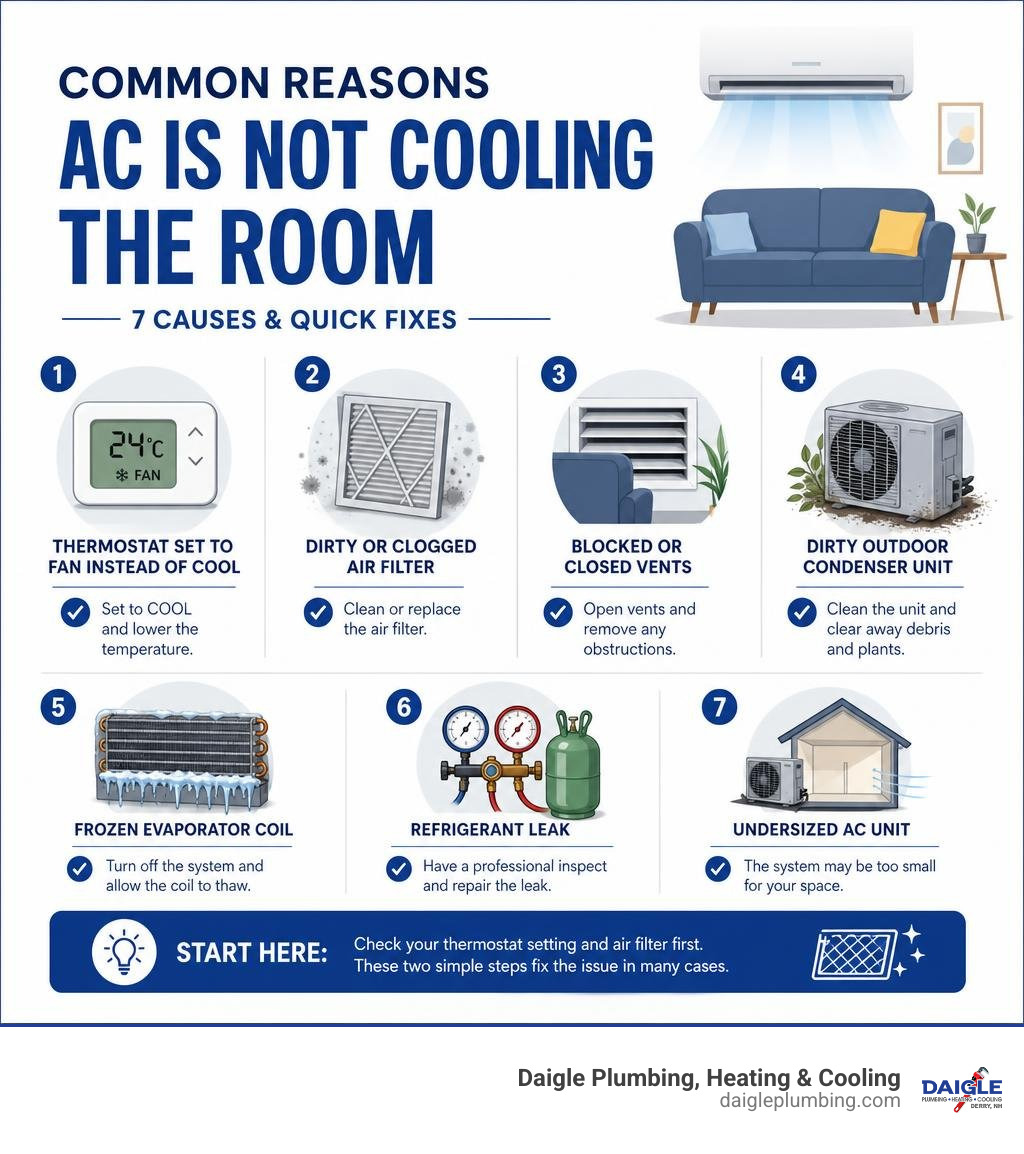
Most common reasons your AC runs but does not cool:
- Thermostat set to FAN instead of COOL: the blower runs but no cooling happens
- Dirty or clogged air filter: restricts airflow and forces the system to work harder
- Blocked or closed vents: prevents conditioned air from reaching the room
- Dirty outdoor condenser unit: trapped heat cannot escape, reducing efficiency
- Frozen evaporator coil: ice blocks heat transfer and causes warm air output
- Refrigerant leak: low refrigerant means the system cannot remove heat effectively
- Undersized AC unit: the system cannot keep up with the cooling load on hot days
Start with the thermostat and air filter. These two checks alone resolve the problem in many cases with no tools required.
At Daigle Plumbing, Heating & Cooling, our licensed HVAC team has diagnosed every variation of AC is not cooling the room you can imagine, from a simple fan-mode mistake to a failing compressor on the hottest day of the year. In this guide, our team will walk you through exactly how to find the problem and what to do about it.
What to Do When Your AC Is Not Cooling the Room
When your AC is not cooling the room, the very first thing you should do is take a deep breath and step through a logical diagnostic process. It is incredibly frustrating to sit in a sticky, humid room in the middle of a New Hampshire summer heatwave, but running a malfunctioning air conditioner can turn a minor, inexpensive issue into a complete system failure.
To understand why your room remains warm, you have to understand that an air conditioner does not actually “create” cold air. Instead, it works by extracting heat from the air inside your home and moving it outdoors. If anything breaks this delicate cooling chain, the system will blow lukewarm or even hot air.
We always recommend starting with the easiest, most common culprits before assuming you need a costly replacement. If the problem goes beyond a quick thermostat or filter fix, Daigle Plumbing, Heating & Cooling provides professional cooling services for homeowners in Derry, Manchester, Salem, Nashua, and nearby New Hampshire communities.
Our team also explains the most common cooling-performance issues in our blog on 7 reasons your AC is not cooling the house properly, including airflow restrictions, equipment problems, and maintenance mistakes that can leave rooms too warm.
Thermostat Settings and Airflow Obstructions
It might sound silly, but you would be amazed at how many service calls we receive where the only issue is an incorrectly set thermostat. If someone in your household accidentally bumped the thermostat, or if the system reset after a brief power flicker, your AC might be running on “FAN” mode instead of “COOL” mode.
When the thermostat is set to “FAN,” the indoor blower fan runs continuously, circulating room-temperature air without activating the outdoor condenser. Make sure your thermostat is explicitly set to “COOL” and that the temperature setting is at least 5°F below the current room temperature.
If the thermostat settings are correct, your next step is to check for physical airflow obstructions. Walk around the room and inspect every supply vent and return grille.
- Are your vents completely open?
- Is there heavy furniture, a rug, or drapes blocking the return air grilles?
- Have you closed off vents in unused rooms?
Many homeowners close vents in empty rooms thinking it saves energy, but this actually creates excessive back-pressure within your ductwork. This restricted airflow can cause the entire HVAC system to malfunction, leading to a situation where the AC is not cooling the room you are actually using. If you are experiencing weak airflow or warm air in southern New Hampshire, our article on AC not blowing cool air in Derry NH explains more local troubleshooting considerations for homes in the area.
Dirty Air Filters and Restricted Airflow
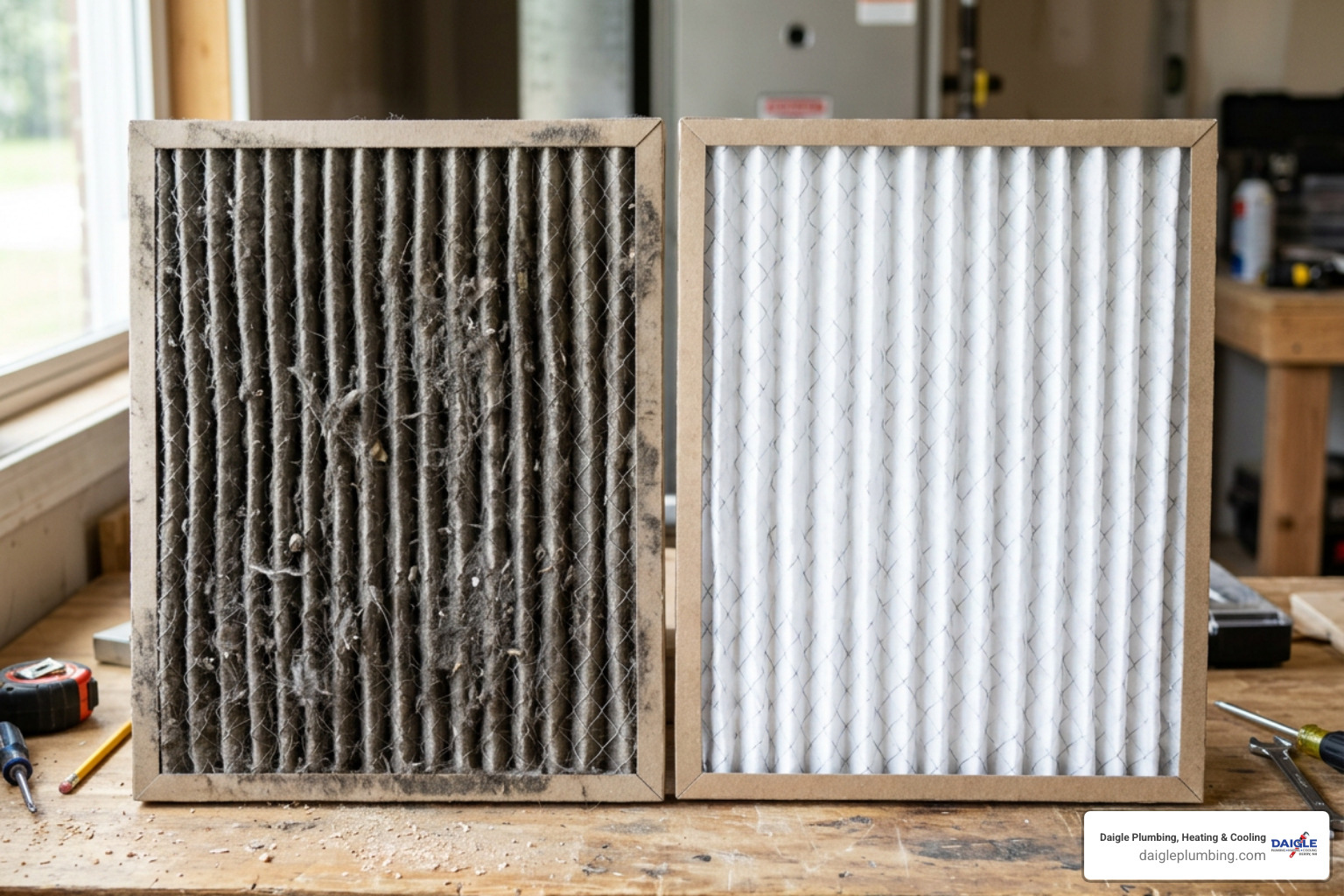
If your thermostat is set correctly and your vents are wide open, but the AC is not cooling the room, the culprit is highly likely a dirty air filter. In fact, a clogged air filter is the single most common cause of poor cooling performance.
An air conditioner requires a constant, robust volume of air passing over its cold evaporator coils to transfer heat. When dust, pet dander, and hair clog the filter, airflow drops significantly. This restriction forces your blower motor to work twice as hard, spiking your energy bills and putting immense strain on the entire system.
When airflow is severely restricted, the moisture that naturally condenses on the evaporator coil can quickly freeze, turning the coil into a solid block of ice. Once the coil freezes, heat transfer stops entirely, and your AC will blow warm air. We recommend checking your air filter every 30 days during the peak summer months and replacing it at least every 1 to 3 months.
Mechanical and Refrigerant Issues Preventing Proper Cooling
If your thermostat is configured correctly and you have replaced your dirty air filter, but the AC is not cooling the room, we need to look closer at the mechanical and chemical components of your air conditioning system. These issues are slightly more complex and typically require the diagnostic tools of a professional HVAC technician.
The outdoor unit, also called the condenser, plays a critical role in dumping the heat your indoor unit collected. If the condenser coils are caked in dirt, grass clippings, or pollen, or if the unit is choked by overgrown shrubs, it cannot release that heat. The heat stays trapped in the system, and your AC will struggle to lower the indoor temperature.
Mechanical failures, such as a failed capacitor that helps start the compressor and fan or a failing compressor motor, will also cause the system to blow warm air. When the issue points to a component failure, Daigle Plumbing, Heating & Cooling can help with AC repair and cooling system service instead of letting the system keep running under strain.
Our team breaks down the warning signs and repair scenarios in more detail in this blog on common AC problems needing repair, including electrical, airflow, and mechanical issues that can stop a system from cooling properly.
Frozen Evaporator Coils and Why the AC Is Not Cooling the Room
A frozen evaporator coil is a major roadblock to home comfort. The evaporator coil, located in your indoor air handler, is filled with cold refrigerant designed to absorb heat from your indoor air. However, if the airflow is restricted due to a dirty filter or blocked return vents, the temperature of the coil drops below freezing, causing the condensation on the coil to turn to ice.
Once ice begins to accumulate, it acts as an insulator, preventing the refrigerant from absorbing any more heat. The air blowing out of your registers will feel warm, and you might even notice water pooling around your indoor unit as the ice starts to melt.
If you suspect your system is frozen, turn it off immediately at the thermostat. Running an air conditioner with a frozen coil can cause liquid refrigerant to flood back into the compressor, causing permanent and expensive compressor failure. Let the system thaw completely before attempting to run it again, and use our detailed blog on why your air conditioner is freezing up to understand the root causes.
Refrigerant Leaks and Why the AC Is Not Cooling the Room
Refrigerant is the lifeblood of your air conditioner. It is the chemical compound that continuously cycles between liquid and gas states to carry heat out of your home. A very common misconception is that air conditioners “consume” refrigerant over time, much like a car burns gasoline. This is completely false. Your AC is a sealed system, and its refrigerant charge should remain constant for the entire lifespan of the unit.
If your system is low on refrigerant, it has a leak.
When refrigerant levels drop due to a pinhole leak in the coils or lines, the system loses its capacity to absorb heat. Common signs of a refrigerant leak include:
- A gradual decline in cooling capacity over several weeks
- The AC running constantly without reaching the set temperature
- Hissing or bubbling noises coming from the indoor or outdoor unit
- Ice forming on the refrigerant lines or the evaporator coil
Attempting to add refrigerant yourself is not only highly dangerous, but it is also illegal under EPA Section 608 regulations without proper certification. Furthermore, simply topping off the system without finding and sealing the leak is a waste of money.
DIY Troubleshooting Steps for Homeowners
Before you pick up the phone to schedule a professional service call, there are several safe, simple steps you can take to see if you can resolve the issue yourself. Use this handy table to distinguish between steps you can safely perform at home and problems that require licensed HVAC experts.
| Troubleshooting Step | DIY Safe? | What to Do / What to Look For |
|---|---|---|
| Check Thermostat Settings | Yes | Confirm it is set to COOL and AUTO, and set the temperature 5°F below room temp. |
| Inspect and Replace Filter | Yes | Replace the filter if you cannot see light passing through the fibers. |
| Clear Airflow Obstructions | Yes | Ensure all registers are open and free of furniture, rugs, or drapes. |
| Clean Outdoor Condenser | Yes | Turn off power and gently spray loose dirt and leaves off the outdoor coils with a garden hose. Do not use a pressure washer. |
| Reset Tripped Breakers | Yes | Check your electrical panel for a tripped breaker labeled AC or HVAC and reset it once. |
| Thaw a Frozen Coil | Yes | Turn the system completely OFF at the thermostat and let it sit for several hours. |
| Test Capacitor and Electricals | No | Requires a multimeter and handling high-voltage electrical components. |
| Repair Refrigerant Leaks | No | Requires EPA Section 608 certification and specialized leak-detection equipment. |
| Replace Blower Fan or Compressor | No | Complex mechanical work that requires professional tools and training. |
If you want to make sure your system is fully prepared to handle the peak of summer, Daigle Plumbing, Heating & Cooling can inspect the equipment, clean key components, and identify worn parts before they cause a breakdown.
Frequently Asked Questions About Poor AC Performance
Can an undersized AC unit fail to cool a room effectively?
Yes, absolutely. When an air conditioner is installed, an HVAC professional must perform a detailed calculation, known as a Manual J load calculation, to determine the exact cooling capacity, measured in British Thermal Units, or BTUs, required for the space.
If your AC unit is undersized, it will struggle to keep up as outdoor temperatures rise. The system will run constantly, driving up your energy bills, but it will fail to cool the room effectively because the heat gain entering through your walls, windows, and roof exceeds the rate at which the unit can remove it.
Should I turn off my AC if it is running but not cooling?
Yes, you should turn it off immediately. If your AC is running constantly but the temperature in your home is rising, keeping the system on will only waste energy and place severe mechanical stress on the compressor. The compressor is the most expensive component in your air conditioning system. Running it under strain or while it is frozen can cause permanent failure, turning a simple repair into an expensive system replacement.
Why is only one room not cooling while the rest of the house is fine?
If your entire home is comfortable but one specific room remains warm, the issue is likely localized. This is often caused by:
- A blocked or closed supply vent in that specific room
- Leaky or disconnected ductwork in the attic or crawlspace leading to that room, allowing conditioned air to escape before reaching its destination
- Localized heat gain, such as a west-facing room with large windows receiving direct afternoon sunlight
Conclusion
A home should be a sanctuary from the summer heat. If your AC is not cooling the room as we head into the peak of the June 2026 cooling season, taking swift action can save you from high energy bills and major system damage. While simple tasks like changing your air filter or resetting your thermostat are great DIY starting points, complex electrical, mechanical, and refrigerant issues require the touch of an experienced professional.
At Daigle Plumbing, Heating & Cooling, we have served Derry, NH, and surrounding communities like Manchester, Salem, and Nashua for over 40 years. As a family-owned business, we back our licensed and insured experts with a satisfaction guarantee, convenient financing options, and seasonal specials.
If your troubleshooting steps have not restored the cool breeze to your home, do not sweat through another humid night.
Ready to get your home comfort back on track? Contact our professional AC technicians at Daigle Plumbing, Heating & Cooling today.