7 Critical Signs You Need Boiler Repair Derry NH Homeowners Face
The primary warning signs that you need boiler repair in Derry, NH include strange clanking or kettling noises, uneven heat distribution across rooms, pooling water around the unit, frequent pressure drops, rapid short cycling, yellow burner flames, and sudden spikes in heating bills. Recognizing these issues early prevents heating disruptions and protects your home against frozen, burst pipes during harsh New England winters.
When winter arrives in southern New Hampshire, Derry homes rely heavily on hydronic systems, including radiant floors, baseboards, and cast-iron radiators, to maintain consistent warmth. Scheduling timely heating services in Derry NH repair installation and maintenance gives our team the opportunity to correct hidden faults before sub-zero weather places peak demand on your equipment.
Here are the primary warning signs that indicate your system needs professional attention:
- Unusual operational noises: Clanking, whistling, popping, or rumbling sounds during a heating cycle.
- Uneven heat distribution: Radiators or baseboard zones staying lukewarm while the boiler runs continuously.
- Water pooling around the unit: Visible drips near valves, circulator flanges, or the expansion tank.
- Frequent pressure drops: A pressure gauge repeatedly falling below normal operational thresholds (typically 12 to 15 PSI for residential hydronic setups).
- Rapid short cycling: The burner turning on and off every few minutes without satisfying the thermostat.
- Discolored burner flames or soot buildup: Yellow, lazy burner flames instead of a crisp blue flame, often accompanied by black residue on exterior panels.
- Unexplained spikes in energy bills: Fuel usage climbing significantly despite consistent weather patterns.
Strange Noises, Kettling, and Clanking Sounds
Boilers should operate with a gentle hum and the soft sound of circulating water. Loud, jarring noises usually signal internal stress.
One of the most frequent problems we encounter across Rockingham County is “kettling.” This happens when hard water minerals, such as calcium and limescale, accumulate on the internal surfaces of the heat exchanger. This layer traps small pockets of water against the metal, causing them to boil instantly into steam bubbles. As those steam bubbles collapse back into cooler water, they create sharp knocking or banging sounds reminiscent of a boiling tea kettle.
Left unaddressed, kettling restricts water flow, overheats the metal, and can eventually crack the cast-iron or stainless steel heat exchanger. Clanking or pipe rattling can also indicate trapped air pockets circulating through your baseboards or broken pipe hangers shifting under thermal expansion.
Uneven Heating and Cold Radiators
If some rooms in your Derry home feel like a sauna while others remain chilly, your hydronic distribution system is struggling. Uneven heating often stems from:
- Airlocks in the heating lines: Air trapped inside the loop prevents hot water from reaching specific radiators.
- Failing zone valves: Motorized valves that control flow to different floors or sections of your home can stick in a closed position.
- Circulator pump failure: A malfunctioning pump cannot push heated water through long pipe runs. Recognizing the signs you need a boiler pump replacement and what to do next helps you address sluggish circulation before entire heating zones go completely cold.
- Thermostat communication errors: Outdated wiring or faulty zone controllers sending incorrect signals to the burner controls.
Visible Leaks and Sudden Pressure Drops
A closed-loop hydronic heating system should hold a consistent volume of water. Puddles or active drips around your boiler are clear indicators of mechanical wear.
Common leak sources include degraded pipe joint seals, failing circulator pump gaskets, or a waterlogged expansion tank. If the internal diaphragm of an expansion tank fails, thermal expansion forces excess pressure through the pressure relief valve, causing it to discharge water onto your floor.
Consistently low system pressure prevents hot water from reaching upper-story radiators, leaving second-floor bedrooms cold while placing extra mechanical strain on the boiler’s internal components.
Yellow Burner Flames and Carbon Monoxide Risks
Gas and oil boilers require the correct balance of fuel and oxygen for safe, complete combustion. A properly operating gas burner produces a steady, sharp blue flame.
If your burner displays a yellow, wavering flame or if you notice dark soot collecting around the burner door and draft hood, the unit is experiencing incomplete combustion. This malfunction can produce dangerous levels of carbon monoxide (CO), a colorless, odorless gas.
Reviewing how to handle fuel hazards and how to check for gas leaks without sparking a disaster is a vital safety step for any homeowner. If your carbon monoxide alarms sound, or if anyone in your household experiences unexplained dizziness, headaches, or nausea, evacuate the house immediately and call emergency services from a safe location outdoors.
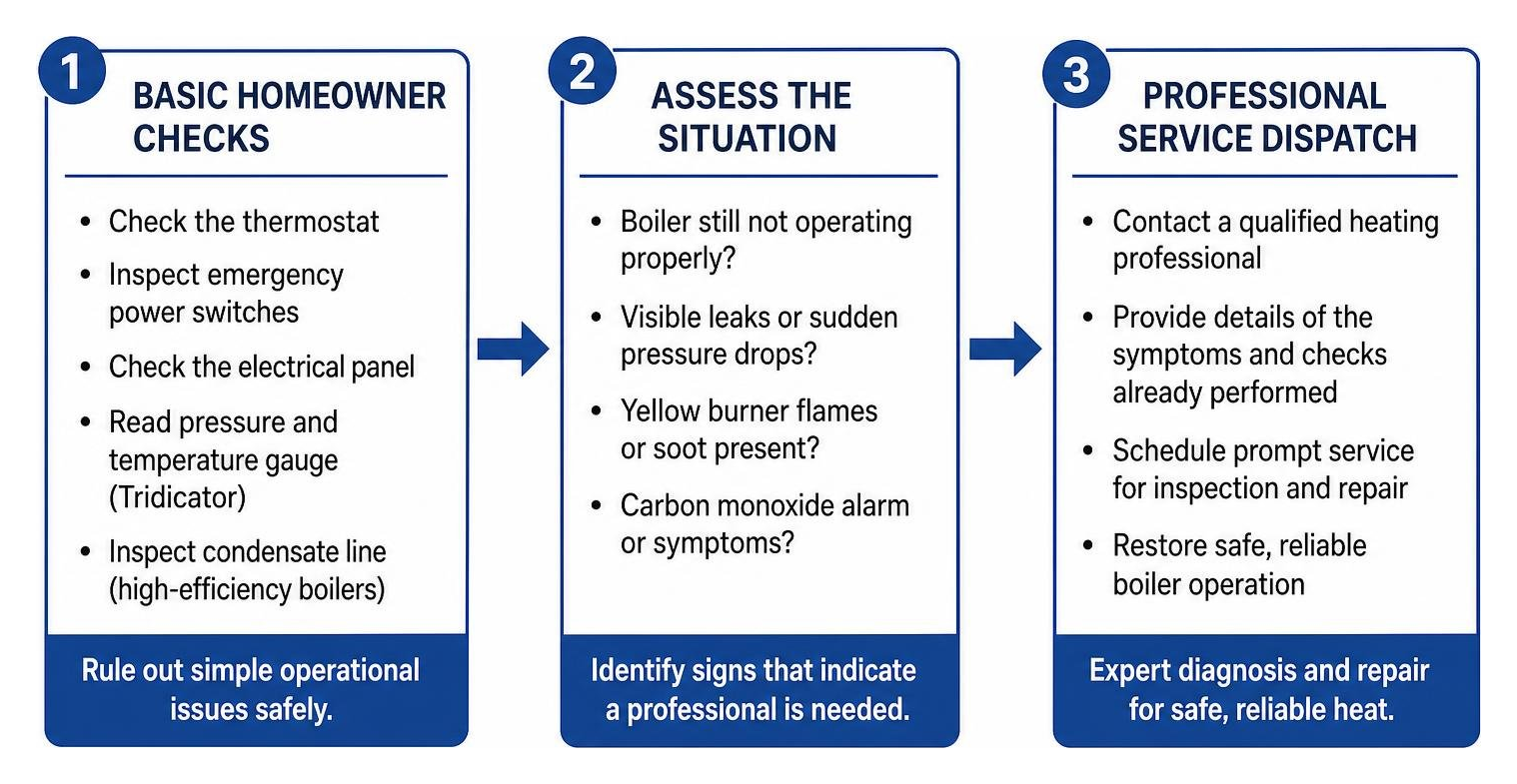
Step-by-Step Boiler Troubleshooting and Assessment Guide
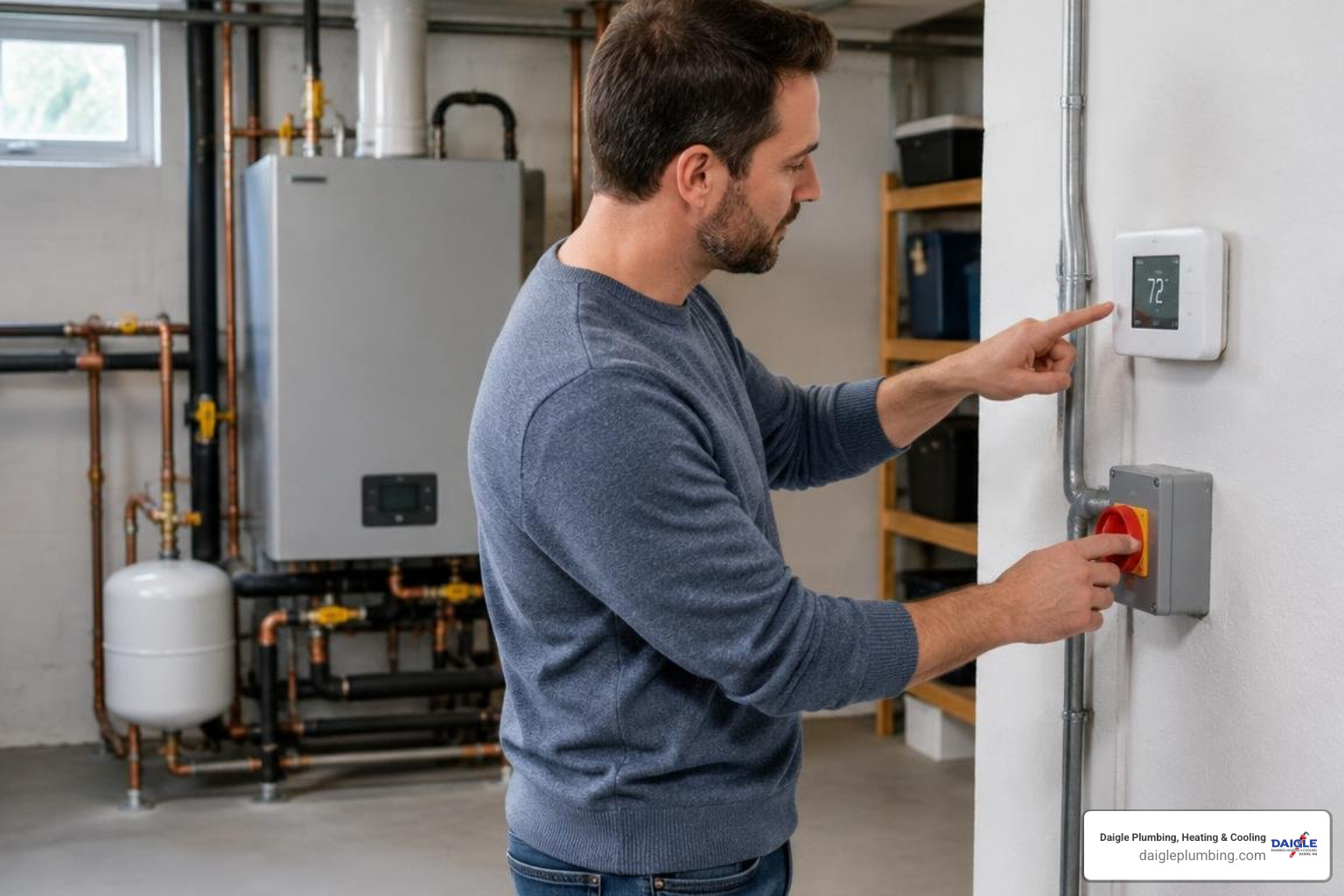
Before calling a professional technician for service, you can run through several safe, basic troubleshooting checks to rule out simple operational issues:
- Check the thermostat: Ensure the thermostat is set to “Heat” mode and configured at least 5 degrees above the current room temperature. Replace weak batteries in digital thermostats.
- Inspect the emergency power switches: Boilers have red emergency shutoff switch plates, often located at the top of the basement stairs and directly on the unit. Ensure these switches have not been bumped into the “Off” position.
- Check the electrical panel: Inspect your home’s circuit breaker box to confirm the heating circuit has not tripped. Reset a tripped breaker once; if it trips again immediately, leave it off and call a professional.
- Read the pressure and temperature gauge (Tridicator): Normal cold residential boiler pressure sits around 12 to 15 PSI. If the gauge reads near zero, the system has lost water; if it reads above 30 PSI, the system is overpressurized.
- Inspect the condensate line (for high-efficiency condensing boilers): In modern high-efficiency units, make sure the plastic condensate drain line is clear and not blocked by debris or ice during sudden early freezes.
Maintaining clean airflow around heating equipment and following a proper furnace filter replacement schedule for hybrid or auxiliary warm-air units also helps keep your utility space clean and free of airborne debris that can clog boiler intake louvers.
When to Schedule Boiler Repair Derry NH Specialists Recommend
While checking switches and thermostat settings is safe for homeowners, technical repairs should always be left to certified heating professionals. You should schedule immediate service if you encounter:
- Repeated ignition lockouts that require manual resetting.
- Unusual chemical, metallic, or rotten-egg odors near the appliance.
- Persistent water leaks from internal valves, cast-iron sections, or distribution pipes.
- Electrical buzzing, clicking, or burning plastic smells from control boards.
- Total loss of heat during freezing outdoor temperatures.
Attempting to disassemble gas burners, adjust fuel pressure, or bypass high-limit safety controls without proper training and specialized diagnostic instruments creates significant property damage and safety risks.
Boiler Repair vs. Boiler Replacement: Making the Right Call
Homeowners often wonder whether it makes more financial sense to repair an aging boiler or invest in a brand-new, high-efficiency system. We evaluate this decision using the equipment’s age, overall reliability, and operating efficiency.
| Factor | Boiler Repair Candidate | Boiler Replacement Candidate |
|---|---|---|
| System Age | Under 10 to 12 years old | Over 15 to 20 years old |
| Repair Frequency | First issue in several heating seasons | Multiple service calls within the last two years |
| Repair Scope | Component wear (zone valve, thermocouple, pump) | Cracked heat exchanger, leaking cast-iron block |
| Efficiency Rating | Operates near original rated efficiency | Obsolete low-efficiency system driving high fuel bills |
| Parts Availability | Standard OEM replacement parts readily available | Obsolete components, long lead times during winter |
Modern heating standards favor high-efficiency condensing boilers that reach AFUE (Annual Fuel Utilization Efficiency) ratings of 95% or higher. If your existing boiler is approaching two decades of service and requires substantial component repairs, upgrading to a modern system often delivers lower long-term heating costs and greater reliability during New England winters.
Derry Local Regulations, Repair Costs, and Contractor Standards
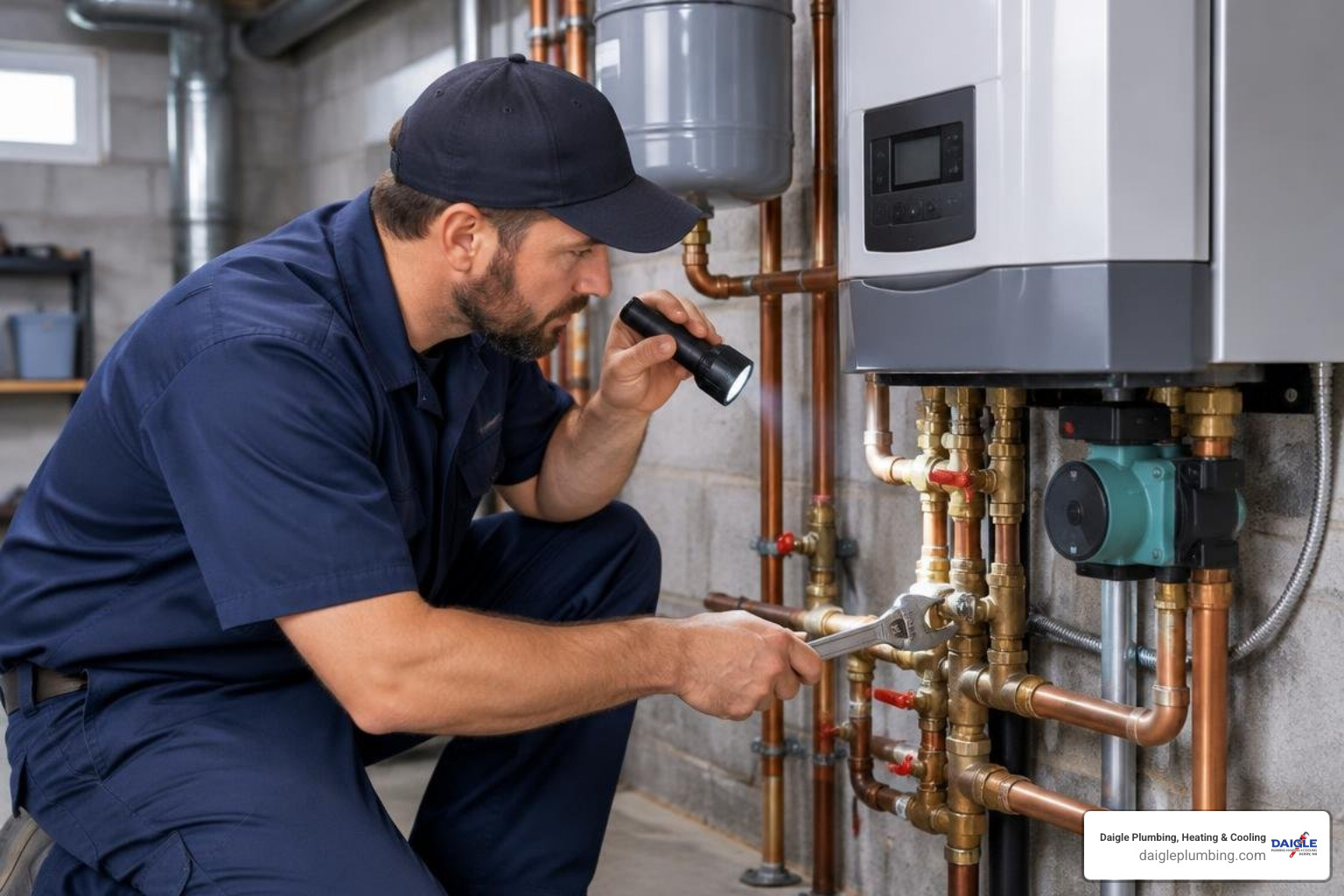
Boiler work in Derry, NH is governed by strict safety standards to protect residential properties from combustion hazards, gas leaks, and structural water damage.
Professional Standards for Boiler Repair Derry NH Residents Trust
When selecting a heating contractor in Derry, verify that the company meets essential professional benchmarks:
- Proper licensing and insurance: Technicians should carry appropriate New Hampshire gas fitting and plumbing licenses, backed by comprehensive liability and workers’ compensation coverage.
- Experienced background: Look for established, family-owned companies with decades of experience working on traditional New England hydronic systems, cast-iron boilers, and modern condensing units.
- Transparent diagnostic practices: Trustworthy technicians explain what caused the mechanical failure and provide clear options before performing repairs.
- Warranty and satisfaction backing: Reliable companies stand behind their labor and replacement parts with clear warranties.
Our team at Daigle Plumbing, Heating & Cooling brings over 40 years of family-owned experience to every service call across Derry, Salem, Manchester, Nashua, Londonderry, and neighboring communities, ensuring all repairs meet high industry standards.
Derry Building Codes, Permitting, and Venting Compliance
In Derry and throughout Rockingham County, mechanical and plumbing codes follow standards established by the International Mechanical Code (IMC), National Fire Protection Association (NFPA 54 National Fuel Gas Code), and local municipal amendments.
Key code considerations include:
- Combustion air supply: Boilers installed in confined basement utility rooms must have adequate dedicated fresh air intake to prevent incomplete combustion.
- Venting and chimney liners: Modernizing or replacing an older boiler venting into an unlined brick chimney often requires installing a certified stainless steel or PVC/polypropylene flue liner to prevent toxic exhaust gases and acidic condensation from degrading masonry.
- Backflow prevention: Local plumbing regulations require tested backflow preventers on auto-feed water lines to keep non-potable boiler water from siphoning back into your home’s clean drinking water supply.
- Emergency shutoffs: Code mandates clear, accessible emergency power cut-off switches outside the mechanical room entrance.
Essential Preventive Maintenance to Prevent Mid-Winter Breakdowns
Annual maintenance is the most effective way to ensure smooth boiler operation through the winter. Scheduling a comprehensive tune-up in late summer or early fall provides several advantages:
- Cleans combustion chambers and burners: Removing carbon deposits and soot ensures optimal heat transfer and prevents dangerous burner clogs.
- Tests safety limits and relief valves: Checking high-limit aquastats and pressure relief valves ensures your system will shut down safely if internal water temperatures or pressures exceed safe thresholds.
- Flushes sediment and purges air: Flushing debris from distribution pipes and bleeding trapped air from radiators restores quiet, balanced heat throughout every room.
- Inspects the expansion tank and circulator pump: Checking air pre-charge levels in the expansion tank and lubricating pump bearings prevents sudden mid-winter leaks.
- Improves fuel efficiency: Fine-tuning the fuel-to-air combustion ratio reduces monthly heating fuel consumption across cold New England winters.
Proactive care also pairs well with broader home mechanical upkeep. For instance, just as a timely cooling checkup before summer keeps your cooling system efficient, pre-season boiler maintenance safeguards your home comfort against extreme winter weather.
Frequently Asked Questions About Boiler Repair in Derry, NH
How quickly can a technician respond to an urgent boiler breakdown in Derry?
During cold snaps, local heating services prioritize “no heat” emergencies to protect homes from frozen and bursting pipes. When you contact a local provider in Derry, NH, dispatchers evaluate your heating situation and schedule prompt heating help to diagnose and resolve the issue quickly.
What is the average cost of boiler repair in Derry, NH?
Boiler repair costs vary depending on the nature of the breakdown. Total expenses depend on factors such as diagnostic time, whether standard replacement parts (like thermocouples, zone valves, or igniters) or major components (such as circulator pumps, electronic control boards, or gas valves) are needed, and the overall age and accessibility of your heating equipment.
What are the main warning signs of a dangerous carbon monoxide leak?
Warning signs of potential carbon monoxide leaks include a yellow, flickering burner flame, dark soot marks around the front panels or flue pipe, persistent condensation on nearby basement windows, and sounding CO detectors. Physical symptoms include unexplained headaches, dizziness, fatigue, and nausea. If you suspect carbon monoxide exposure, leave the building immediately and dial 911.
Conclusion
Getting through a freezing Derry winter requires a dependable, efficiently running boiler. By recognizing the early warning signs of equipment failure, such as kettling noises, radiator cold spots, minor leaks, and fluctuating system pressure, you can address minor mechanical issues before they turn into major mid-winter heating failures.
Whether your home needs standard component repairs, safety testing, or seasonal maintenance, our licensed team at Daigle Plumbing, Heating & Cooling is ready to help keep your heating system running safely and efficiently. If your heating equipment is acting up, contact our professional boiler repair technicians for prompt local heating help before the first major freeze arrives.